



By Youssra el-Sharkawy
The film industry and television are powerful tools for the achievement of any nation’s soft power objectives and Egypt is no exception in this regard.
The liberation of Sinai from Israeli occupation has been one of the main themes that Egyptian cinema and television focused on for decades.
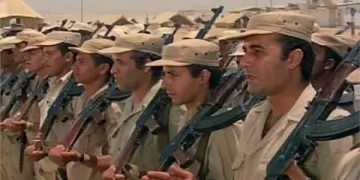
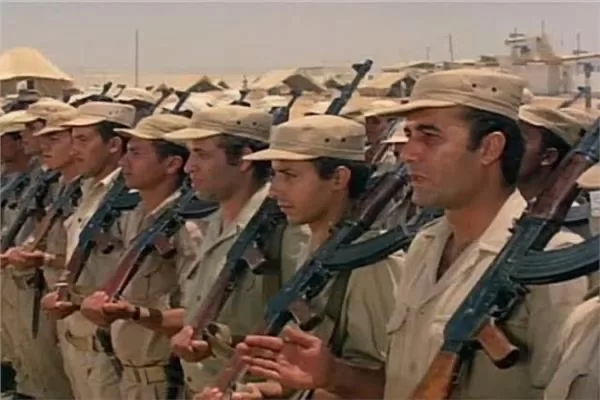
Works made about this national achievement specifically focused on the heroic role the Armed Forces played so that Sinai could return to Egypt.
This turns the same works into a living military archive, from mere entertainment.
Multiple films and television productions captured the transition from the 1967 setback to the 1973 victory and the full liberation of Sinai on April 25, 1982.
This artistic depiction of Sinai’s liberation hasbeen evolving through the years.
After the 1967 defeat and until 1972, known as the “Post-Defeat Period”, war films focused on the emotional consequences of this dismal development for characters, not on military action.
Oghnia ala el-Mamar (Song On The Passage), a 1972 film, depicted the fine line between despair and determination, showing soldiers as deeply human beings who could face loss and fear with bravery and optimism.
Directed by Ali Abdel Khale, the movie tells the story of five men stuck in a Sinai mountain pass, following the 1967 war.
The five men’s main challenge is to overcome their fear, make their dreams come true and maintain strong determination.
After the October War of 1973, the cinema entered the “Victory Era” which started in the mid-1970s. This era witnessed the birth of several films, including el-Rasasa Latazal Fi Gaibi (The Bullet Is Still In My Pocket), a 1974film that became a cultural landmark that glorifies the victory of the army.
Directed by Hosam Eddin Mostafa, the film is one of the best classic Egyptian war movies.
It tells the story of Mohammad who has experienced a devastating loss in 1967 and recovers his lost dignity through his involvement in the Crossing of 1973.
The combination of realistic scenes from the battlefields contributed to the authenticity of the movie. The role of the Egyptian soldier played by Mahmoud Yassin also created the image of a physically weak, but a brave man.
These films became symbols of their time, embodying the pride and the excitement of the people about crossing the Suez Canal and making the necessary sacrifices for the achievement of victory after years of hardships.
In the 1990s, filmmakers focused on documenting lesser known facts about the war, such as secret missions and naval warfare.
A milestone work was el-Tariq Ila Eilat (The Road to Eilat) (1994) which highlighted naval warfare and showcased a dangerous mission conducted by Egyptian frogmen on Israeli targets in the harbour of Eilat.
Directed by Inaam Mohammed Ali, the film adopted the plot framework of a suspense thriller, emphasizing the importance of accuracy, coordination, and cooperation for military success.
Years later, a new work emerged that renewed the genre, namely el-Mamar (The Passage) (2019).
This film is set amidst the war of attrition and focuses on Saa’ka (Thunderbolt) forces which conduct dangerous operations deep inside Sinai.
The film utilizes impressive special effects,along with dynamic cinematography in portraying the soldiers as multidimensional personalities defined by their emotions.
It blends modern techniques with intense emotion-based storytelling to bring back the war narrative for the young generation.
The first few films of the 1970s included conventional love stories, undermining their power as war film.
The lack of visual records, due to the secrecy of the military operation, compelled filmmakers to use very little archival shots as well as re-enactments of war scenes at times.
Limitations in technology made it difficult for filmmakers to create battle sequences and explosions.
Nevertheless, War of Attrition movies like The Passage are considered more mature and artistic because they highlighted the psychological growth of their characters.
Also, film industry advancements have made it possible for directors to recreate war in a way that makes it more realistic than ever before.
While films were able to portray major battles in their full glory, television series took the story one step further, by incorporating elements of espionage and psychological warfare into the narrative.
TV series like Raafat Al-Haggan (1988) portrayed the tale of an Egyptian spy whose job was to gather valuable information about the Bar Lev line.
Also, Domoo’ Fi Oyoun Wakeha (Tears in Insolent Eyes) (1980) shed light on the strategic planning and cleverness needed to overcome enemy surveillance.
Contemporary productions, such as Al-Ikhtiyar(The Choice) (2020) demonstrate significant genre evolutions in terms of production quality and plot development, making viewers feel as immersed in the story as possible, comparable to international standards.
Film and TV presentations of Sinai’s liberationare, however, more than just a recording of Egyptian military victories.
Sinai’s sands have turned into a symbol of honour, self-sacrifice and patriotism, thanks to the art of the moving picture.
Whether it is the introspection of the early 1970s films or the high-tech production of modern days, they will always resonate across generations.
Future generations will always remember that the liberation of Sinai was not just a political issue, but a human victory won through perseverance, solidarity, and an unwavering conviction that what is taken by force can only be restored by force.



