










The Magic of Ancient Egypt Through an Italian Lens exhibition started in the Egyptian Museum in downtown Cairo on August 19.
This temporary exhibition’s opening coincided with World Photography Day. Lasting for three months, the event gives visitors the chance to step into a visual time capsule crafted by three Italian photographers, namely Antonio Beato, Giovanni Farazani, and Enrico Leichter.
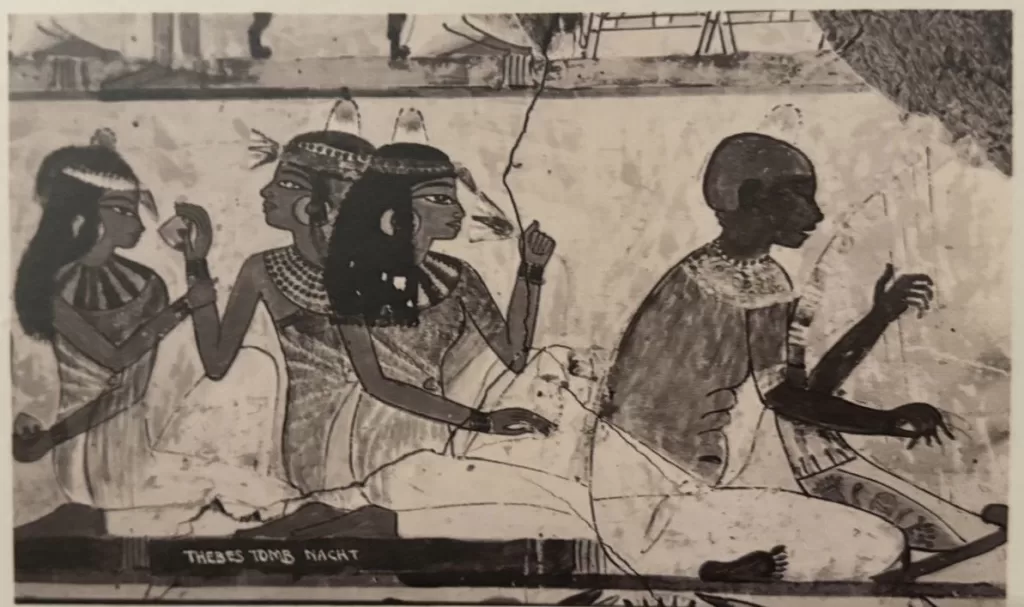
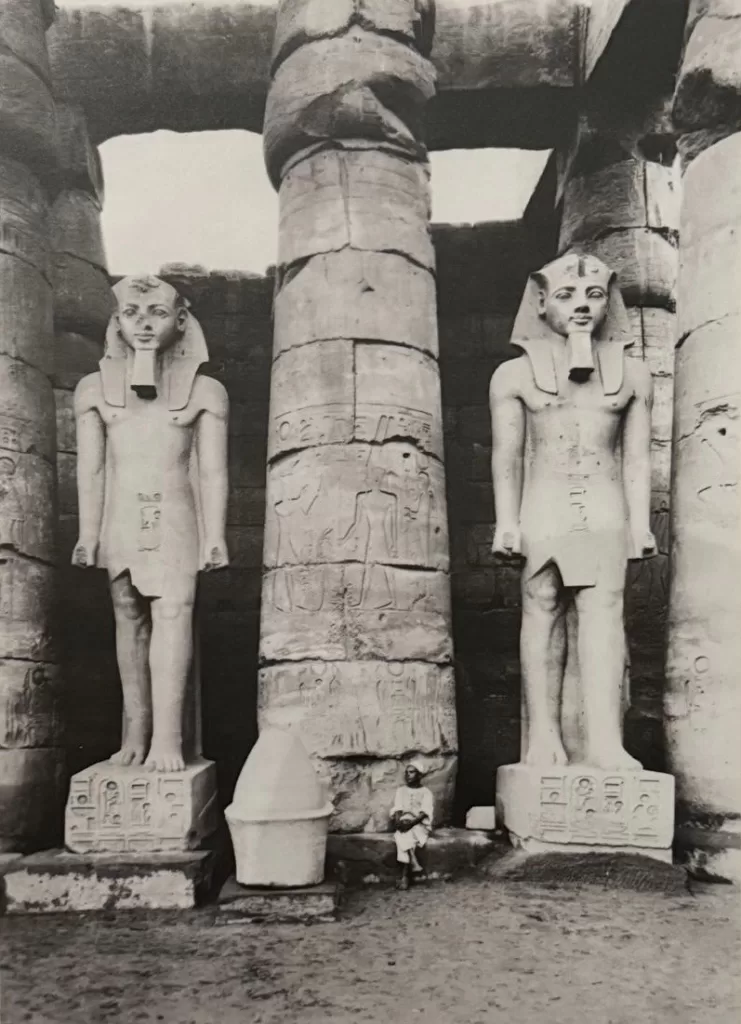
Through a series of distinguished works, the three photographers give their lenses the chance to immortalise Egypt’s landscape, monuments, and daily life, especially between 1860 and 1940.
Nevertheless, the exhibition is more than just a collection of photographs. It is a portal to an era when Egypt’s ancient wonders were seen through fresh eyes.

Museum Director Ali Abdel Haleem described the exhibition as a celebration of photography’s power to remember, learn, and connect with history in a unique way.
These images, he said, are not just art, but historical documents that preserve moments that might otherwise have faded into oblivion.
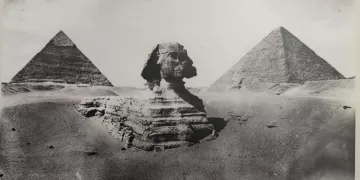
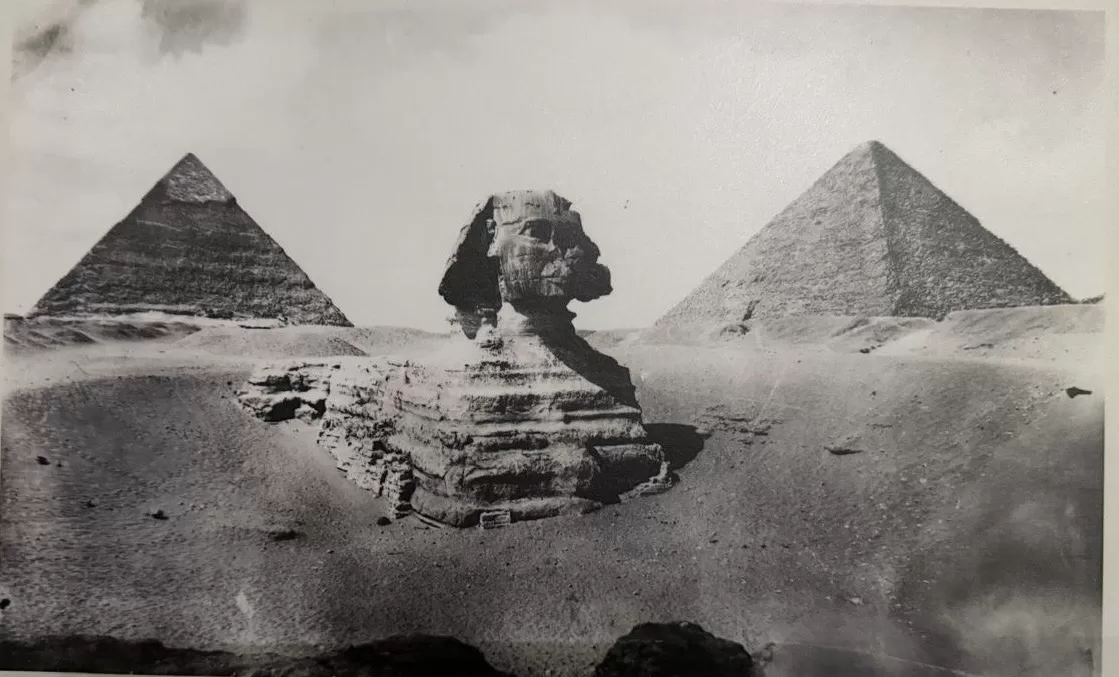
The photographs capture Egypt at a crossroads of time: temples standing untouched by modern restoration, the Sphinx half-buried in sand, and the daily rhythms of a society caught between tradition and change.
From the bustling streets of Cairo to the serene grandeur of Luxor’s temples, the works of Beato, Farazani, and Leichter offer a rare glimpse into a world that has since transformed, yet remains eternally evocative.
Each photographer featured in the exhibition brings a unique perspective to Egypt’s story.
Antonio Beato (1832–1906), an Italian-British pioneer, roamed the Mediterranean with his camera, capturing genre scenes, portraits, and architectural marvels.
Working occasionally alongside his brother Felice, Beato was among the first to bring large-scale images of the “Orient” to global audiences.
His photographs in the exhibit reveal a keen eye for composition, framing Egypt’s pyramids and Nile landscapes with a painterly sensitivity that feels both timeless and intimate.
Giovanni Farazani (1859–1931), another Italian trailblazer, arrived in Cairo in 1890 and made his mark with the iconic “Mena Photo Store” near the Mena House Hotel. His images of the Pyramids and the Sphinx, often featuring tourists or local figures posed against these monumental backdrops, are both charming and historically significant.
Farazani’s early photographs of the Sphinx, taken before its full excavation, are particularly striking, offering archaeologists and historians invaluable insights into its pre-restoration state.
Enrico Leichter (1882–1940), an Austrian-born photographer who made Egypt his home, rounds out the trio.
After settling in Cairo around 1910, Leichter established a studio in Luxor and became a key figure in documenting Egypt’s archaeological treasures.
His collaboration with Chicago House, particularly his meticulous work at the Temple of Ramesses III at Medinet Habu, produced thousands of images that remain critical records of sites now altered by time and human intervention.
Leichter’s postcards and studio portraits also capture the vibrancy of Egyptian life, from bustling markets to quiet moments by the Nile.
The exhibition is a testament to the enduring cultural bond between Egypt and Italy, brought to life through a partnership between the Egyptian Museum, the Ministry of Tourism and Antiquities, the Italian Centre for Archaeology, and the Italian Cultural Institute.
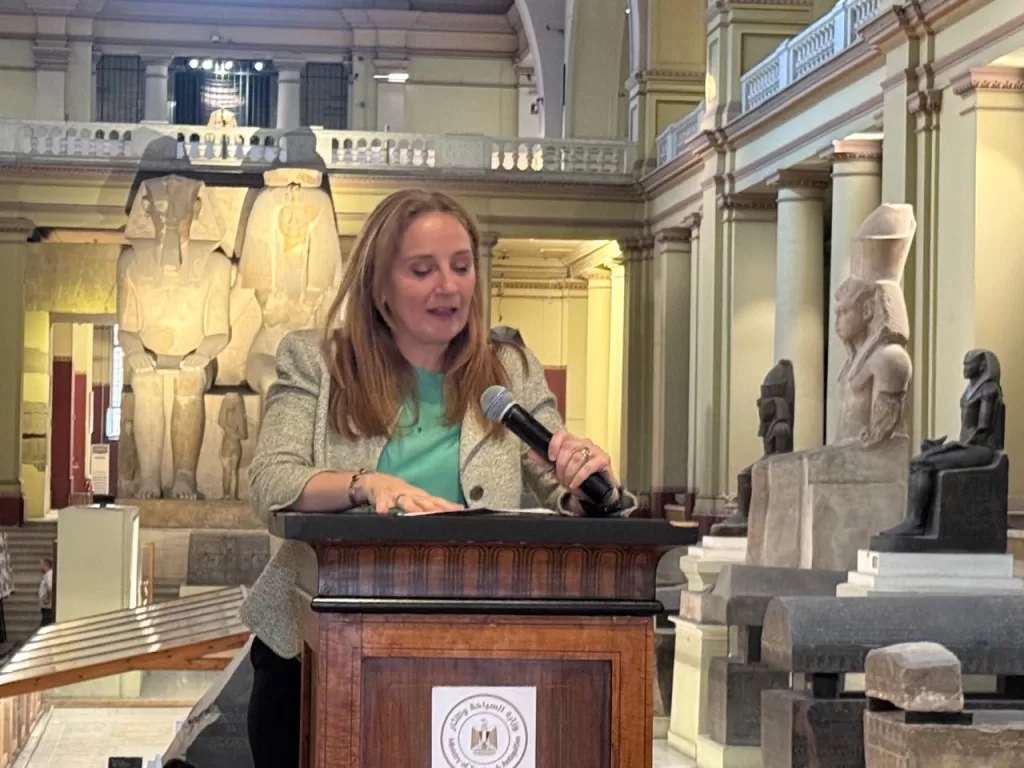
Mariela Laroccia, Deputy Italian Ambassador to Egypt, eloquently frames the exhibit as a reflection of photography’s role as a “unique bridge between art and the faithful portrayal of reality”.
She highlights how these images, captured over a century ago, continue to forge connections between creativity and truth, much like photography did when it first emerged 150 years ago.
The exhibition’s opening also marks a milestone in a broader programme of cultural exchange championed by Dr Giuseppe Cecere, who leads both the Italian Cultural Institute and the Italian Centre for Archaeology.
One of the highlights of the exhibition will be in November with the Day of Archaeology in Cairo, promising to weave together voices from culture, business, education, and technology in a celebration of shared heritage.
The story of photography itself adds a layer of depth to the exhibition.
Abdel Haleem reminded visitors of al-Hasan ibnal-Haytham, the 11th-century polymath whose ground-breaking work on optics laid the foundation for modern photography. This nod to history underscores the exhibition’s theme: photography as a tool for preserving memory and bridging cultures across centuries.
Abdel Haleem urged guests to linger over each photograph, to see not just their beauty but the history they hold.
“Each image is a window into the past,” he said, “and together they form a visual memory of Egypt that continues to inspire”.
“The exhibition is an invitation to see Egypt in a new form, through the eyes of three photographers who captured its soul over a century ago,” Abdel Haleem added.