


In near-future Brazil, where the government suddenly slashes the mandatory retirement age from 80 to 75 and herds the “surplus” elderly into remote colonies, 77-year-old Tereza refuses to go quietly.
Co-written with Tibério Azul, Murilo Hauser and Heitor Lorega, Gabriel Mascaro’s hauntingly beautiful The Blue Trail transforms this dystopian premise with a lyrical road movie twist, one of dignity and rebellion, on the human hunger to see the world from above.
This film introduces Tereza (Denise Weinberg), who scrubs blood from alligator carcasses in a canning factory-a job that keeps her barely afloat.
While state propaganda crows that “the future is for all”, this very same regime strips her of her autonomy overnight, placing her under the legal guardianship of her daughter.
Permission is needed for every decision. Rather than submit, Tereza steals away on a rickety boat, bound and determined to board an airplane for the first time in her life, to finally look down on a planet that always looked down on her.
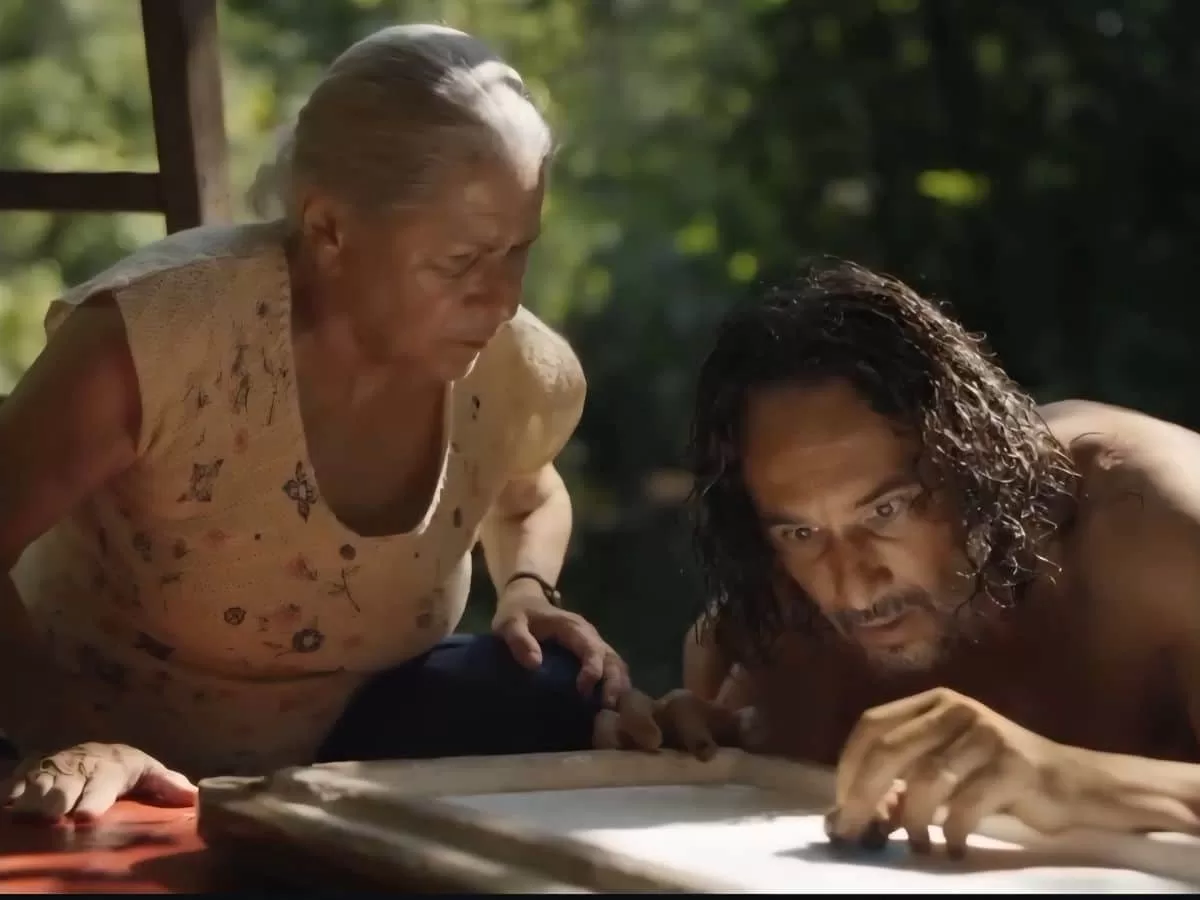
Her companion for the Amazon leg of the journey is Cadu (Rodrigo Santoro), a laconic sailor who discovers a mythical blue snail whose saliva, when dripped into the eyes, supposedly reveals the future.
What begins as gritty social realism gradually unfurls into magical realism: Mascaro never explains the visions, yet they seem as inevitable as the river current.
As such, the snail trace of light becomes literal and metaphorical guidance toward a horizon that keeps slipping from Tereza.
From the film’s unforgettable opening-a series of conveyor belts bearing slaughtered alligators that slide past Tereza’s weary face-to its dreamlike nocturnal sequences on the water, Mascaro crafts images that sear themselves into memory.
The Amazon is not a postcard paradise; it’s a living, breathing organism: huge, uncaring, and sometimes merciful.
Sound design is equally impressive: the constant drone of factory machines gives way to the lapping of water and to the distant rumble of thunder as it charts Tereza’s transition from captivity to dangerous freedom.
Already awarded with the Grand Jury Prize at Berlinale 2025, aside from many other international recognitions, The Blue Trail opened the 46th Cairo International Film Festival out of competition-a fitting opening for a film that defies categorization.
It’s at once a furious political allegory about how societies discard their elders, and a tender character study about one woman refusing to be discarded.
What raises the film beyond topical outrage is its universality.
Tereza’s terror of losing agency, her childlike wonder at the idea of flight, her stubborn attachment to small rituals of independence-all these are feelings which cross borders and generations.
Mascaro relies on silence and gesture over exposition, trusting Weinberg’s expressive face to convey whole chapters of emotion.
Where too many films about aging succumb to sentimentality, The Blue Trail is fierce, funny, and unflinchingly strange. It reminds us that the right to imagine another view, either from the window seat of a plane or in a drop of blue snail saliva, is one worth fighting for, even at 77. Seen at the 46th CIFF, with around 150 films over 11 sections and continuing until November 21, The Blue Trail stands out as one of its most urgent and poetic offerings. Miss it at your peril.

