


“In previous wars, we thought that defeat or death was the cruelest thing that could happen to someone in this country”
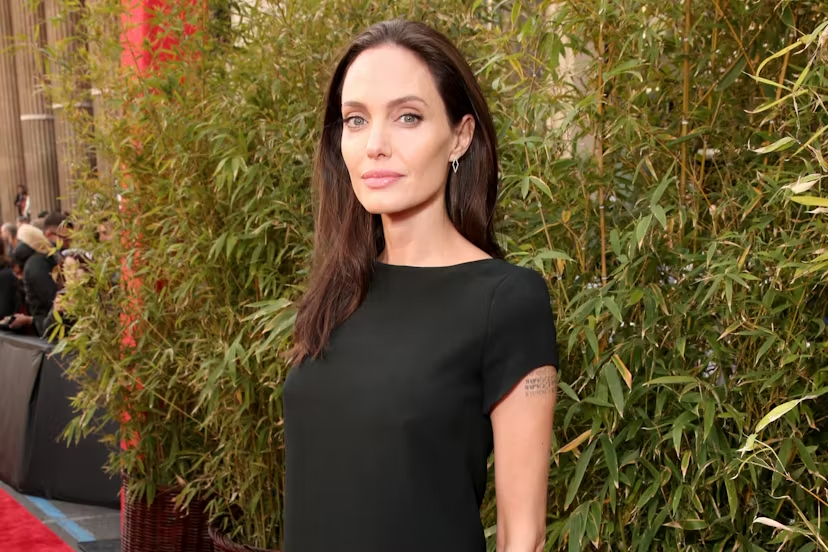
A few weeks ago, Angelina Jolie, also known for her activism, travelled to Rafah, on the border between Egypt and Gaza, during a humanitarian mission.
In this context, she recently received a letter, as she wrote in a new post on Instagram, from a 26-year-old woman from Gaza who lost her father in an artillery attack.
Now, as the actress and director explains, she lives with her family and her disabled sister in a tent in Gaza.
“She told me what daily life is like for her, her family and her neighbours. I wanted to share it. Their reality continues, even as our attention is distracted by other desperate events unfolding in the world.”
“In previous wars, we thought that defeat or death was the cruelest thing that could happen to someone in this country. We believed that this was the highest level of pain and that nothing could be worse. But in this war we discovered that there is something worse than death, to continue living without a soul, carrying a suffering as heavy as the tonnes of melted cement where our cities once stood.”
“Nearly five months after the end of the war, life in Gaza today is not just about surviving the bombardment, but about a series of debilitating details that follow us from the moment we wake up. The little things that were once normal have now become extremely difficult.”
As this young woman says, among other things, “in the overcrowded camps, the story begins in the morning, where people are awakened not by the chirping of birds, but by the constant noise of children and adults screaming as they wait in line for water. Once they get water, they carry it long distances under the hot sun or the bitter cold. Then there is another queue in front of the humanitarian aid kitchens, where the food rations are barely enough to protect a child from hunger. Many children have forgotten what school is like, what it is like to hold a pencil or draw. Their dreams have been limited to securing a liter of water or a plate of food.”

