


Attention, women of Egypt! Three important dates in March are as follows: International Women’s Day on the 8th, Egyptian Woman’s Day, the 16th, and Mother’s Day, the 21st.
This year, March began with a historic move for women judges as the Council of State announced that all female judges who were recently appointed to the State Council will sit on the judiciary with their fellows for the first time this week. In March 2021, a decision was issued to appoint 98 women judges at the State Council and the prosecution for the first time.
In fact, women’s rights have been one of the top priorities of President Abdel Fattah El Sisi since he assumed power.
The President announced the year 2017 as Woman’s Year and assigned the Ministry of Social Solidarity to coordinate with all relevant state agencies and institutions to launch a national initiative for micro-enterprises that achieve economic empowerment for women.
Egypt also has launched the National Strategy for Egyptian Women 2030, which includes political empowerment, economic empowerment, and leadership.
“In the recent years we have witnessed great positive changes in women’s status thanks to President Sisi’s keenness to improve living standards and empower women,” Rania Yehia of the National Council of Women (NCW) told The Egyptian Mail.
Egypt’s Vision 2030 embraces the national strategy to empower Egyptian women, national strategies to combat female genital mutilation and violence against women, child marriage and human rights in Egypt.
“Still, some issues like female genital mutilation and child marriage are being addressed because people in underprivileged areas still need to be made aware of the need to stamp out erroneous traditions. So we [NCW] work in the 27 Egyptian governorates to raise awareness and offer support,” Yehia added.
“In underprivileged areas there are some inherited customs and traditions that make women lose their rights because of male-dominated societies, which we are working on to change,” she added.
At political level, the last years saw an increase in the proportion of women cabinet ministers from 6 per cent in 2015 to 25 per cent in 2018 – the largest ever representation of women in the cabinet.
The number of women in the position of deputy minister was also increased from 17 per cent in 2017 to 27 per cent in 2018, and the number of women in the position of deputy governor increased by 31 per cent in 2019.
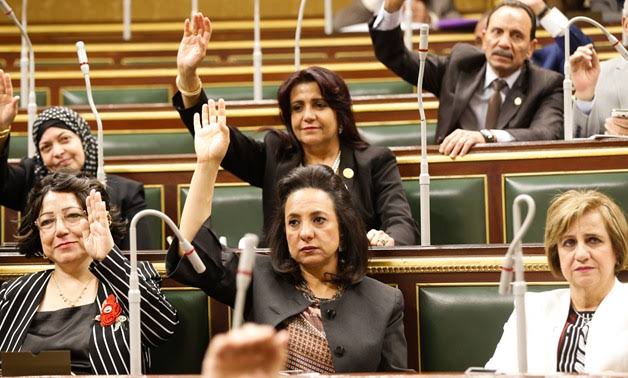
Also, the number of women in the Egyptian parliament increased from 2 per cent in 2013 to 15 per cent in 2018, which represents the biggest representation of women ever in the Egyptian parliament, since women were given the right to run for elections in 1957.
On the economic level, women’s unemployment fell to 21.4 per cent in 2018, and 16 per cent of private companies were managed by women, while 51 per cent of beneficiaries of microfinance loans were women, while 69 per cent were granted small business loans 2018.
Women working in government are at 44.5 per cent, and the percentage of women investors in the stock market reached 30 per cent.
“What we have gained in the recent years is unprecedented, but, I still want to see more female governors and I hope to see a woman as prime minister,” Yehia told the Mail.
“This year, we are waiting for more surprises and honours, which the president gave to women in all fields as he does every year,” she said.


Discussion about this post