


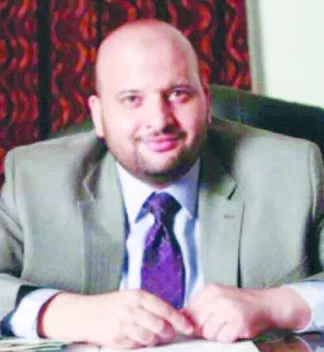
Ibrahim Negm
Every year, Eid arrives like a gentle interruption. It knocks on our doors with the scent of jasmine and the sound of takbir, asking us – demanding of us – to pause. To breathe. To remember what we are, and what we owe one another. But this year, as the crescent moon rises over a region still smoldering with conflict, displacement, and political uncertainty, the question that hangs in the air is not merely how we celebrate, but whether the very act of celebration still carries meaning.
I believe it does. More than ever, in fact.
There is a profound misunderstanding, common even among the devout, that joy in troubled times is somehow a betrayal of those who suffer. That to lay a festive table while others have none is an act of moral indifference. I have heard this argument in scholarly gatherings, in community halls, and on social media – and I understand its emotional logic. But I believe it is wrong, both theologically and practically.
Islam has never asked its faithful to perform collective grief as a substitute for collective action. The Eid celebration is not an escape from reality; it is a declaration of resilience within reality. When the companions of the Prophet celebrated the first Eids, many of them had buried loved ones, endured exile, and faced existential uncertainty. Their joy was not naivety — it was an act of faith that the future remained open, that the arc of history had not yet been fixed, and that communities which preserved their solidarity and their values could endure and rebuild.
That, I would argue, is precisely the message our region needs today.
Egypt has long understood something that younger or more volatile political cultures sometimes forget: that stability is not stagnation. That measured, patient statecraft – the kind that prioritises the preservation of institutions, the continuity of social trust, and the protection of civil order – is not passivity. It is, in fact, the most radical act of all in a region where the temptation to embrace chaos as a short-cut to change has proven so catastrophically costly.
The Arab world has learned this lesson at enormous human cost over the past decade and a half. Societies that abandoned the slow work of institutional reform in favour of spectacular rupture have, in almost every case, found themselves worse off – not better. The euphoria faded; the structures that held communities together collapsed; and the most vulnerable paid the highest price.
Eid, in this sense, is not just a religious occasion. It is an annual reminder of what a functioning society actually feels like. The act of gathering – with family, with neighbours, with community – is a rehearsal of the social contract. The obligation of zakat al-fitr, the almsgiving tied to the holiday, is a built-in mechanism of solidarity that acknowledges inequality while refusing to be paralysed by it. The exchange of greetings across sectarian, class, and generational lines is a small but meaningful assertion that what we share is more durable than what divides us.
For English-speaking observers of this region, particularly those trained in Western political frameworks, the Egyptian approach can sometimes seem frustratingly incremental. But incrementalism, properly understood, is not a failure of ambition – it is a theory of change that takes seriously the weight of history, the fragility of social fabric, and the catastrophic cost of getting it wrong. Egypt does not export revolutions. It exports, when it is at its best, a model of civilisational patience.
This is also, I would submit, a deeply Islamic idea. The Qur’an speaks repeatedly of mizan— balance, measure, proportion. Of building rather than destroying. Of reconciliation as a higher virtue than retribution.
The great Islamic jurisprudential tradition has always been suspicious of maximalist positions, preferring instead the careful weighing of benefits against harms, of the immediate against the long-term, of the individual right against the collective welfare.
In a region convulsed by maximalism – by ideologies and actors who promise everything and deliver ruin – this tradition of measured wisdom is not a relic. It is a resource.
So as the takbir echoes across Cairo’s mosques and minarets, as families gather around tables and children run through streets in new clothes, I do not see escapism. I see something more important: a people asserting, quietly but firmly, that life goes on. That the bonds of community have not been severed. That we still believe, against considerable evidence to the contrary, that tomorrow can be better than today – and that it is our responsibility, not merely our hope, to make it so.
That is the message of Eid. And in a region that has seen too much destruction, it may be the most important message of all.
Senior Advisor to the Grand Mufti of Egypt

