




In the collective consciousness of the Egyptian state, the transition from life to martyrdom is not an end, but a foundation stone upon which the sovereignty of the nation is built.
Every year on March 9, Egypt observes the Martyr’s Day, an important occasion that transcends mere military commemoration to reflect a deeply rooted national doctrine: “Victory or Martyrdom.”
The historical weight of this date is anchored in the sands of Ismailia.
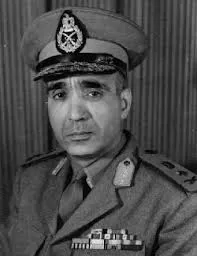
On March 9, 1969, General Abdul Munim Riad, then Chief-of-staff of the Armed Forces, was martyred during the War of Attrition.
Unlike the traditional image of high-ranking officers commanding from the rear, Riad was hit by Israeli mortar fire while personally inspecting frontline positions.
His death redefined the relationship between the Egyptian leadership and its soldiers.
By falling among his men, Riad transformed March 9 into a symbol of “The Golden General”, an embodiment of a military culture where the highest ranks share the ultimate risks of the lowest.
The narrative of the Egyptian martyr is a 5,000-year-old lineage.
From the unification campaigns of King Menes to the expulsion of the Hyksos by Ahmose I, and the strategic triumphs of Thutmose III at Megiddo, the Egyptian identity has been forged in the crucible of defence.
This legacy found modern echoes in the 1948 liberation of Palestine, where Col. Ahmed Abdel Aziz led volunteer forces with such ferocity that they reached the gates of Jerusalem before his martyrdom in Fallujah.
It was seen again in the 1956 Suez Crisis through the unyielding defiance of Navy Captain Mohammed Shakir aboard the frigate Damietta, and during the epic 100-day siege of Kebrit in 1973, led by the indomitable Maj. Ibrahim Abdeltawab.
In the last decade, the nature of the threat has shifted from conventional armies to the shadows of asymmetric warfare.
The “Martyr’s Creed” has remained the primary shield against terrorism in the Sinai Peninsula and the Western Desert.
The names of Col. Ramy Hassanein, Maj. Hazem Osama, and Col. Ahmed el-Dardiry have joined the pantheon of heroes.
El-Dardiry’s final moments wounded in both legs, yet refusing to retreat to cover his men, mirror the selfless tactical brilliance of Gen. Riad decades earlier.
This modern sacrifice by both the Armed Forces and the Police remains the essential price paid for the stability Egypt enjoys today amidst a turbulent regional landscape.
The Martyr’s Day is not solely a display of military hardware. It is a profound gesture of “Loyalty” (Al-Wafa).
Under the auspices of President Abdel Fattah El Sisi, the state has institutionalised its commitment to the families of the fallen.
Speaking to The Egyptian Gazette, Maj. Gen. Dr Nasr Salem, former head of the Reconnaissance Service, noted that the annual ceremony serves two purposes: it provides a “message of deterrence” to those who threaten national security, and it offers a “promise of remembrance” to the families.
The state’s message is clear: those who defend the nation will never be relegated to the footnotes of history.
As the sun sets over the Nile this March 9, the silence of the commemoration speaks louder than any anthem.
The Martyr’s Day serves as a strong, professional reminder that Egypt’s resilience is not accidental. It is a type of peace bought with the lives of those who believed that the survival of the state was more precious than their own breath.
In honouring them, Egypt does more than look back. It secures its path forward, ensuring that the legacy of the fallen remains the heartbeat of the nation’s future.

