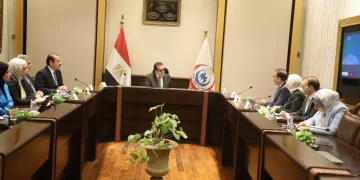
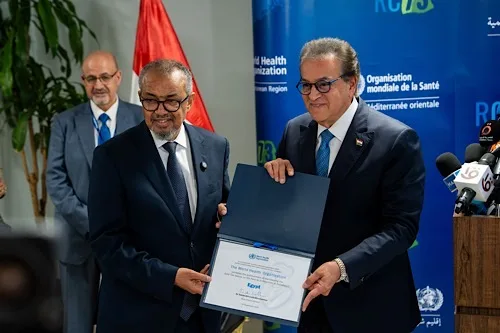







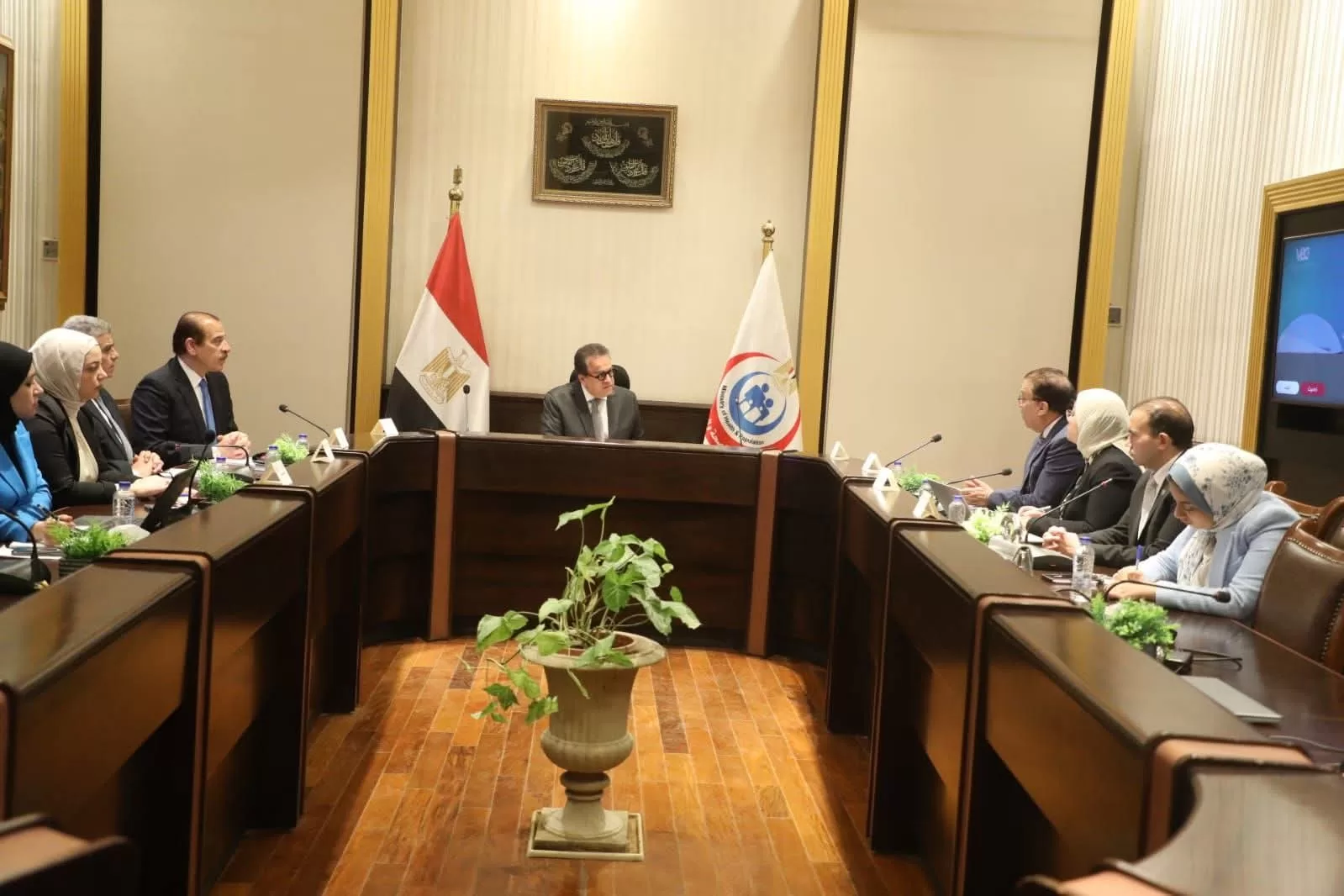
Egypt’s Minister of Health and Population Khaled Abdel Ghaffar met on Monday with Magdy El-Sayed, chief executive of the Vaccine and Biotechnology City (VBC), to review progress on the flagship national project and outline next steps for launching the VBC Academy- part of a broader push to localise biotechnology industries and bolster Egypt’s health security.
The meeting also reviewed construction progress. The city is being built over 115,000 square meters and includes 32 buildings and facilities. The first phase is fully complete, while infrastructure works have reached around 90 per cent.
The project includes three factories for human vaccines and three for veterinary vaccines. It also features advanced research and development labs and a logistics hub for storage.
Minister Abdel Ghaffar said the Vaccine City is one of Egypt’s most ambitious national projects. It aims to boost local vaccine manufacturing, achieve self-sufficiency, and support exports to regional and global markets.
Production capacity is expected to reach 140 million human doses annually by 2030, along with 5.5 billion veterinary doses. By 2040, this is projected to rise to 690 million human doses and 11 billion veterinary doses. This would allow Egypt to cover around 16 per cent of Africa’s vaccine needs, the minister elaborated.
He added that the project marks a major shift toward self-sufficiency. It will also support exports to more than 60 countries, strengthening Egypt’s position as a regional hub for vaccine production.
The meeting also discussed expanding co-operation with African countries and international partners.
The role of the VBC Academy was also highlighted. It is set to become a regional center of excellence in vaccine manufacturing and biotechnology. The academy will train specialised professionals to international standards, support scientific research, and link it to industrial applications.

