



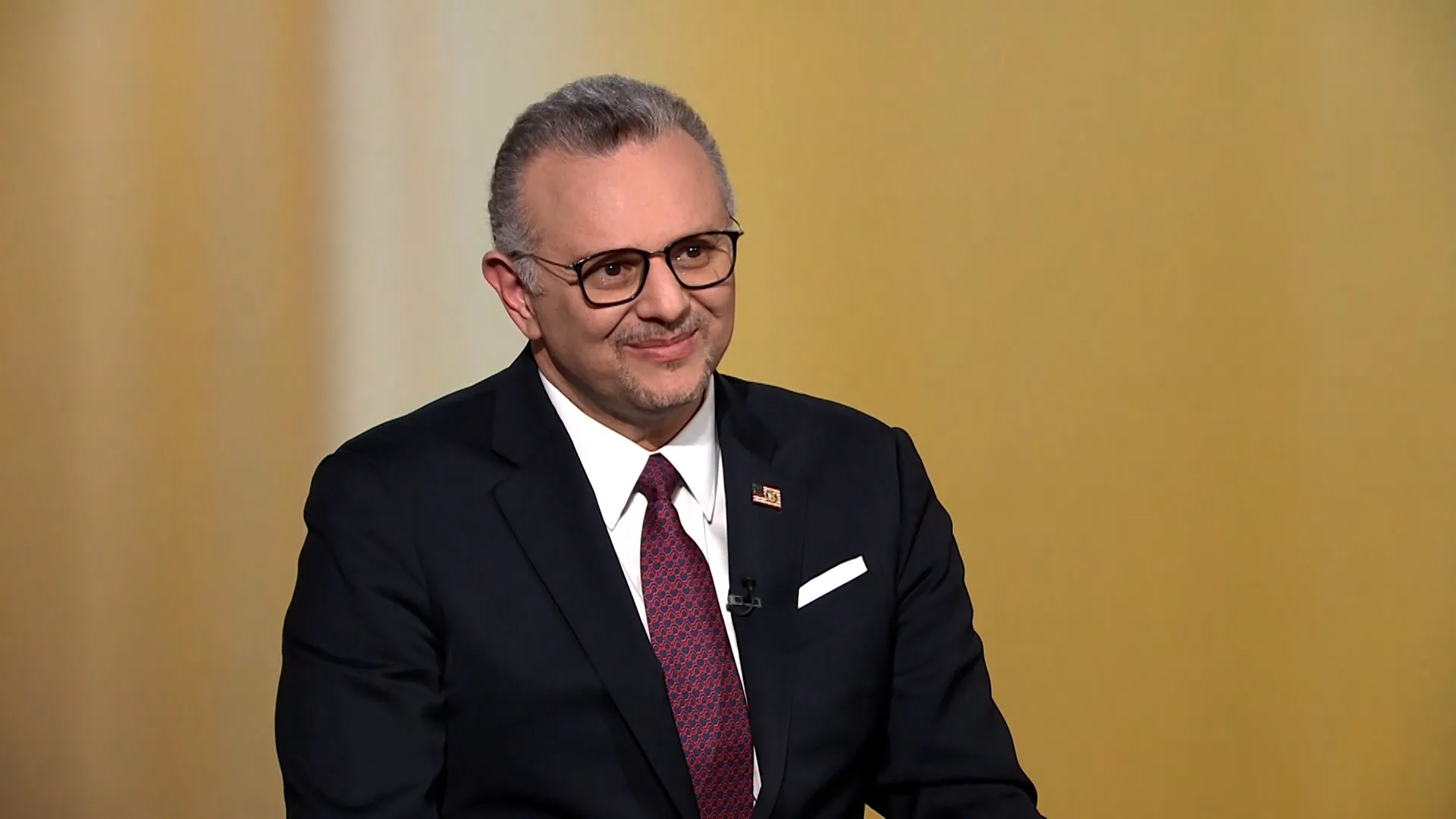
Massad Boulos, the senior adviser to US President Donald Trump on Arab and African affairs, has described relations between the United States and Egypt under Presidents Donald Trump and Abdel Fattah El Sisi as a strong and solid partnership extending beyond the Middle East and the Horn of Africa.
Speaking to the MENA news agency following talks with Badr Abdelatty, the Minister of Foreign Affairs, International Cooperation and Egyptian Expatriates, Boulos was asked about the recent momentum in US–Egyptian relations. He was also questioned on what the latest summit between the two leaders revealed about the special importance the Trump administration attaches to Egypt’s role within the emerging global order.
Boulos said President Trump had articulated this relationship clearly over the past week, describing it as a highly distinguished and robust partnership. He also noted the longstanding personal relationship Trump shares with President Sisi, which is characterised by mutual respect and friendship.
Over the past nine months, Presidents Trump and Sisi have held three bilateral summit meetings: the first in Sharm El Sheikh last October, the second in January, and the third only a few days ago, Boulos noted. He added that Trump has held a similar number of meetings with only a very limited number of world leaders, reflecting the importance of the relationship alongside numerous meetings between the foreign ministers and senior officials of both nations.
Asked about prospects for major developments in Libya, Boulos said there is cautious optimism, as both eastern and western Libyan parties have, for the first time, begun converging on a number of issues. He pointed to tangible progress on the ground, including joint military exercises held two months ago and the adoption of a unified national budget for the first time in more than 13 years. Such steps could pave the way towards unifying Libya’s institutions, restoring national cohesion, and helping the Libyan people recover after years of hardship, he added.
In remarks to diplomatic correspondents after meeting Abdelatty, Boulos described his relationship with the Egyptian foreign minister as excellent and their discussions as characteristically productive. He thanked President Sisi for the strong and advancing partnership, referencing the recent summit between Sisi and Trump in France on the sidelines of the G7 Summit, where they discussed a range of regional and international issues of mutual interest.
Boulos said Saturday’s talks covered several regional files, foremost among them Iran, expressing hope that negotiations, which started in a positive atmosphere, would lead to the desired solutions. Discussions also addressed developments in Libya, Sudan, and other regional issues.
Regarding the Nile, Boulos noted that President Trump had raised the matter clearly during his bilateral meeting with President Sisi, stressing that the United States recognises the importance of the issue for Egypt and the wider region. “Under President Trump’s directives, we are working on this issue,” Boulos said, expressing hope that a satisfactory solution could be reached.
Asked whether Washington had proposed or begun implementing specific steps regarding the Ethiopian dam dispute, which Egypt considers unresolved and problematic, Boulos said he had nothing to add to President Trump’s previous statements. “President Trump was very clear. We are working within the framework he outlined, without going into further details,” he said.
Meanwhile, Abdelatty said discussions on Sudan figured prominently in his talks with Boulos, underscoring close Egyptian–American coordination on regional issues. Welcoming Boulos to Egypt, Abdelatty praised the positive and constructive meetings held over the past two days, saying they reflected the strategic nature of Egyptian–US relations and the distinguished ties between the two presidents.
The foreign minister commended what he described as President Trump’s wisdom, courage, and leadership in addressing key regional issues. These included the Gaza file, efforts to end the war in the enclave, and advancing Trump’s peace plan through the implementation of its second phase. He also praised Trump’s decision to move forward with signing the memorandum of understanding with Iran and efforts aimed at ending the conflict and advancing to the next phase of negotiations.
Abdelatty said contacts between the two sides continue at all levels, noting that he remains in regular communication with US Secretary of State Marco Rubio, Special Envoy Steve Witkoff, and Boulos. He stressed that there is full appreciation within the US administration for Egypt’s role, its leadership, and President Sisi’s wisdom, as well as Egypt’s efforts alongside regional partners to help facilitate the memorandum of understanding.
Egypt will continue supporting the negotiations and President Trump’s vision, whether regarding the Palestinian issue, developments in Gaza, or efforts to reach a final agreement between the United States and Iran, Abdelatti said, adding that Cairo highly values Washington’s constructive role and President Trump’s leadership.
Turning to Sudan, Abdelatti said the issue was discussed extensively both during Saturday’s talks and in previous meetings, alongside other key files including water security, developments in the Horn of Africa, Libya, and regional stability. He noted that he had met Sudan’s foreign minister on Friday and expressed hope for progress towards a humanitarian truce that could pave the way for a permanent ceasefire and a comprehensive, Sudanese-owned political process free from external interference.
“We are engaging with the United States, which plays a pivotal role in this file, whether through the Quartet mechanism or other bilateral frameworks,” Abdelatti said. He stressed that Egypt supports and coordinates closely with the US on all aspects of the Sudanese issue to help end the humanitarian tragedy facing its people.
Abdelatti added that Egypt and the United States fully agree on supporting Sudan’s national institutions, as well as preserving the country’s unity and territorial integrity. “The partition of Sudan is unacceptable to both the United States and Egypt,” he affirmed.

