


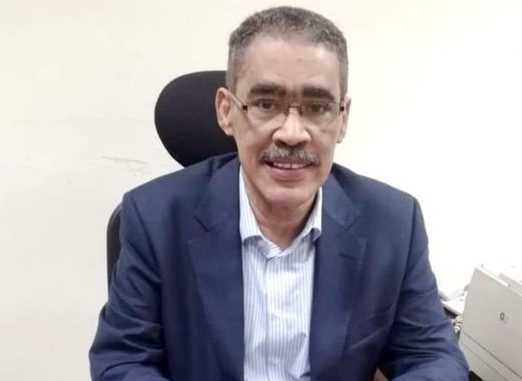
Egypt’s State Information Service (SIS) Chief Diaa Rashwan said Tuesday that the US plan attributed to President Donald Trump for ending the Gaza war has undergone major changes, shifting from an initial draft shaped by Israeli Prime Minister Benjamin Netanyahu to a more balanced framework influenced by Arab and Islamic pressure.
Speaking to Studio Extra on Extra News channel, Rashwan said the current version has 20 points, down from 21 in earlier drafts, but still lacks clear timelines or mechanisms for implementation.
“It has attracted more attention from Western analysts than from official Arab circles because it raises questions rather than answers,” he noted.
Rashwan described two phases: before the 9 September Israeli strike on Qatar and after the Arab-Islamic summit held in Doha in response.
He said the first draft “bore Netanyahu’s fingerprints” and showed little grasp of Palestinian realities.
As the Doha summit marked a turning point, President Abdel-Fattah El-Sisi’s strong speech at the summit has yet to elicit a response from Israel.
According to Rashwan, Arab unity and the threat of reconsidering the Abraham Accords forced Washington to change course.
“Trump realized that what he was hearing through Netanyahu was not the whole truth, so he opened a direct channel with Arab and Islamic states, something the US does not usually do,” Rashwan said.
After a meeting with eight countries, five Arab and three Islamic, Trump surprised observers by declaring that he “will not allow the annexation of the West Bank.”
Rashwan described this as a direct reflection of Arab influence on US policy, noting that new ideas have since appeared in the plan.
On Hamas, Rashwan said the plan’s clauses mirror Netanyahu’s war goals: dismantling Hamas’s military capabilities, retrieving captives, stripping Gaza of weapons, and placing the territory under Israeli security control.
He added that the proposal envisions an interim civilian administration unlinked to Hamas or the Palestinian Authority, managed by a technocratic committee under an international “Peace Council.”
Some provisions even offer pardons to Hamas members who disarm and safe passage for those who leave Gaza, though Rashwan questioned the feasibility of these measures, citing the lack of enforcement mechanisms or guarantees.
On the humanitarian side, Rashwan praised the resilience of Palestinians, saying they have endured more than two years of “unprecedented brutality.”
“I bow to these people, not just tipping my hat, but out of deep respect for their determination and strength,” he said, arguing that Palestinian steadfastness, combined with Arab unity, has drawn global attention to Israel’s actions.
“Netanyahu’s biggest mistake was attacking Doha, the mediator. By doing so, he united the Arabs against him. Fears of escalation and threats to Gulf stability forced everyone to recalculate their positions,” he added.
Rashwan also highlighted Egypt’s role in preventing mass displacement. “Without Egypt’s stance, Palestinians would have been uprooted in the first weeks of the assault. Egypt played a decisive role in protecting its rights and preserving stability.”
He drew particular attention to the Right of Return included in the plan, citing Article 12, which affirms that no one will be forced to leave Gaza and that anyone who does retains the right to return.
“This is not just a slogan; it is the essence of the Palestinian cause. And in Israel, even mentioning the Right of Return is considered taboo, a threat to the very existence of the state,” he said.
Rashwan noted that this conflict has lasted more than 125 years and will not be resolved with a knockout blow.
“In my view, Netanyahu will seize on Trump’s plan and turn it into a political victory at home. He will personally welcome released prisoners, stage a grand scene, push the extremist right out of his coalition, and align with the traditional right in a temporary electoral alliance,” Rashwan concluded.

