






Sarah Saad
In the quiet moments of family life, he braided his daughters’ hair and taught them the Quran.
On the battlefield, he stood as an unshakable protector of his homeland.
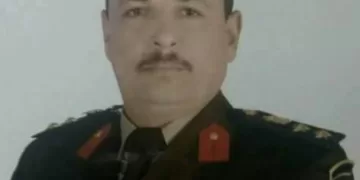
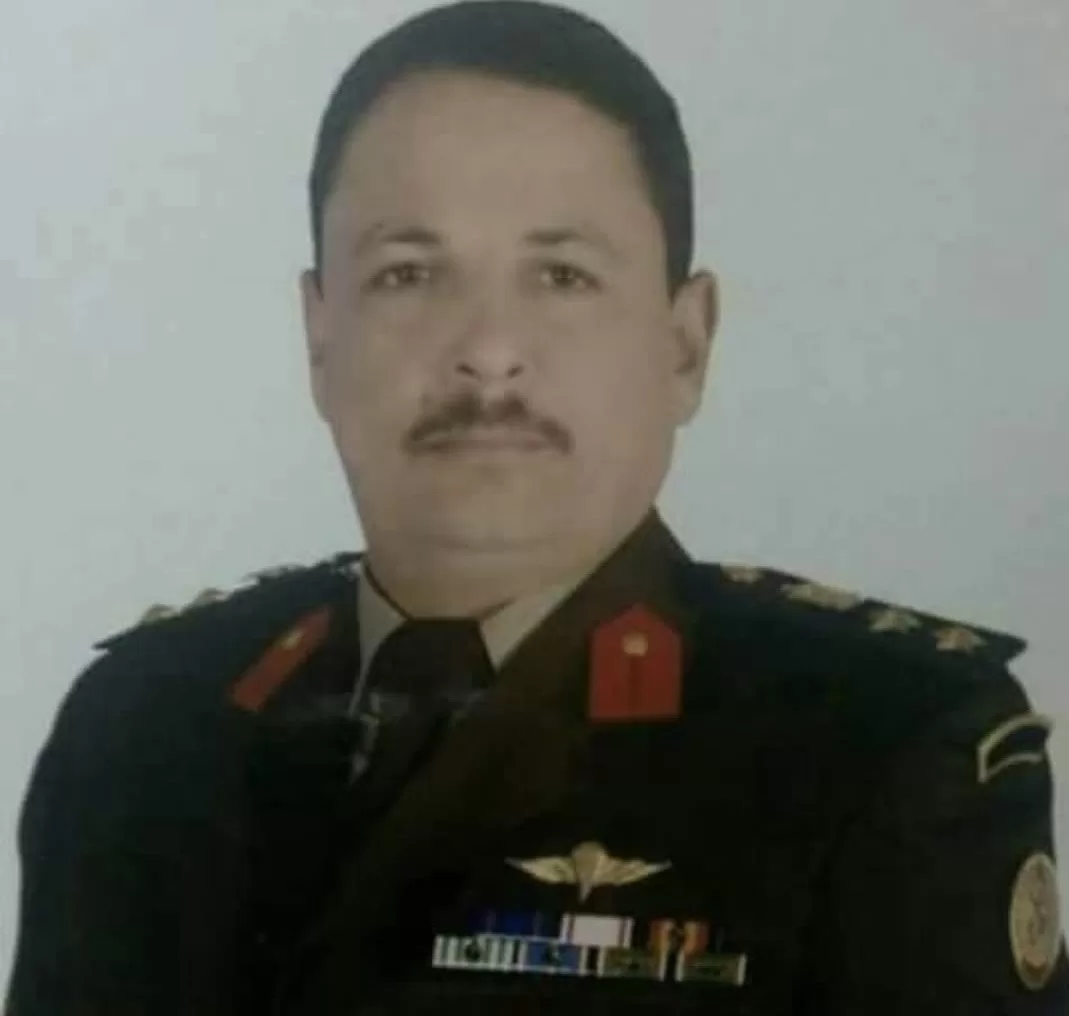
Brig. Gen. Ahmed Abdel Nabi Bayoumi, commander of the 101st Border Guard Battalion in North Sinai, was not just a soldier – he was a father, a mentor, and a man of unwavering faith, his wife, Eng. Marwa Mahmoud Qansouh said, recalling the memories of a man whose generosity knew no bounds.
For 21 years, he walked the rugged terrain of Sinai, forging bonds with its people and leading with a heart that knew no fear, Qansouh said, adding that he viewed his duty not just as a mission, but as a sacred calling.
“He was not just a commander, but a trusted figure among the local tribes. He believed in diplomacy, in peace, in solving conflicts rather than fueling them,” Qansouh said of Brig. Gen. Abdel Nabi.
She also recalls moments that now feel like echoes of fate. When a police ambush near his battalion was under attack during the Operation Martyrs’ Right, he ordered securing his battalion members first, ensuring their safety before stepping into the line of fire.
“Why are you crying?” he asked me when I shed tears for fallen soldiers.
“I cry for the mothers whose hearts are broken, the children left orphaned,” she replied.
His response was simple yet profound: “Would you have me lock our daughters in safety while others fight in the cold? If I do not protect them, who will do this?”
She further noted that I pleaded with him to leave North Sinai, as did his sisters, but his answer was always the same – duty came first.
“If everyone leaves their post, who will protect the borders?” he asked. “God sees everything. I fear Him in all I do.” Even as threats loomed, his devotion never wavered. “You are raising four daughters,” she reminded him, hoping he would reconsider. “Neither I nor you raise them,” he replied. “God raises our daughters, just as He entrusted me with my soldiers. Their families do not know what happens here, but I do. If I do not protect them, how can I protect my own?”
Before leaving for his final mission, he stood with his daughters in front of the Military College and pointed toward the illuminated building. “This is where men are born,” he told them, the pride in his voice unmistakable.
Days later, he met his fate, not with fear, but with the certainty of a man who had fulfilled his duty. “Who dies a martyr?” he had once asked. “Look at Khalid ibn al-Walid – he fought in one battle after another but died in bed. After 21 years in Sinai, I want to die among my soldiers.”
Recalling the moments when they first met, Qansouh said “Despite my hesitation when he proposed – as I was occupied with the final-year engineering project – his deep kindness, confidence, and unwavering love won me over”.
Their journey together was one of warmth, resilience, and shared faith. He was not only a husband but also a father whose love knew no bounds.
Jana, Nada, Sama, and Lama were the centre of his world. He learned to braid their hair, spent his rare moments of rest teaching them the Holy Quran, and instilled in them the values he held dear.
The month of Ramadan was sacred to him, not only as a time of faith but as a season of family.

