


By Mohamed Zain
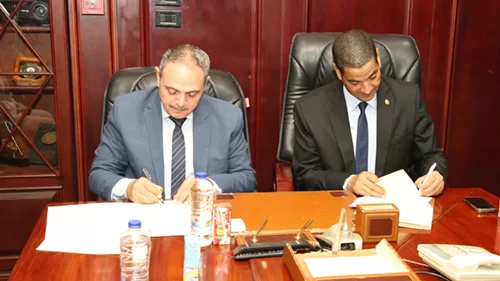
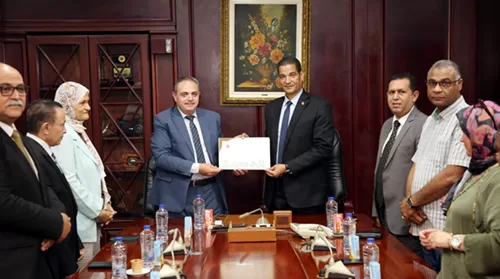
The Egyptian Gazette and the Sadat Academy for Management Sciences signed a co-operation protocol to open up fresh career prospects for students of the Faculty of Languages and Translation at the Academy through providing hands on professional training opportunities in the newspaper.
The protocol marks the beginning of fruitful co-operation between the two sides, It serves as bridge between academic studies and newsrooms, providing students with an integrated learning environment that combines theoretical knowledge and practical experience.
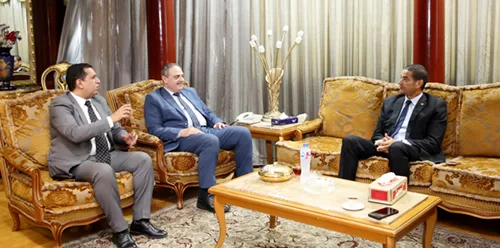
The signing ceremony was attended by Board Chairman of the Dar Al-Tahrir Printing and Publishing Tarek Lotfy, President of the Sadat Academy Mohamed Saleh Hashim, and The Editor-in-Chief of the Egyptian Gazette Mohamed Fahmy.
Attendees also included Dean of the Faculty of Languages and Translation Hala Tawfiq Maklad, Academy’s Secretary General Salah Fathy El-Sawy and Head of the Central Administration Mamdouh Abouraya.
Attending from Dar Al-Tahrir, General Manager Adel Al-Saadawi, Board Members Iman Ibrahim, who is also Director of the Training Centre, and Head of the Education Section Mohamed Zain Eddin.
This collaboration offers a unique opportunity for the college students to develop their skills in press translation and professional English writing, as well as learning about the daily work mechanisms in a newsroom, said The Gazette’s Chief Mohamed Fahmy.
They will also participate actively in producing journalistic content that addresses local and international audiences, Fahmy added.
Training offers an opportunity for students to interact directly with professional journalists and editors, which will help hone their expertise and boost self-confidence before they join the labour market, he added.
They will also understand the dynamics of media work, in light of the newspaper’s broad audience, both local and foreigners.
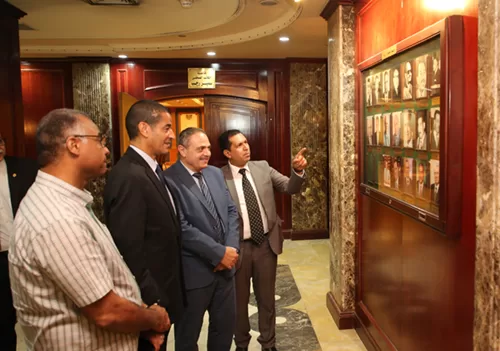
Officials from both sides affirmed that the co-operation is a successful model for how educational institutions and media organisations should integrate, to serve students and support the development of a new generation of competitive media professionals.
The two sides voiced hope that the protocol will function as the beginning of a series of joint initiatives to benefit students, support their abilities, and connect them to the labour market through practical training within institutions with a long history and influence.

