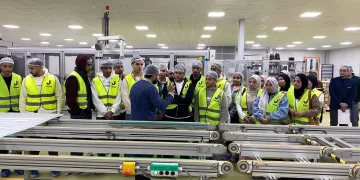






Minister of Higher Education and Scientific Research, Abdelaziz Konsowa, has reviewed a report on the performance of Egypt’s technological universities, reaffirming that technological education is a key pillar in preparing skilled human resources aligned with labour market demands.
The report, presented by Ahmed el-Gioushy, Secretary-General of the Supreme Council for Technological Education, on Friday highlighted recent progress in the sector and the growing role of technological universities in supporting development priorities.
Konsowa stressed that technological education represents a vital pathway for equipping graduates with the skills required to meet the needs of local, regional, and international labour markets. He noted that these universities are fundamentally based on the application and utilisation of technology in serving society, while providing students with practical skills, expertise, and competencies across a wide range of disciplines.
The minister added that technological universities currently offer a variety of modern academic programmes tailored to the needs of industry and society. Egypt now has 14 technological universities, including both public institutions and those established in partnership with the private sector.
He also reviewed key specialisations offered by these universities, which total 29 fields, spanning areas such as food manufacturing technology, electrical and electronic technology, mechatronics, renewable energy, petroleum technology, artificial intelligence, cybersecurity, data science, healthcare technology, tourism and hospitality services, and pharmaceutical industries. Overall, technological universities provide 68 academic programmes.
For his part, El-Gioushy noted that academic programmes are designed based on in-depth studies of labour market needs. He added that technological universities are equipped with advanced laboratories and workshops that follow the latest global standards, ensuring a comprehensive education system focused on practical and applied training through partnerships with industrial and production institutions.
