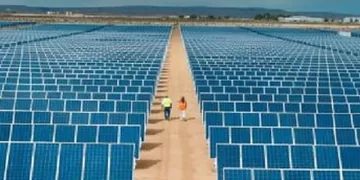









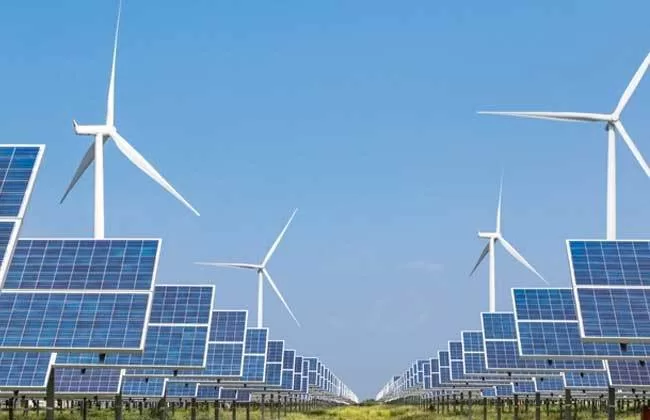
Egypt has made progress in expanding the use of solar energy in homes, factories, and new urban communities.
This comes in line with a broad plan by the government to rationalise electricity and fuel consumption with the chief aim of easing pressure on public finance.
Since the start of the US-Israeli war on Iran, the government has taken a raft of measures to confront the repercussions of the war on energy supply chains.
Prime Minister Moustafa Madbouli announced, during a recent Central Crisis Management Committee meeting, the launch of a stimulus initiative for factories and homes to speed up the transition to solar energy.
The state, he said, attaches paramount importance to this critical file.
“The government is finalising a raft of incentives to encourage solar adoption for both industrial and residential sectors,” the prime minister said.
Egypt aims to achieve a 45 per cent renewable energy share by 2028, ahead of the previous 2030 target, as part of a comprehensive national strategy to achieve energy security and sustainability, according to a statement by the Ministry of Electricity and Renewable Energy last week.
Egypt has allocated around LE136.3 billion to the electricity and renewable energy sector in its 2025-2026 development plan, nearly double the 72.6 billion pounds set aside last year, Minister of Electricity Mahmoud Esmat said.
The minister revealed that the state is taking measures to cut down dependence on fuel and maximise the benefit from renewable energy by obligating some facilities, especially consumer-intensive ones, to install solar panels.
“New factories have to rely on solar energy for 25 per cent of their power consumption,” Minister Esmat said in recent press remarks.
Coordination, he added, has been made with the Ministry of Industry on this connection.
The minister noted that installing solar panels is a condition for the issuance of the necessary licences for new factories.
Economist Hanan Ramsis underscored the importance of increasing dependence on renewable energy.
“Renewable energy is becoming indispensable in the light of global economic conditions,” she told The Gazette.
Meanwhile, Egypt makes tremendous efforts to expand the cross-border interconnection capacity to 3,900 megawatts by the end of 2026, up from current 780 MW.
Ramsis referred to key power interconnection projects with some neighbouring countries that include upgraded links with Jordan, Libya, and Sudan, the Saudi interconnection, and a 1,650-km undersea cable with Greece and Cyprus.
The government also establishes a number of solar energy projects, including the ‘Benban Solar Power Plant’, 35km northwest of Aswan.
The project is the largest in Africa and the Middle East, with a production capacity of 2,000 megawatts of electricity.
Egypt has also developed ‘Abydos 1 Solar PV Park’ project in Kom Ombo, Aswan, which includes more than one million solar cells, with a production capacity of 500 megawatts of electricity.
Energy expert Gamal al-Qalyoubi said the government attaches due importance to completing clean energy projects on schedule.
“It is also committed to fulfilling its financial obligations to foreign partners to expedite these projects,” a local newspaper quoted him as saying.
He cited encouragement by the government for factories to increase reliance on renewable energy resources.
Energy-intensive industries, al-Qalyoubi said, must have clear plans for the use of renewable energy, which will reduce the fuel used in electricity production.
Hafez Salmawy, an energy engineering professor at Zagazig University, expected investment in distributed solar systems for factories, industrial zones and new cities to stimulate local manufacturing and private-sector participation in the clean-energy sector.
“Spreading a culture of solar and clean energy use has become necessary in the light of the current turmoil in energy prices and supplies,” he told this newspaper.
Increased reliance on renewable energy, he added, would help stabilise electricity costs for consumers in the longer term.

