





Egypt’s Minister of Industry Khaled Hashem said on Thursday that boosting pharmaceutical security is a pillar of Egypt’s national security amid rapidly evolving regional dynamics.
He also underscored that the government is committed to supporting and developing the pharmaceutical industry by enhancing production efficiency, adopting advanced technologies, and facilitating export procedures in coordination with relevant authorities to ensure sustainable production, meet domestic market needs, and enhance the competitiveness of Egyptian products internationally.
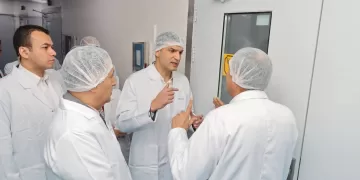
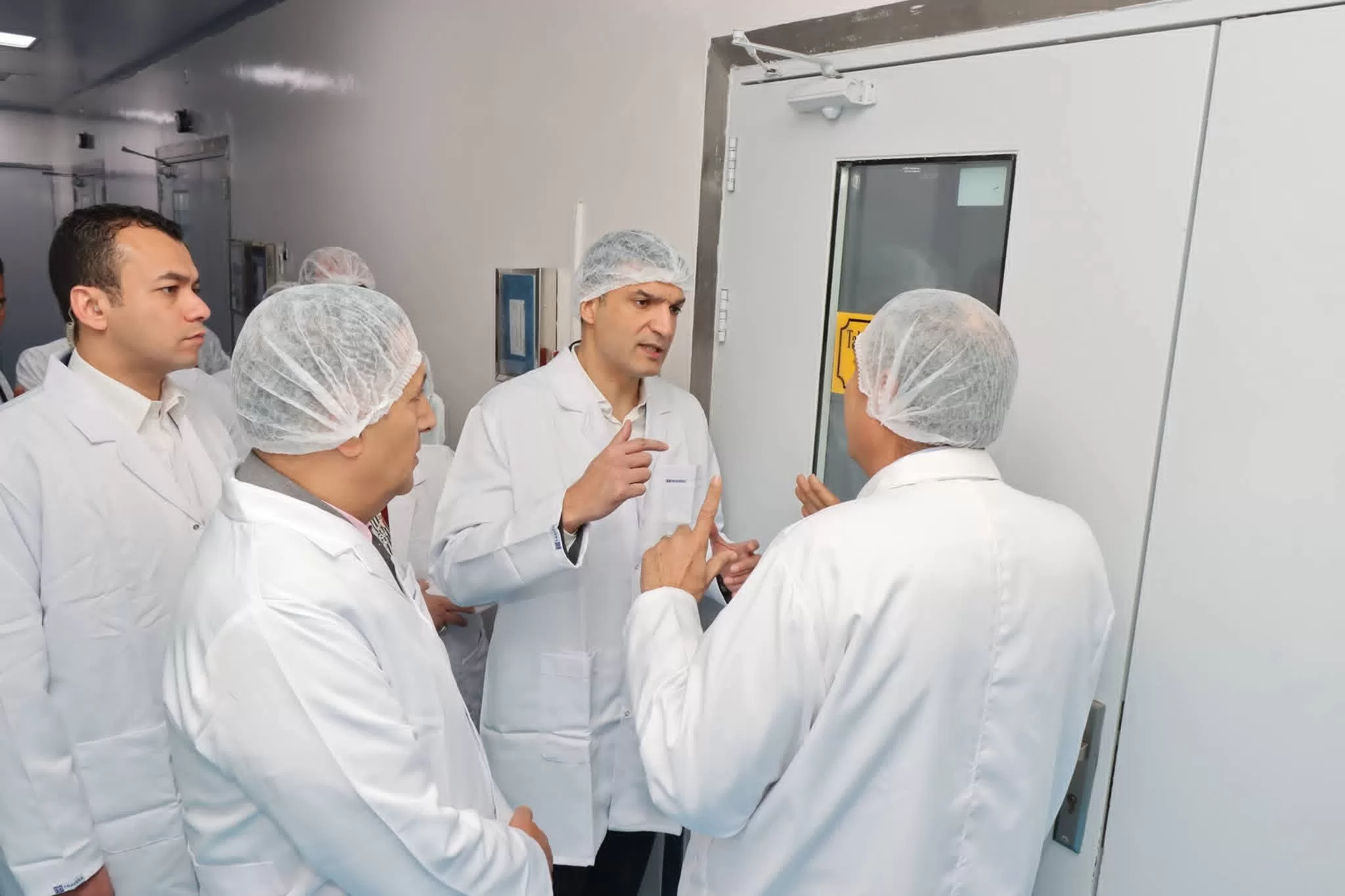
Part of this commitment, the minister, accompanied by Qalyubia Governor Hossam Abdel Fattah, inspected five pharmaceutical factories in Obour Industrial City as part of field visits to monitor production processes, assess manufacturers’ needs, and explore opportunities to support and develop the sector, improve local supply, and increase exports.
Several senior officials from the Ministry of Industry joined the tour.
The visit began at Unipharma, a 10,000-square-metre global company with a capital of LE100 million, 60 per cent local content, over 500 jobs, and LE 27.8 million in exports in 2025.
The minister toured the tablet and powder production departments, central packaging hall, and expansion area, reviewing sterilisation protocols and multi-stage quality control aligned with WHO standards, the ministry said in a statement.
At Amoun Pharmaceuticals, covering 58,000 square metres with LE 9 billion investments, 30 per cent local content, 2,700 jobs, and LE850 million exports in 2025, the minister inspected production lines for liquids and effervescent tablets, and reviewed the facility’s international-standard quality systems.
Markeryl Pharmaceuticals, 11,500 square metres with LE 350 million capital, 45 per cent local content, 2,200 employees, and LE 814 million exports, was visited next.
It produces suppositories and hormonal tablets, holding EU-GMP and Saudi FDA certifications.
Orchidia Pharmaceutical Industries spans 6,000 square metres with LE500 million capital, total investments of LE2.07 billion, 80 per cent local content, 630 jobs, and LE 620 million exports; the Minister inspected eye-drop and ointment production lines.
The tour concluded at Jamjoom Pharma, 15,500 square metres with $70 million investments, 73 million packages annually, and 350 jobs.
The minister reviewed production lines and quality standards, and confirmed that the ministry would facilitate export approvals, and accelerate customs and certification processes.
He also called for reducing bureaucratic procedures, to ensure the smooth flow of export operations and enhance the ability of factories to efficiently meet external demands.

