


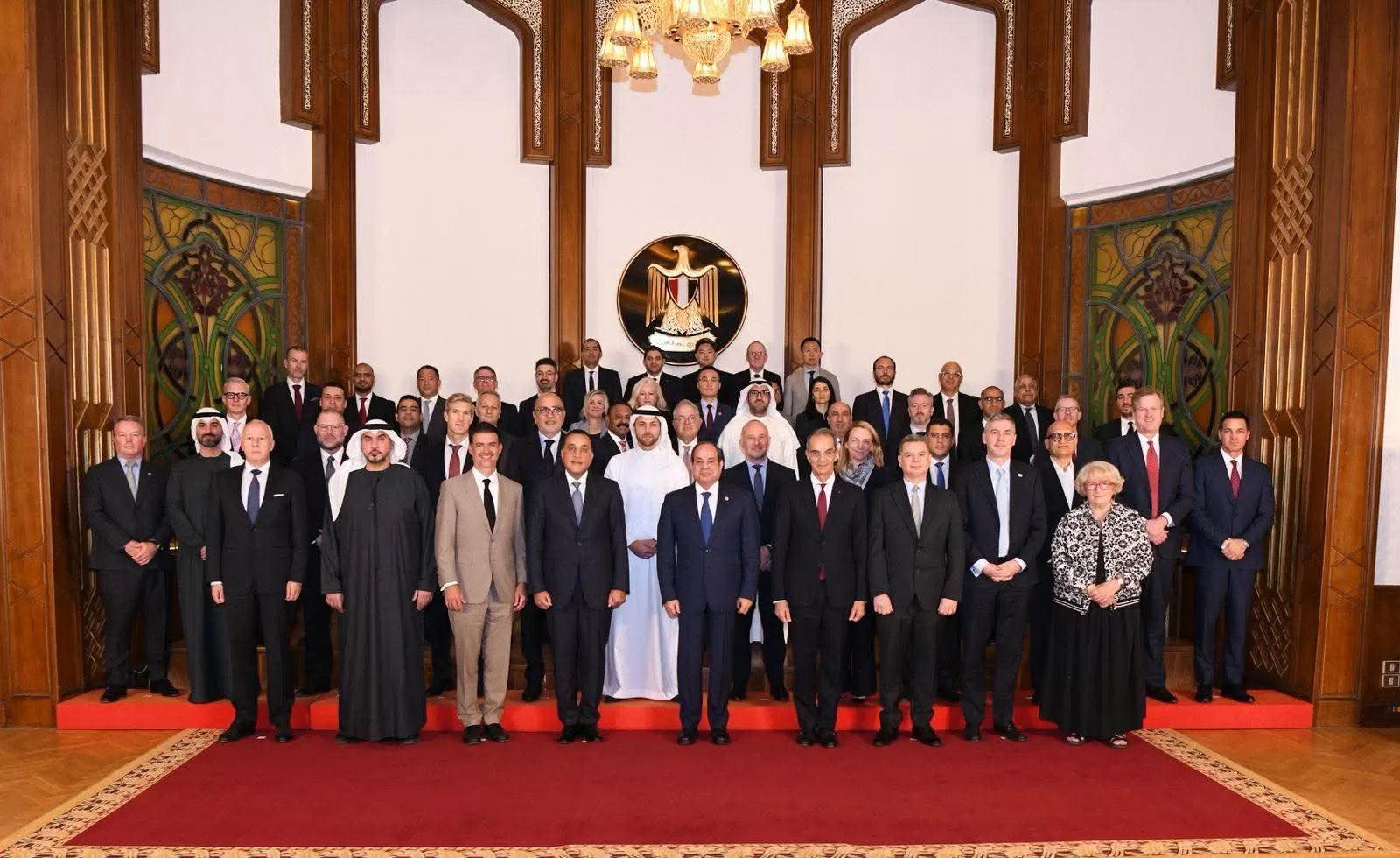
President: Hosting Int’l Outsourcing Summit reflects trust in Egypt’s CIT sector
‘Building competitive, future-ready economy target of national strategy’
President Abdel Fattah El Sisi has affirmed Egypt’s unwavering commitment to strengthening its position as a leading regional and global hub for communications, information technology, and outsourcing services.
The president made these remarks during a meeting he initiated on Monday with the heads and senior executives of 52 major Egyptian and international companies operating in the outsourcing industry, held on the sidelines of the Global Outsourcing Summit, hosted by Egypt November 9-10, 2025, Presidency Spokesman Ambassador Mohamed el-Shennawy said.
Prime Minister Dr Mostafa Madbouli and Minister of Communications and Information Technology Dr Amr Talaat attended the meeting.
At the start of the meeting, President Sisi welcomed the company leaders and expressed appreciation for their confidence in Egypt’s communications and information technology sector. This confidence, the President noted, was clearly demonstrated by the signing of 55 new agreements with the Ministry of Communications and Information Technology, paving the way for the creation of 75,000 new job opportunities over the next three years.
In his remarks, President Sisi emphasized that Egypt’s hosting of the Global Outsourcing Summit reflects the international community’s trust in the capabilities of the Egyptian state and its strong commitment to building a competitive, future-ready digital economy.
He further highlighted Egypt’s unique advantages, including its strategic location, skilled workforce, and advanced infrastructure– pillars that position it as an increasingly attractive destination for global investment in outsourcing and digital services.
The president explained that the state has developed a comprehensive national digital strategy aimed at transforming the communications and information technology sector from a purely service-oriented field into a productive and export-driven pillar of economic growth. The strategy, he said, sets clear targets for job creation, export expansion, and sustainable development, spokesman Shennawy said.
He added that the president underscored that human capital lies at the heart of this transformation. Accordingly, the state continues to invest heavily in training Egyptian talent, expanding partnerships with leading international universities and institutions, and integrating digital education across all levels of the national education system.
Elaborating, President Sisi stressed that these efforts aim to build a generation equipped with the skills required to drive Egypt’s digital future and capitalize on the vast potential of its growing market.
During the meeting, the president engaged in an interactive dialogue with several company representatives, who expressed their enthusiasm for expanding their investments in Egypt. They commended the favourable business climate and the supportive measures provided by the state to facilitate their operations, the Presidency spokesman said.
President Sisi reaffirmed Egypt’s full support for foreign investors, assuring them of the government’s readiness to address any challenges they may encounter. He emphasized that Egypt’s stability, despite regional challenges, remains a cornerstone of its investment appeal—attributed not only to state policies but also to the resilience and awareness of the Egyptian people.
For his part, Minister Talaat reported out that there is a significant progress in implementing the national strategy for the outsourcing industry, noting that the number of trainees has risen to 800,000 annually, compared to just 4,000 eight years ago. He outlined the state’s digital capabilities programme, which opens opportunities for graduates from various disciplines to pursue technology-related careers. This program includes 24 Digital Innovation Centers established nationwide, offering in-person and remote digital training.
Dr. Talaat also highlighted the “Digital Pioneers” initiative, personally overseen by President Sisi, which trains more than 10,000 young Egyptians annually, providing full scholarships and accommodation. He added that the state continues to encourage global ICT companies to expand their presence in Egypt through incentives such as recruitment support, training assistance, and export subsidies. He revealed that by the end of 2024, approximately 60,000 specialists had joined the labor market, and that Egypt’s digital outsourcing exports doubled between 2022 and 2024. The sector’s annual growth rate currently stands between 14% and 16%, with its contribution to the national GDP increasing from 3.2% in 2018 to 6% in 2025. Egypt also continues to lead Africa in fixed internet speed for the fifth consecutive year, while Cairo ranks among the world’s top cities for innovation and entrepreneurship.

