


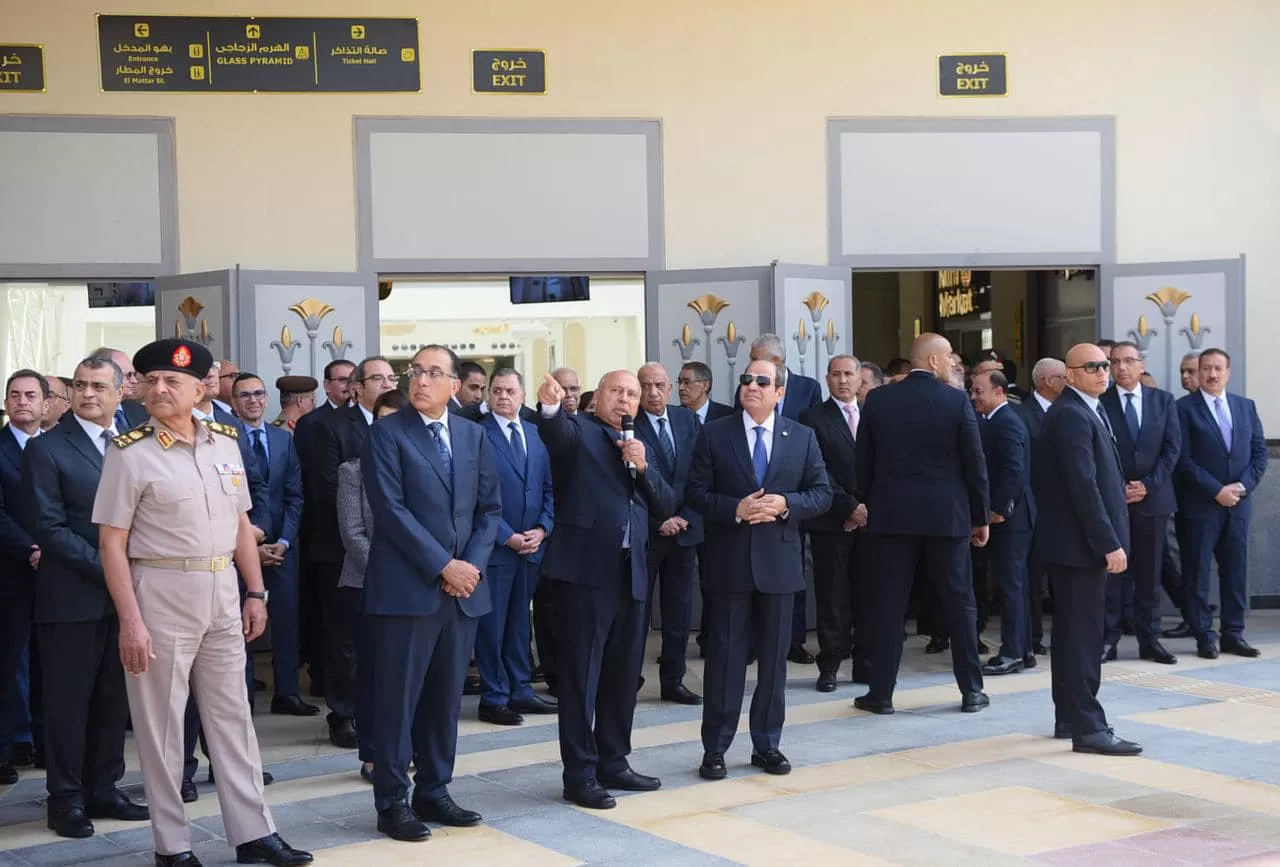
Egypt’s President Abdel Fattah El Sisi said the State had no choice other than pursuing a radical approach toward overhauling the country’s transport and railway networks.
“The government has been criticized for spending EGP 2 trillion on developing the transportation system,” Sisi added during the opening ceremony of Upper Egypt Railway Station in Bashtil in Giza, which he attended via videoconferencing on Saturday.
He said the railway sector had been neglected for decades and that what has been done is only the first mile in a long journey.
Applauding the efforts made by the ministry of transport to improve the train service, Sisi said if the development process had not started early, the costs would have increased much more, amid rising global prices.
“The state did not have the luxury of time, and there was no choice but to work for development to achieve the growth that the Egyptian people deserve,” the president said.
Touching upon the road projects pursued under the “Decent Life” rural development presidential initiative, Sisi said a total 41,000 kilometers of roads have been completed within the villages covered by the project.
He also said the initiative will continue despite the difficult circumstances the region is going through.
However, due to these circumstances, progress will be slower than it used to be, the president noted.
Sisi cited the foresight of late President Anwar Sadat, who proved to his opponents at the time that his decision to pursue peace was the right path, despite facing widespread criticism and boycotts.
Over time, it became clear that Sadat’s choice was in the best interest of everyone, he added.
Regarding the rise in the dollar exchange rate, Sisi explained that Egypt has imported many goods at high costs, even though they could have been manufactured locally.
He provided a list of annual imports, including $9 billion worth of mobile phones, $23 billion in medicines, $25 billion in cars, $2 billion in electrical control panels, $440 million in perfumes and deodorants, $500 million in cosmetics, $200 million in handbags, $400 million in certain types of chocolate, $235 million in ceramics, and $500 million in aluminum foil, along with other products that could be locally produced.
Sisi blamed some importers and traders who prefer to purchase these goods rather than manufacture them domestically, contributing to the dollar crisis.
He emphasized the need to establish factories and produce items that can easily be made in Egypt, calling it a great investment opportunity.
The president acknowledged the challenges ahead but assured that the government is actively working to overcome any obstacles.


Discussion about this post