
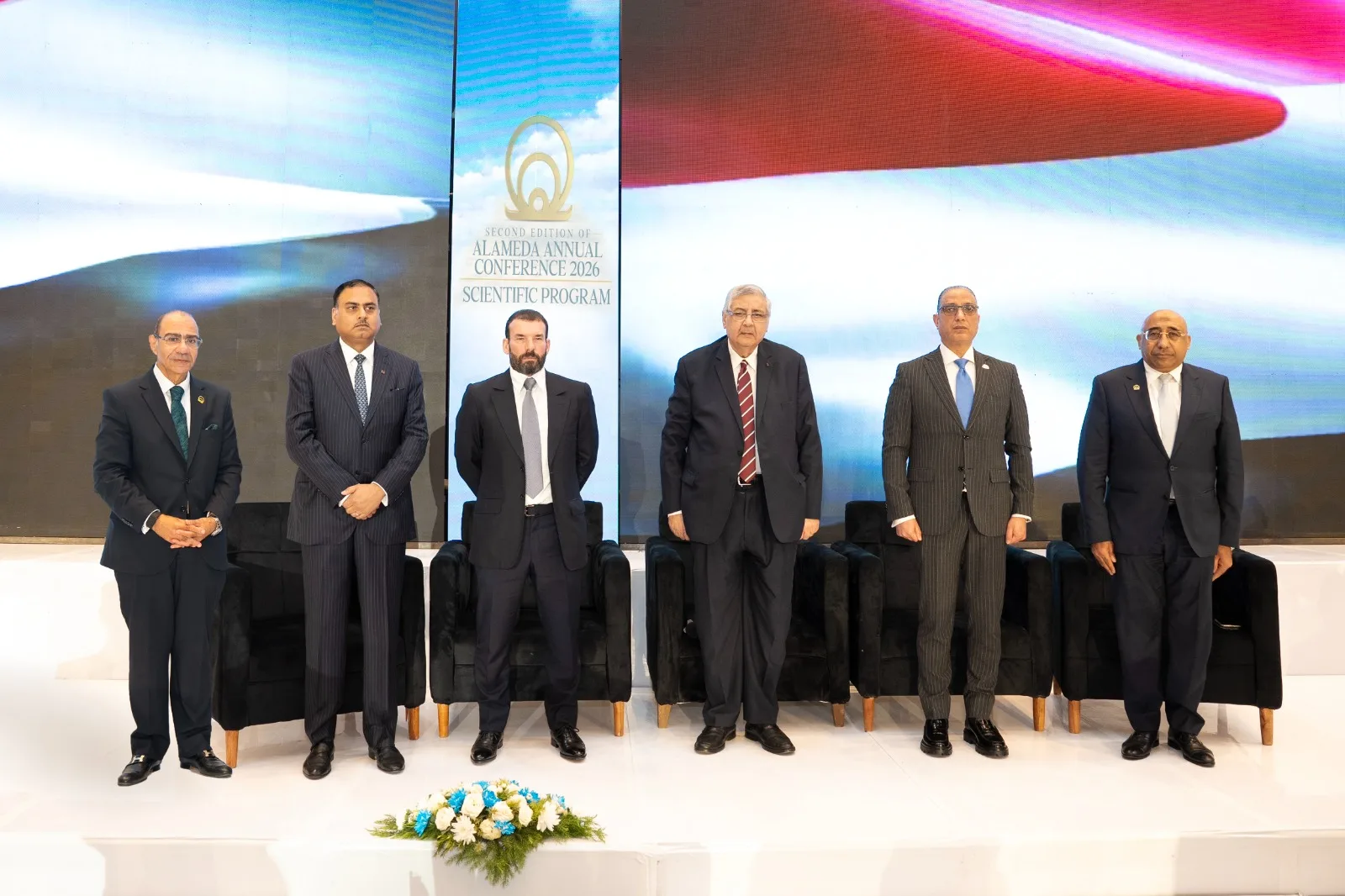






President Abdel Fattah El Sisi, Supreme Commander of the Armed Forces, reviewed on Tuesday the capabilities of state institutions to respond to crises and disasters during the inauguration of Egypt’s Armed Forces’ Strategic Command headquarters in the New Administrative Capital.
The event was attended by Prime Minister Moustafa Madbouli, Commander-in-Chief of the Armed Forces and Minister of Defense and Military Production Lieutenant General Ashraf Salem Zaher, along with a number of ministers and senior state officials.
Prime Minister Madbouli delivered a speech during the event, in which he said the world is witnessing rapid changes, regional and international crises, natural disasters, and other non-traditional challenges, making it imperative for the state to strengthen its preparedness, enhance the efficiency of its institutions, and improve their capacity to respond swiftly and effectively.
He added that the Egyptian state adopts a proactive approach to enhancing readiness and addressing crises.
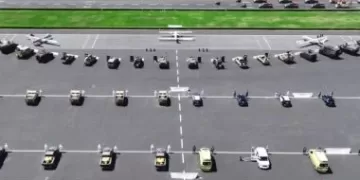
The ceremony featured a display of specialised equipment and preparations that form one of the pillars of the country’s comprehensive national system for confronting disasters and crises, protecting citizens and preserving national stability.
The event included a lineup of equipment and vehicles representing around 40% of the assets of Egypt’s governorates, underscoring the readiness of state institutions to deal with a range of challenges.
It also featured an exhibition of defence industries at the Egyptian Military Academy, showcasing models of military vehicles that were produced, developed and armed using the capabilities and expertise of the Armed Forces’ military manufacturing entities.
The exhibition also included the 30 June drone, which is used to provide decision-makers with the information needed to assess the situation across various strategic directions, as well as the Rafale 1200 multi-mission combat boats manufactured by the Naval Shipyard. These vessels are designed for maritime counterterrorism operations, coastal strikes and fire support for naval special forces units.
The presentation also highlighted part of the capabilities used by law enforcement forces from the Armed Forces and civilian police in counterterrorism operations, including the military police’s control formations, which comprise motorcycle units, security vehicles and armed patrols.
In addition, the ceremony showcased armoured assault vehicles designed for operations in desert, mountainous and rugged terrain, equipped with protection against explosive devices, rocket-propelled grenades and small-arms fire, along with light combat vehicles used by special forces in counterterrorism missions and combat operations inside built-up areas.
The display also featured the Ford Patriot armoured vehicle, designed for assaults on buildings, transport vehicles and aircraft. It is also equipped with dual hydraulic lifting systems and a sniper platform. It also includes the Mercedes Sprinter mobile command vehicle, used for surveillance, reconnaissance, security operations and explosive device disposal.
A number of military vehicles and equipment used by the Armed Forces in operations to eliminate terrorist elements were also showcased. They have been fitted with the latest technological systems to achieve the highest levels of efficiency and operational effectiveness.
Also showcased was the Ford Patriot armoured vehicle, designed for assaults on facilities, means of transportation, and aircraft. It is equipped with hydraulic lifting systems and sniper platforms, in addition to mobile command vehicles that enable field command and control and the management of operations under various conditions.
In the maritime domain, the display included combat boats carrying special forces units and designated for maritime counterterrorism missions, as well as the protection of coastlines and maritime navigation routes.
The display also featured equipment for dealing with explosive devices and conducting search-and-rescue operations, including bomb disposal robots, advanced bomb disposal suits, specialized explosive containment vessels, and medical equipment used to safeguard personnel during missions.
It also included shoulder-fired rocket launchers, unmanned aerial systems (UAS) and advanced control systems, as well as electronic security equipment and wired jamming systems used to collect operational information and neutralize remotely controlled explosive devices.
The display reflected the advanced level of training and equipment attained by the Military Police and their ability to carry out a wide range of security and combat missions with a high degree of efficiency, reinforcing the Armed Forces’ readiness to confront challenges and safeguard the nation’s security.

