










President Abdel Fattah El Sisi reaffirmed Egypt’s firm rejection and condemnation of the Iranian attacks targeting several countries in the region, stressing the state full solidarity with its Arab brothers and its commitment to supporting all efforts aimed at preserving regional security and stability.
The president further emphasised that Egypt views the security of Arab states — particularly the Gulf countries and Jordan — as an integral part of its own national security, underscoring the importance of strengthening joint Arab action and unity to confront the current challenges and prevent further escalation.
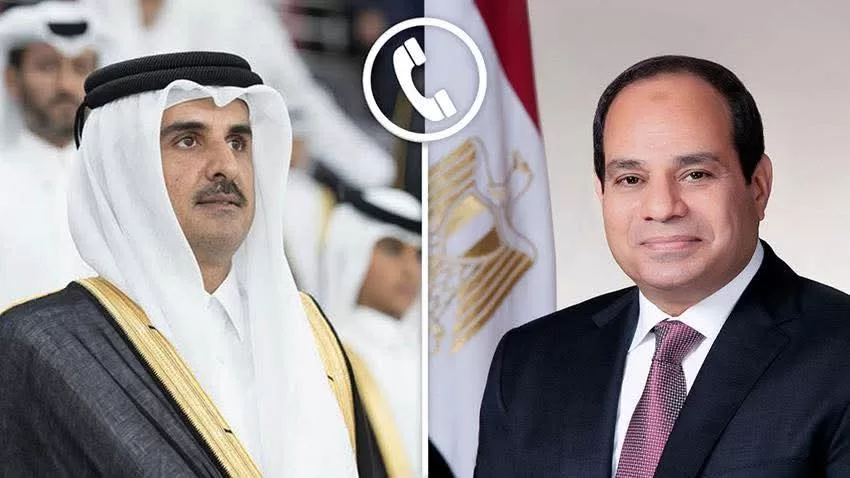
In this context, President Sisi initiated three telephone conversations on Sunday with Qatari Amir Tamim bin Hamad Al Thani, Emirati President Mohamed bin Zayed Al Nahyan, and Jordanian King Abdullah II to discuss the latest regional developments and ongoing efforts to de-escalate tensions and restore stability in the region.
During the calls, President Sisi affirmed Egypt’s categorical rejection and condemnation of the Iranian attacks targeting Qatar, the United Arab Emirates, and Jordan, expressing Egypt’s full support — both government and people — for the three brotherly countries and its solidarity with the Gulf states in light of the current developments, said the Presidency Spokesman Ambassador Mohamed el-Shennawy.
He added that the president stressed Egypt’s readiness to provide all necessary forms of support to preserve the security and stability of the affected states, while noting that Egypt is intensifying its diplomatic contacts and initiatives at both the regional and international levels to halt the ongoing conflict as soon as possible and prevent further escalation.
President Sisi also commended the responsible roles played by Qatar, the United Arab Emirates, and Jordan in supporting efforts to contain tensions and promote regional stability, Shennawy noted.
He unveiled that the discussions also addressed broader regional developments, including the situation in the occupied Palestinian territories, and underscored the importance of coordinated Arab efforts to manage the current crisis.
For their part, the leaders of Qatar, the United Arab Emirates, and Jordan expressed their deep appreciation for Egypt’s steadfast and supportive positions toward their countries, affirming their commitment to continued close coordination with Egypt and other Arab states to avoid further escalation and work toward ending the conflict as quickly as possible.
They also praised the deep-rooted fraternal relations that bind their countries with Egypt and their peoples, Ambassador Shennawy said.
In this respect, President Sisi reiterated that the shared destiny of Arab nations requires strengthening Arab co-operation and consolidating the concept of collective Arab national security to ensure the protection of Arab states from threats or aggression, stressing that unity and coordination remain the most effective means to overcome the current challenges and safeguard the stability of the region.

