


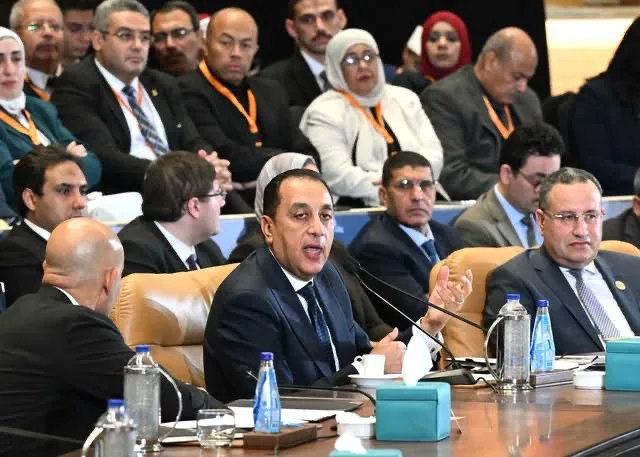
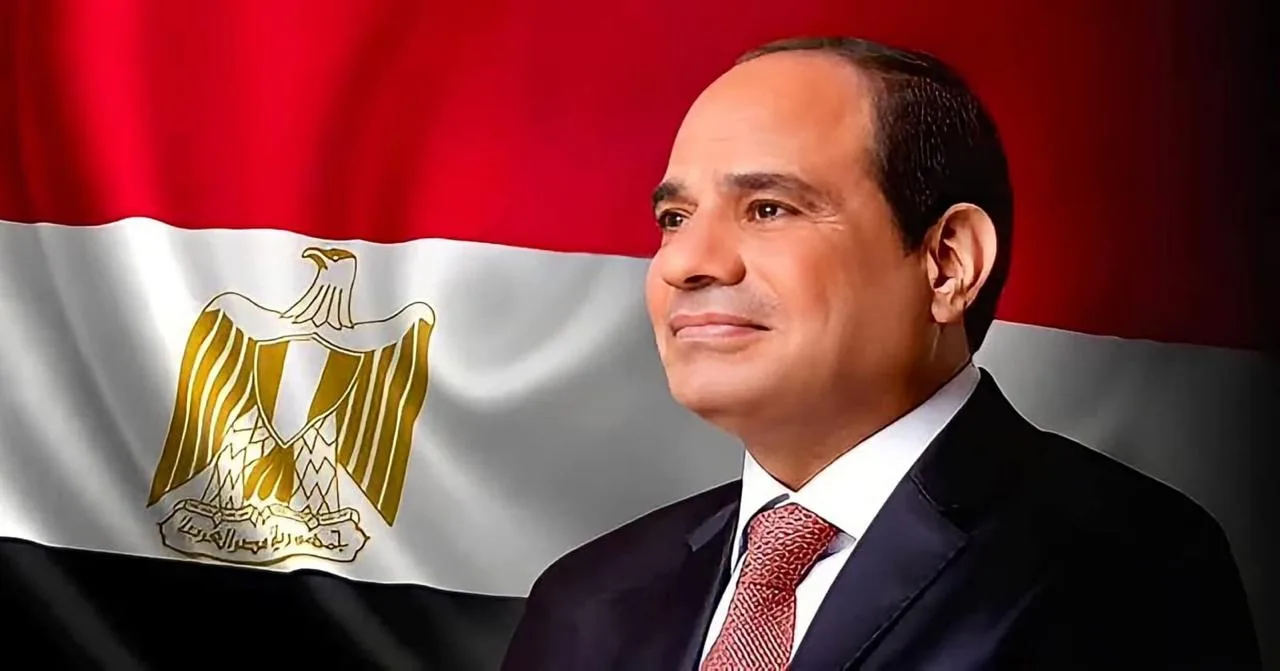



Egypt’s President Abdel Fattah El Sisi attended on Wednesday a panel discussion themed “challenges of future jobs from a global perspective” during the inauguration of the second version of the Global Forum for Higher Education and Scientific Research (GFHS) in the New Administrative Capital.
The panel discussion was moderated by Minister of Higher Education and Scientific Research Khaled Abdel Ghaffar who said that the world’s return to refocus on industry and technological innovation has played an important role in achieving the the fourth industrial revolution.
The minister pointed out that there is a conflict between human intelligence and industrial intelligence however the world will indeed benefit a lot from the new technologies that have so far been introduced as result of human intelligence.
He said technological development would help scientists in their work, for example, renowned cardiologist Magdy Yakoub would be able in the future to perform heart operations at his Aswan heart centre using state-of-the-art robots.
For his part, director general of the Islamic World Educational, Scientific and Cultural Organisation (ICESCO) Salem bin Mohamed al Malek said his organisation adopted basic points in its new visions and plans and seeks, along with member states, to adopt a new course reminiscent of the civilisation created by the ancestors.
He called for building partnerships to adopt new academic and scientific policies coping with the industrial intelligence and investments in space sciences.
Ms Stefania Giannini, UNESCO Assistant Director-General for Education, said during the panel discussion the world interest in education, science and culture would give a chance for more smart, talented and motivated people to surface and show their skills which is necessary in the development process.
She called for drawing up a study to enable all people to get a fair opportunity to receive higher education, pointing out that the outbreak of the Covid-19 pandemic has greatly affected the education process worldwide.
Minister of Planning and economic Development Hala El Said noted that the labour market problems and challenges have been getting more of the world’s attention since the disease’s spread.
She said future jobs need particular skills especially in the areas of industrial intelligence, calling for narrowing the gap between the needs and expectations of the labour market and the quality of graduates leaving higher education institutions.
Minister Said pointed out that the government increased investment in universities nationwide by 100 per cent to furnish all students wishing to continue their higher education with the opportunity to do so in the future.
Jeff Maggioncalda, the chief executive officer of Coursera, an online-learning platform, underlined the importance of pursuing online-learning trends in the post-Covid-19 future.
Maggioncalda said 30 million students started receiving their online lessons through his platform in 2020 following the closure of many universities and schools worldwide due to the pandemic.
He also said 90 million students are now receiving their online learning through Coursera, pointing out that the platform will allow educational institutions to receive education services in any part of the world free of charge.
Mike McKirdy, president of the Royal College of Physicians and Surgeons of Glasgow, Scotland, underlined the role of higher education and scientific research in future jobs.
He said the new advanced technology would enable surgeons to better hone their skills while performing surgical operations.
He added that the cutting-edge technology in mammograms have greatly improved breast imaging, thus helping doctors detect and diagnose breast disease, especially cancer in women, in a relatively short time.


Discussion about this post