New book documents Egypt’s conditions
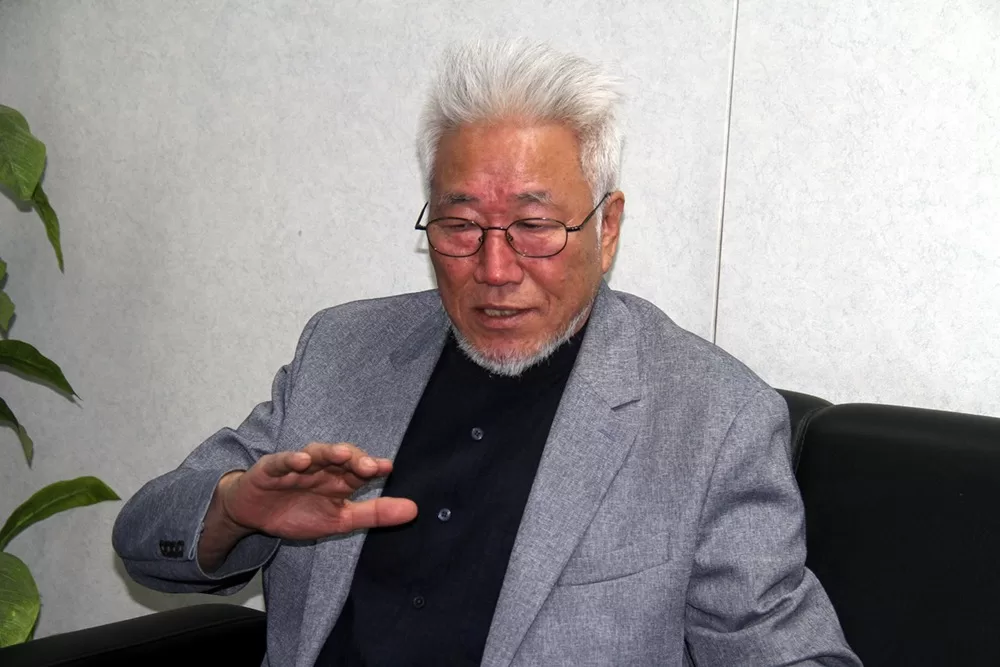
Korean author, Cho Chul-hyeon, in an exclusive interview with The Gazette:
Egyptian leader associated with security, stability
A book was released recently to mark 30 years on the establishment of diplomatic relations between Korea and Egypt.
For the Koreans, who celebrate this year 80 years of independence, Egypt is a familiar country. It is the country where the ‘Cairo Declaration’ was made.
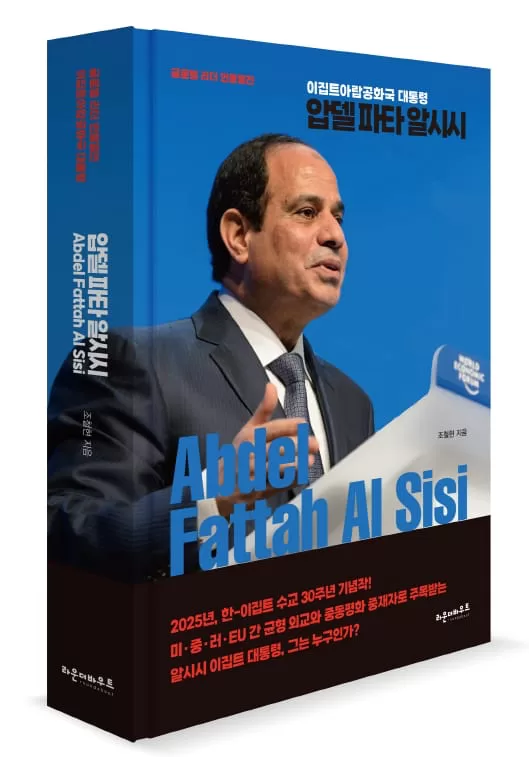
The new book is an autobiographical collection about Egyptian President Abdel Fattah El Sisi who assumed Egypt’s presidency in 2014 and is currently serving his third consecutive term.
Sisi is a peace broker in the Middle East. He recently invited international attention against the background of statements made by US President Donald Trump about Gaza Strip.
The book begins by throwing light on the process of Sisi becoming the Egyptian President in the midst of the turmoil created by the Arab Spring in 2011.
The book deals with how Egypt stabilised after being struck by a series of terrorist bombings carried out by various armed groups. It dwells on the strategies this Arab country employed to overcome the economic hardships it faced on the way.
In particular, the book describes the role of the mediator the Egyptian leader played during the war between Israel and Hamas and the emergence of his global leadership through a balanced diplomacy with the US; China; Russia, and the European Union.
The book takes readers on a documented journey of Egypt’s unprecedented development boom over the past ten years.
It accurately recounts the life of President Sisi, from childhood in the neighbourhoods of the Egyptian capital and his career to his pivotal role in leading Egypt towards a prosperous future.
The Korean-Egyptian Development Association (KEDA) published the book earlier this month.
Authored by Korean writer, Cho Chul-hyeon, the book provides a deep insight into the life of the Egyptian leader, revealing the personality of a man who led his country through unparalleled challenges and threats.
The author also monitors the economic transformations witnessed by Egypt during Sisi’s reign, including infrastructure projects, such as the new Suez Canal and the New Administrative Capital (NAC), new cities, the nation’s giant road network, power plants, ports and airports, as well as the president’s efforts to attract foreign investments and enhance Egypt’s position on the international arena.
The writer likes to call Sisi’s efforts on all these fronts ‘investment diplomacy’, referring to the Egyptian leader’s ability to diplomatically market Egypt’s economic growth through his foreign visits.
The book, not only tells the facts, but also reflects how Sisi managed to combine firmness in crisis management and the ability to foresee the future, putting Egypt on the path of economic growth and progress.
It mentions how the Egyptian president also included a social dimension in his policies and paid attention to human rights, and the rights of women and children.
The book was published in both Korean and Arabic languages on the road to promoting understanding between peoples and highlighting Sisi’s leadership model that combines economic reform and the humanitarian vision of a wise leader of his stature.
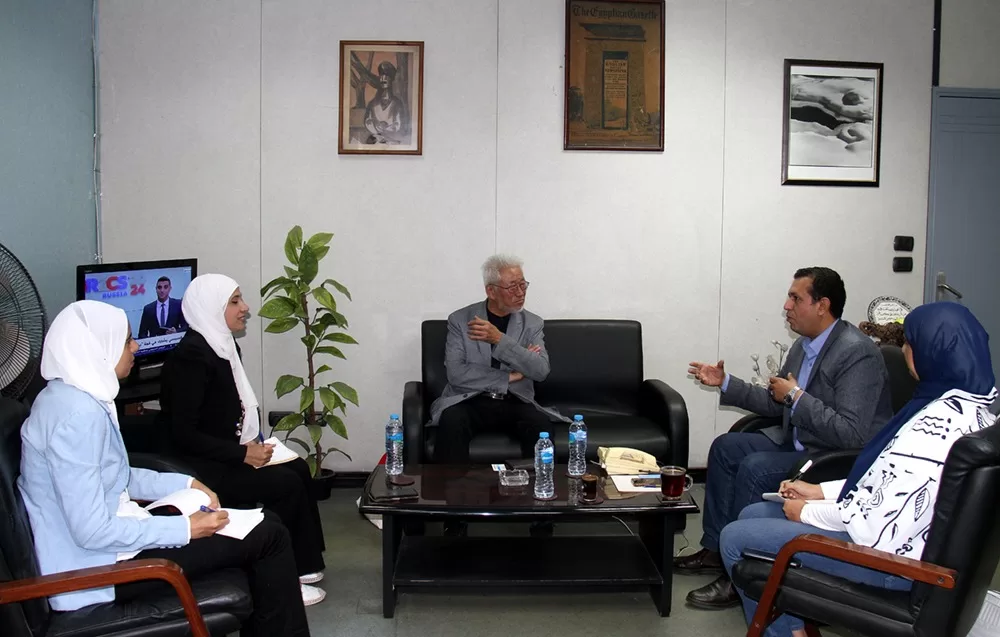
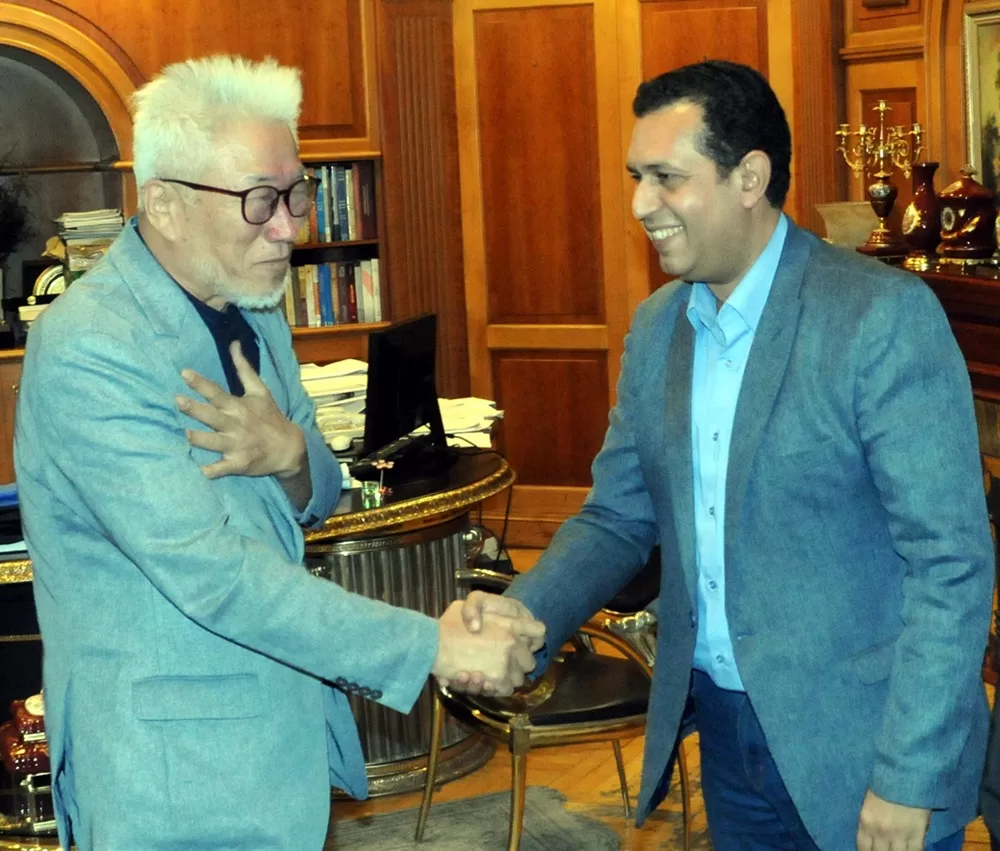
The Egyptian Gazette was keen to interview the author of the book to learn more about it.
The author said the book provides an in-depth view of the life of
President Sisi, including his early years in Cairo and the different stages of his civilian and military education.
The book also covers, the author of the book said, the life of the president when he assumed Egypt’s rule in mid-2014.
The publication of the book coincided with the 30th anniversary of establishing diplomatic relations between Cairo and Seoul.
The writer pointed out that he has been studying Egypt since he was a child. He referred to Egypt’s contribution to the independence of South Korea in 1945, as well as the influence President Sisi has on regional and international issues and his constant attempt and quest to achieve peace and strike a balance between economic growth and human rights, and the rights of women, children and disabled persons.
“He is an inspiring leader,” the author said referring to the president.
The book is an important documentation of a period full of achievements. It is out at a sensitive time where there is international appreciation for President Sisi’s efforts in Egypt’s progress.
This book is expected to be an important historical reference for future generations in Egypt, Korea and the world.
Research journey
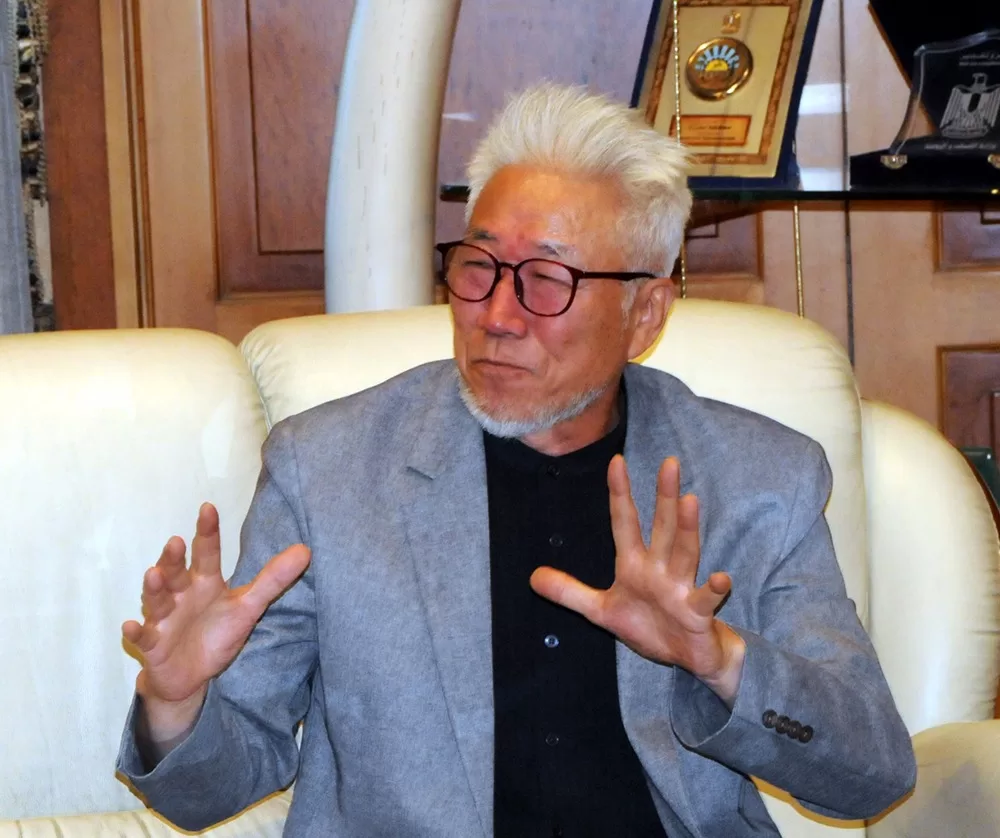
Author Chul-hyeon has already interviewed a host of important figures, including Maj Gen Samir Farag, a commander of President Sisi during his time as an officer in the Armed Forces.
Maj Gen Farag mentioned Sisi’s honesty and sincere love for his country and how he was a committed officer who was jealous for his homeland.
Maj Gen Farag described the president as an intellectual and a distinguished leader.
He pointed out that the Egyptian leader had faced many challenges in the past ten years because of upheavals from regional incidents and developments in neighbouring countries.
Conflicts on the two fronts, he said, had impacted the local economy.
He also referred to the effects of the Covid-19 epidemic on the economy as well.
The author also interviewed Dr Ayat al-Haddad on the role of foreign relations in marketing investments in Egypt and the consolidation of international relations.
Content and relevance
The author notes that the book is made of 420 pages, and deals with several key aspects of President Sisi’s life, with a special focus on the last ten years (2014-2024).
Its content revolves around Sisi’s military and political career and how his major decisions influenced the development of the Egyptian economy and strengthened Egypt’s position on the international arena.
He explains that the book starts with details about Sisi’s childhood and youth, with a review of the various stages of his life that shaped his military and political vision.
It also documents the past ten years of his rule, including major economic initiatives, such as the new Suez Canal project and the policies he pursued to strengthen Egypt’s regional position.
The book also covers presidential initiatives, such as the Decent Life initiative and the Ebdaa (Start) initiative.
The book is an opportunity to throw light on the challenges faced and achievements made by President Sisi, especially in the areas of counterterrorism, economic reform, and strengthening national unity.
It is also a bridge for the enhancement of ties between Egypt and South Korea, highlighting, not only commonalities between the two countries, but also reflecting the role the Egyptian leadership plays in enhancing regional stability.
The book is expected to play a role in introducing the Korean and international public to the achievements made under President Sisi, as well as the aspirations of the Egyptian leader.
Wong Sik Kang
The author revealed that the Korean chairman of KEDA, Prof Wong Sik Kang, is a veteran of the Korean army, who studied in the UK, exactly when President Sisi studied in the same country for a year as an army officer.
The association head, who co-operated with the author in writing the book, offered a great opportunity to know about the life of the Egyptian president and his personality.
Sik Kang was in May last year a member of a delegation of representatives of 20 Korean firms visiting Egypt. The members of the delegation expressed optimism about the prospects of investments in Egypt, being a promising country.
Nobel Peace Prize
The author also pointed out that the book will highlight the global roles of President Sisi, including his role as a voice in Arab and African issues, his efforts to achieve regional peace, in addition to his vision of Egypt as an emerging economic power, with aspirations to become one of the seven major powers in the world.
“President Sisi deserves to be awarded the Nobel Prize for his endeavours in achieving peace,” the author said, expecting President Sisi to become among nominees for the prize next year.
He likened President Sisi to former Korean President, Park Chung-hee, who is respected by Koreans, thanks to his success in achieving an economic boom during his reign that stunned economists, after the country was on the verge of bankruptcy.
Under President Chung-hee, he said, South Korea was able to achieve rapid economic growth, outpacing neighbouring countries, in a short period of time.
Chul-hyeon pointed out that President Chung-hee also came under fire for initiating infrastructure projects.
Today, however, he said, everybody realises the value of what the former president did for his country from an economic and an investment point of view.
He referred to Egyptian luminaries who had received the Noble Prize in the past, including Egyptian author Naguib Mahfouz who won the prize in 1988.
Korean author, Han Kang, he said, also received the prize this year, which highlights the importance of cultural and literary exchange between Egyptian and Korean writers.
“Egypt has skilled writers who can write fluently and professionally,” the Korean author said.
He appreciated the initiative taken by The Egyptian Gazette to write about his book, even before it is released.
Chul-hyeon’s first book was released in 2007. It was about the president of Uzbekistan.
The book resonated among Korean investors and economists, playing an important role in boosting Korean investments in Uzbekistan.
Last year, he released his book about the president of Vietnam, which also had an impact in academic, diplomatic and economic circles.
The book about President Sisi is the author’s third.
He also plans to write a new book about Russian President, Vladimir Putin, which will be released on the occasion of the 35th anniversary of establishing Korean-Russian diplomatic relations.