


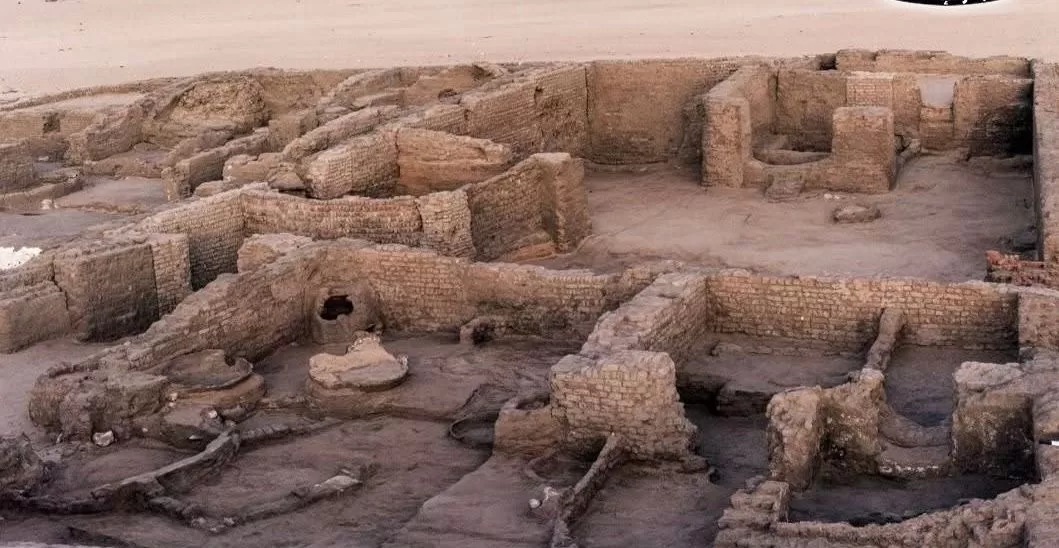
Egyptian and French archaeologists have discovered parts of an 18th‑century mudbrick town at Sheikh El‑Arab Hamam in Qena. The site dates back to the rule of Sheikh Hamam and includes six houses, service buildings, and an industrial area. Some houses had domed roofs made of mudbrick, while others were covered with palm trunks. Traces of white lime plaster were found on the walls.
The mission also uncovered a Byzantine‑era Coptic cemetery beneath the town. Burials were either directly in soil or within mudbrick structures. Finds included pottery, linen shrouds, and fragments of tunics woven in the Coptic style, decorated with crosses, geometric and animal motifs, and inscriptions in Coptic. A copper stamp used for decorating cakes was also found.
Artifacts such as bronze coins, pottery, jewelry, textiles, and children’s toys show the richness of daily life at the site. Officials said the discoveries provide important insights into settlement, funerary practices, and industrial activity in Upper Egypt from the Byzantine period through the Islamic era.

