




President Abdel Fattah El Sisi stressed the need for a carefully calibrated expansion of new and renewable energy projects, alongside reducing reliance on conventional fuels and establishing a balanced energy mix, as part of Egypt’s drive to position itself as a leading regional hub for green energy.
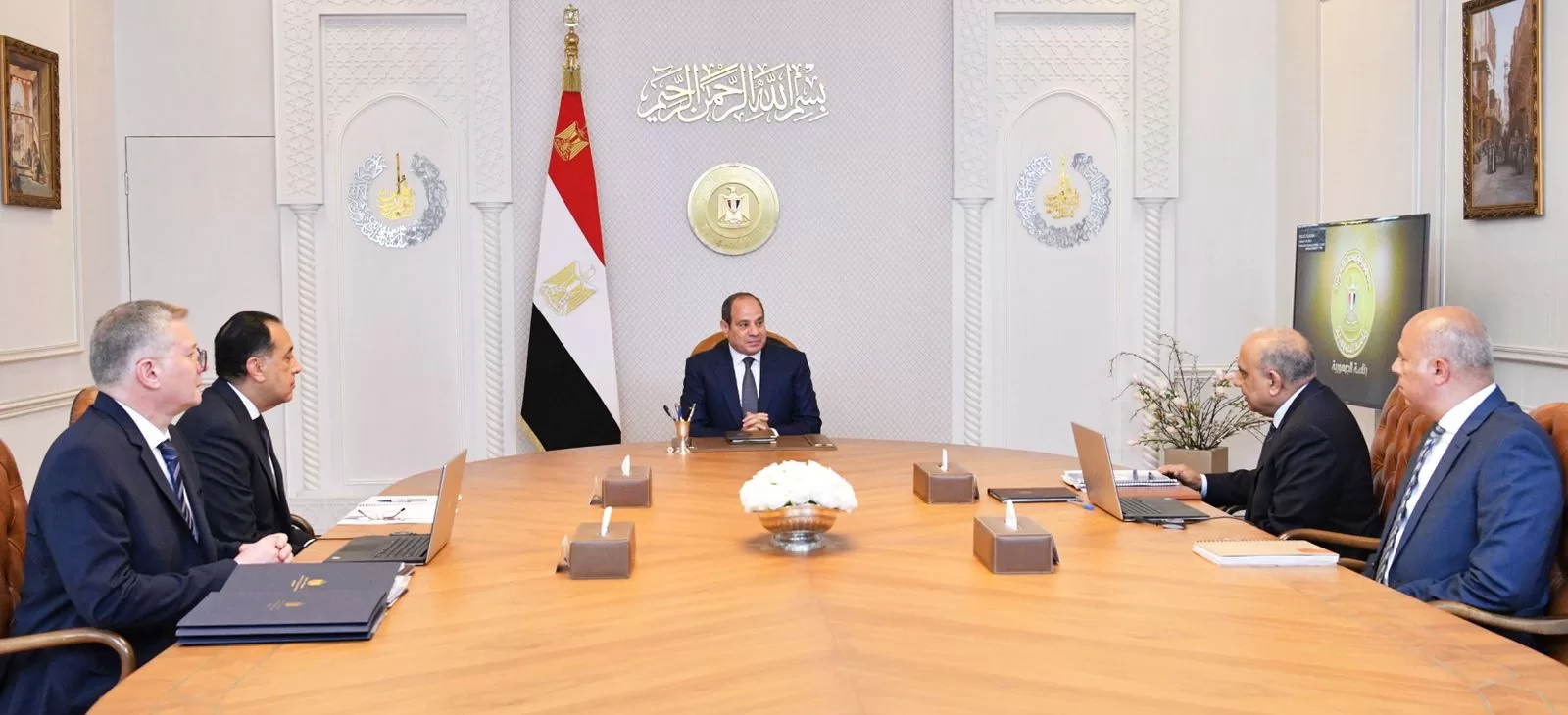
President Sisi made these remarks during a meeting on Wednesday with Prime Minister Moustafa Madbouli, Minister of Electricity and Renewable Energy Mahmoud Essmat, and Minister of Petroleum and Mineral Resources Karim Badawi.
The president also called for enhanced coordination among the ministries of electricity, petroleum, and finance to accelerate the integration of additional clean energy capacities and secure the necessary financing. This, he noted, is essential to ensuring the stability of the national electricity grid and optimising the use of available resources to meet development needs, Presidency Spokesman Mohamed el-Shenawwy said.
The meeting reviewed progress on projects in the field of new and renewable energy, including targeted capacity additions from wind and solar power, as well as battery storage systems for the national grid, in line with Egypt’s Energy Strategy 2030. It also addressed the status of contracted and planned capacities aimed at meeting increasing demand and reinforcing grid reliability.
Minister Esmat noted that this year will see the addition of 2,500 megawatts of renewable energy capacity to the unified grid, thus supporting the sustainability and resilience of the national power system. He also outlined ongoing efforts to improve generation efficiency, reduce dependence on fossil fuels, and achieve a more diversified energy mix, with a target of at least 42% of energy needs to be met from renewable sources by 2030.
The Minister of Petroleum and Mineral Resources Karim Badawi reviewed efforts to settle outstanding dues owed to operating companies, as per the presidential directives to clear all arrears by the end of June 2026. He also highlighted recent oil and gas discoveries, additions to reserves, and the 2026 exploration and development drilling plan, as well as measures to rationalise and reduce the consumption of petroleum products and natural gas.
The president also reviewed measures to address the impact of regional developments, particularly with regard to securing electricity supply, ensuring uninterrupted power availability, improving energy efficiency in the industrial sector, and implementing the summer action plan to manage peak demand and rising consumption, according to the presidency spokesman.

