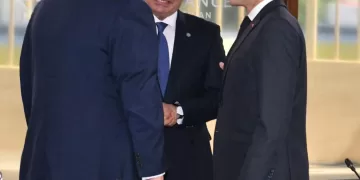
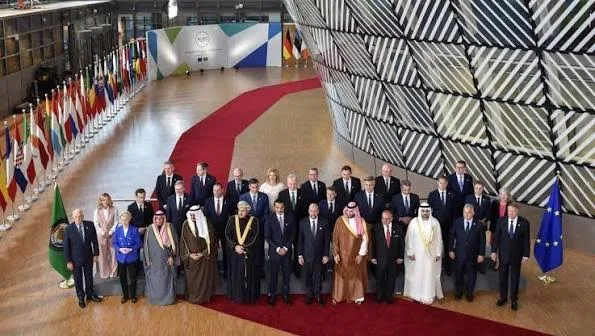
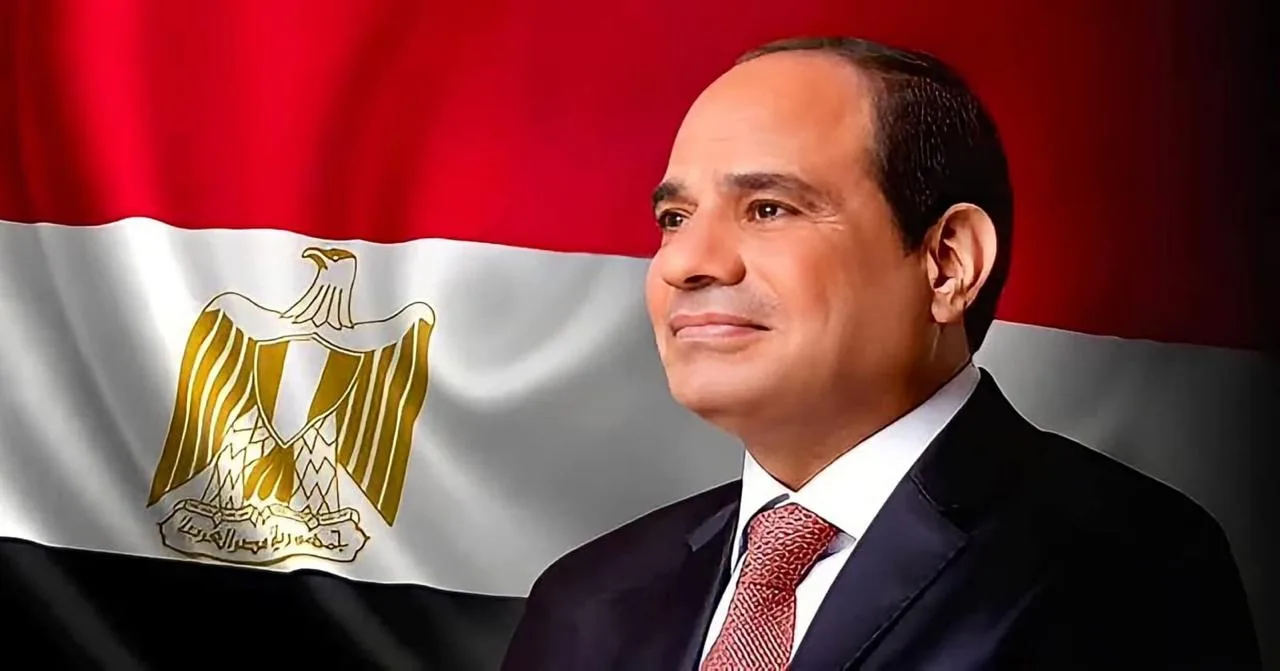




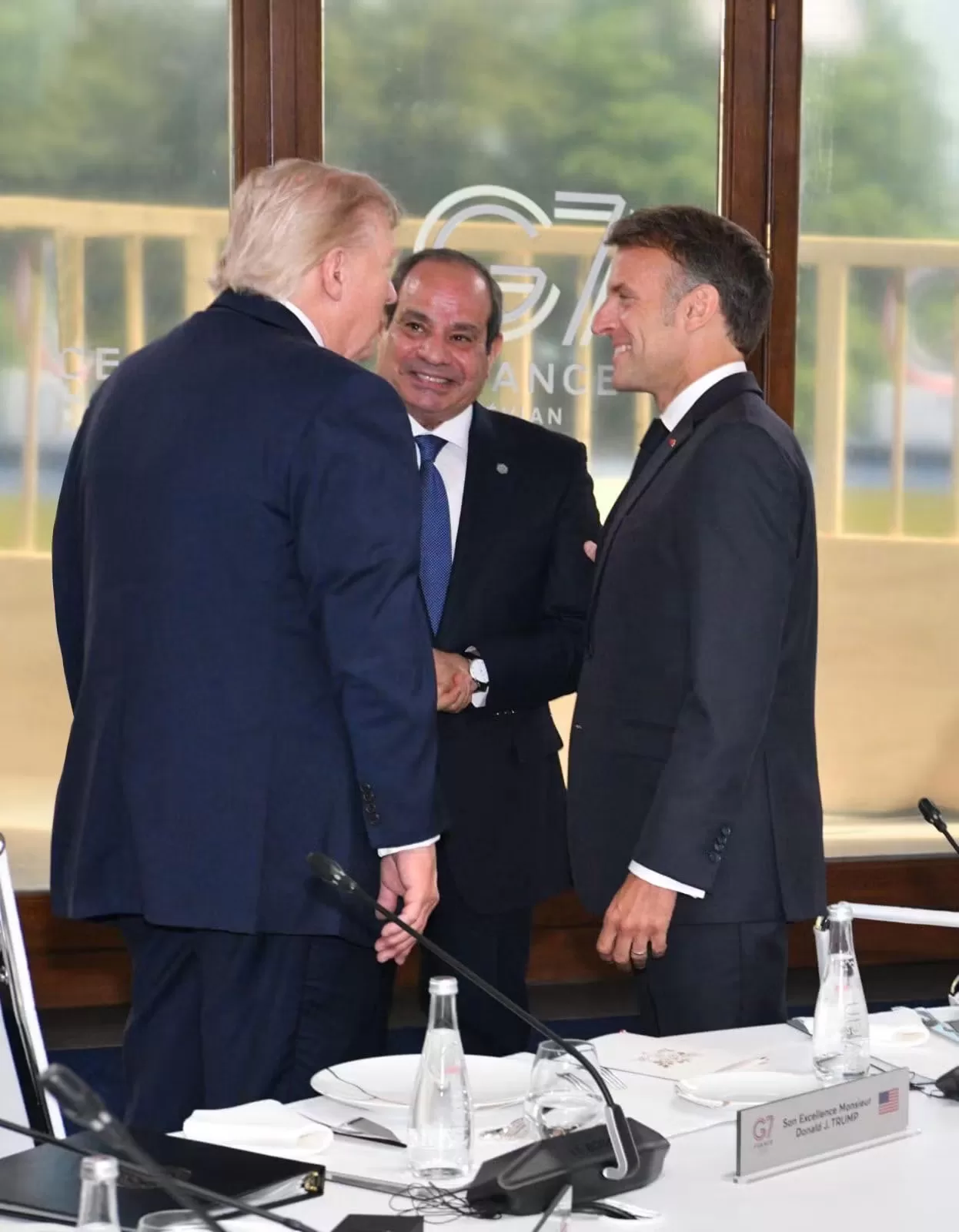
President Abdel Fattah El-Sisi took part today in a session titled “Exiting Crises and Ensuring Stability in the Middle East,” held within the framework of the G7 Summit. The meeting was attended by leaders of the G7 member states, UAE President Sheikh Mohamed bin Zayed Al Nahyan, Qatari Emir Sheikh Tamim bin Hamad Al Thani, the President of the European Council, and the President of the European Commission.
Presidential Spokesman stated that President Sisi outlined Egypt’s vision on regional developments, stressing the need for a comprehensive settlement of Middle East crises to secure regional and global stability. He emphasized that a just and lasting resolution of the Palestinian issue, based on the two-state solution along the June 4, 1967 borders with East Jerusalem as the capital, is indispensable. The President expressed appreciation for U.S. President Donald Trump’s efforts, which led to a ceasefire in Gaza and an agreement to end hostilities with Iran, affirming Egypt’s readiness to cooperate with regional and international partners to achieve sustainable solutions.
President Sisi reiterated Egypt’s categorical rejection of unjustified attacks on Gulf states, affirming solidarity with them as part of Egypt’s national security. He also warned against the expansion of restricted zones in Gaza and any attempts to annex the West Bank.
The President further stressed that stability requires respect for state sovereignty, ending occupation, adherence to international law, and confining arms to legitimate institutions. He called for collective security arrangements addressing concerns of all parties, particularly regarding water security, energy, and maritime safety. He underscored the importance of establishing a Middle East free of nuclear and other weapons of mass destruction, with full and non-selective implementation of non-proliferation measures.
On maritime navigation, President Sisi highlighted the need to safeguard freedom of passage in international waterways and reject any obstruction or alteration of their legal status.
The session also addressed preventing Iran from acquiring nuclear weapons, the situation in Lebanon, and the need for Israel to cease targeting Lebanon and withdraw from occupied areas. Leaders discussed the possibility of deploying an international peacekeeping force and reaffirmed the necessity of advancing the Palestinian cause alongside the Gaza ceasefire. Energy infrastructure and the impact of regional tensions on trade and supply chains were also reviewed.
Several leaders praised Egypt’s role, with Italy’s Prime Minister noting that peace can only be achieved through agreements similar to the Egypt-Israel peace treaty, and Canada’s Prime Minister commending the joint efforts of President El-Sisi and President Trump in securing the Gaza ceasefire.
In closing, President Sisi emphasized that the Egypt-Israel peace treaty serves as a model, urging seizing the current opportunity to achieve regional peace. He cautioned against undermining the agreements reached, stressing again the pivotal role of President Trump in advancing regional stability.

