



Sisi: Egypt promotes peace, boosts national defence
‘Egyptian state never allows any threats to its national capabilities, properties’
Sisi unveils comprehensive reform directives to enhance governance, boost economic growth, improve living standards
June 30 Revolution stood as defining moment in protecting Egypt’s future
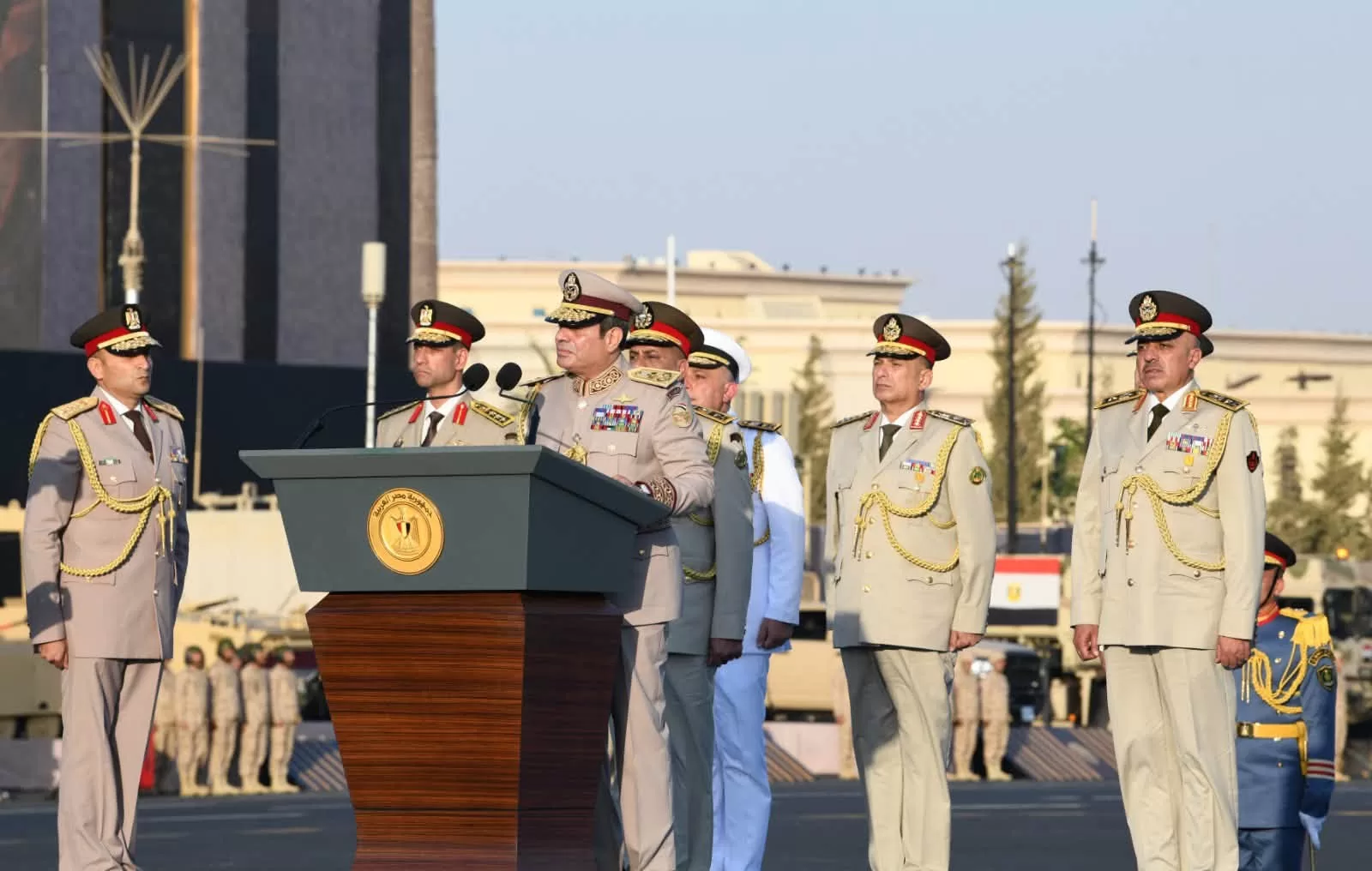
President Abdel Faattah El Sisi reaffirmed that Egypt has exerted tireless efforts to end wars, resolve conflicts, and promote peace.
This reaffirmation was made during the president’s inauguration of the Strategic Command Headquarters in the New Capital on Saturday.
President Sisi described the Strategic Command Headquarters as a transformative addition to Egypt’s command-and-control system, highlighting its advanced technological infrastructure and sophisticated capabilities for information gathering, analysis, and strategic decision-making.
He stressed that the Egyptian state would never allow any threat to its national capabilities or the interests of its people, reaffirming that the June 30 Revolution demonstrated the Egyptian people’s unwavering determination to safeguard their country and protect its future, regardless of the challenges.
The president also reasserted that Egypt’s borders are a red line safeguarded by the will of its people. He added that the Strategic Command Headquarters embodies the Armed Forces’ enduring doctrine that defending the homeland, a sacred responsibility that permits no compromise.
President Sisi described the Strategic Command Headquarters as “a towering national landmark” that will stand as a lasting testament to the will of a nation that knows no impossible.
President Sisi reaffirmed that improving the living standards of Egyptian citizens and easing their economic burdens remain at the forefront of the state’s priorities. He stressed the government’s commitment to sustaining efforts to enhance citizens’ quality of life, meet their essential needs, and advance sustainable development in a manner that ensures a decent life for all Egyptians.
President Sisi spoke about the events of the 2011 January Revolution, saying that Egypt was spared the fate that befell others. There are neighbouring countries that continue to suffer from circumstances that began during that period and persist to this day.”
President Sisi said that the events of 2011 inflicted the state great losses estimated at $450 billion, adding that the country continues to bear the economic cost of those repercussions.
During his address, Presiden Sisi announced that the reactor pressure vessel for the second unit of the El Dabaa Nuclear Power Plant will soon be installed, describing the project as one of the flagship pillars of Egypt’s strategic partnership with Russia.
President Sisi reaffirmed the importance of maintaining direct communication between government officials and citizens, stressing that engaging with public opinion and providing accurate, verified information are essential to fostering informed public discourse and promoting trust.

Speaking during the inauguration of the Strategic Command Headquarters in the New Capital, the president announced a series of directives aimed at advancing governance, stimulating economic growth, enhancing public services, and improving citizens’ quality of life.
On the media front, President Sisi called for expanding objective and balanced public dialogue that accommodates diverse viewpoints to enrich national debate and strengthen public awareness within a framework of mutual respect and understanding. He directed the minister of state for information to coordinate with relevant media and press institutions to organise an annual conference, under his patronage, to review the performance of Egypt’s media sector, assess its challenges and opportunities, and develop practical recommendations for its continued modernisation.
The president also called for revitalising political life by strengthening political parties, preparing a new generation of political and youth leaders, and completing preparations for local council elections to broaden public participation and reinforce local governance.
To help ease the cost of living, President Sisi instructed the Mostaqbal Misr Agency for Sustainable Development, in coordination with the Ministries of Agriculture and Supply, to develop a national programme focused on expanding permanent retail outlets and markets, improving supply chains, and stabilising the prices of essential commodities.
On the economic front, the president announced plans for a comprehensive national economic strategy to be launched following the completion of Egypt’s reform programme with the International Monetary Fund (IMF). He said the initiative would represent a distinctly Egyptian development strategy, building on previous reform achievements while transitioning the economy from stabilisation to sustained, inclusive growth that directly improves living standards, enhances economic resilience, and supports comprehensive national development.
President Sisi also directed the government to accelerate the next phase of the state’s divestment programme by expanding the withdrawal of public entities from economic activities that can be managed more efficiently by the private sector. He emphasised that the process should be guided by the principles of transparency, equal opportunity, and fair competition, while strengthening the private sector’s role as the primary engine of investment and economic growth.
In addition, the president instructed all relevant state institutions to intensify efforts to combat corruption in all its forms, reinforce governance, transparency, and accountability, and expand digital transformation initiatives to safeguard public funds and improve institutional efficiency.
He further underscored the need to continue reforming the education system on the basis of merit and excellence, aligning educational outcomes with labour market needs, and expanding programmes to identify and nurture talented young people capable of driving innovation and enhancing Egypt’s global competitiveness.
The president also called for restructuring the Small and Medium Enterprise Development Agency to place greater emphasis on productive sectors while simplifying procedures for business establishment, licensing, and financing, and creating broader opportunities for youth participation in economic activity.
Concluding his remarks, President Sisi paid tribute to the Egyptian people for their resilience and national awareness. He also honoured Egypt’s fallen heroes, the Armed Forces, the nation’s sword and shield, the Civil Police, and all state institutions entrusted with safeguarding the country and shaping its future, reaffirming that Egypt will remain a steadfast pillar of security, stability, and prosperity.
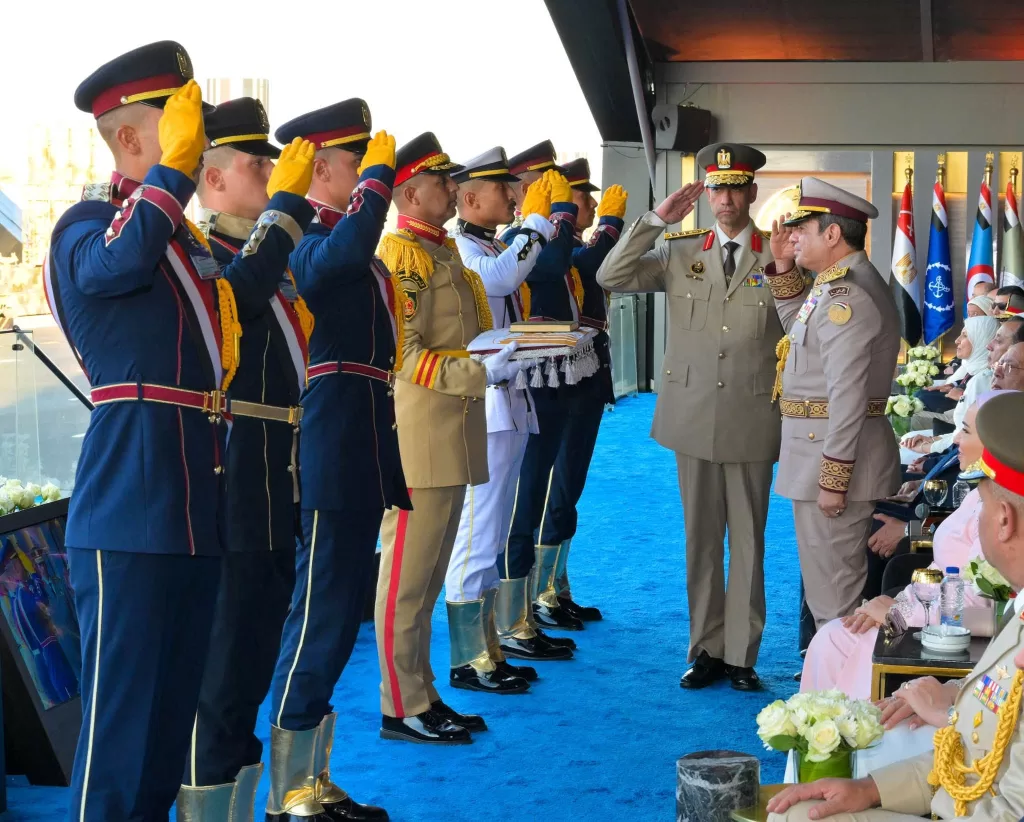
The president conducted an inspection tour of the newly established complex wearing military uniform. He exchanged greetings with Armed Forces officers, personnel and servicemen, commending their high morale, exemplary discipline, and unwavering dedication.
The president affirmed that their sacrifices and tireless services constitute the cornerstone of safeguarding Egypt’s security and stability amid the current regional and international challenges.

President Sisi signed the official document opening the Egyptian Strategic Command headquarters and handed the Armed Forces flag to the guard of honour to raise above the newly inaugurated HQ.
Following the signing of the inauguration document, President Sisi declared:
“In the name of the great people of Egypt, and with trust in Almighty God, I hereby declare the Strategic Command Headquarters in the New Capital officially inaugurated.”
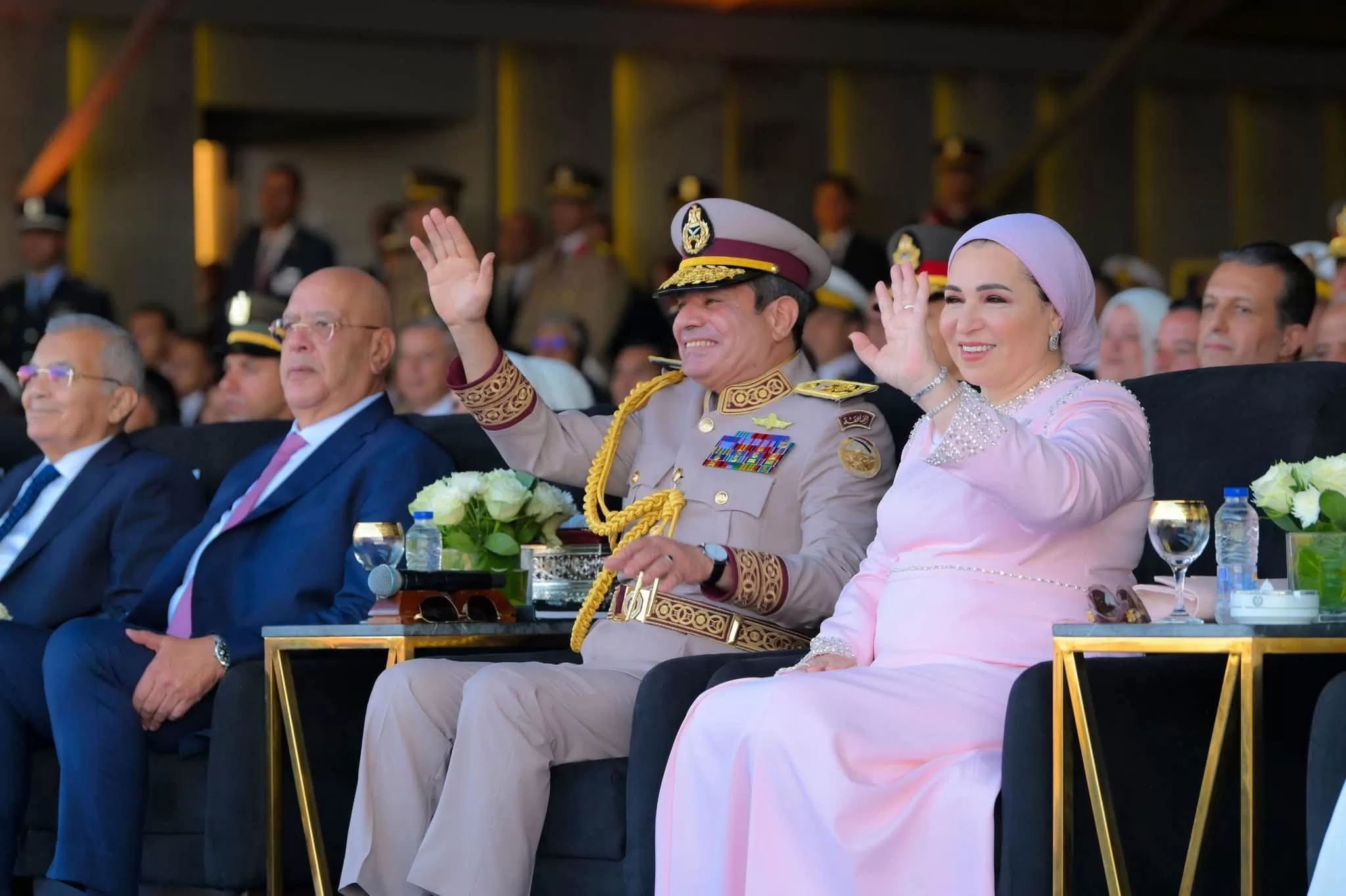
The ceremony was attended by Prime Minister Moustafa Madbouli, Minister of Defence and Military Production Lieutenant General Ashraf Salem Zaher, Chief of Staff of the Armed Forces Lieutenant General Ahmed Khalifa, and other top military commanders. First Lady Entissar El Sisi, Grand Imam of Al-Azhar, Sheikh Ahmed Al-Tayyeb, and Pope Tawadros II, the head of the Coptic Orthodox Church, were among the dignitaries attending the event.

Artillery fired a 21-gun salute to welcome President Sisi upon his arrival at the Strategic Command headquarters.
The Strategic Command Headquarters is one of Egypt’s flagship national projects under the New Republic initiative. Designed as a unified command centre, the complex aims to enhance the efficiency of state institutions, strengthen strategic decision-making, and advance command-and-control capabilities through cutting-edge digital infrastructure and advanced communications systems.

The project brings together the Armed Forces’ General Command, key ministries, and sovereign institutions within a single integrated complex, enhancing coordination among state entities, accelerating crisis and emergency response, and ensuring greater institutional integration in the management of Egypt’s strategic affairs.
Spanning approximately 22,000 feddans with a built-up area of around 4.7 million square metres, the Strategic Command Headquarters ranks among the largest defence and administrative complexes in the region, reflecting Egypt’s commitment to modernising its governance and national security infrastructure.

Described as a “strategic brain” for the Egyptian state, the complex consists of eight interconnected main buildings, representing the various branches and strategic departments of the Egyptian Armed Forces, with two central structures dedicated to political leadership.
At the centre stands the Central Command Building, designed to ensure seamless information flow and command coordination.
President Sisi also watched a documentary titled “The Third Crossing” during the inauguration ceremony.
According to the documentary, the Strategic Command Headquarters has been designed to combine operational efficiency with the highest security standards. The complex features advanced underground data and communications centres equipped with rapid-response capabilities, supporting integrated command, control, and strategic decision-making.

An expansive video reviewed the major accomplishments of the state and the Armed forces in pushing forward the wheels of economic development and strenthening the defensive capabilities of the army in the past 13 years since the 30 June 2013 Revolution.
In addition, the facility, which features modern technological capabilities has protective engineering that is intended to withstand explosions and potential aerial attacks, in addition to defence systems against the latest weapons.
The headquarters is supported by satellite-based intelligence and reconnaissance capabilities, allowing decision-makers to receive and analyse strategic information in real time.