









Egypt’s Prime Minister Moustafa Madbouli said the country successfully built an advanced grain storage system over recent years, based on the latest global technologies, under directives of President Abdel Fattah El Sisi.
The system helps preserve wheat quality, reduce losses and improve the efficiency of managing Egypt’s strategic reserves, strengthening the state’s capacity to secure its needs for extended periods and achieve high levels of food security.
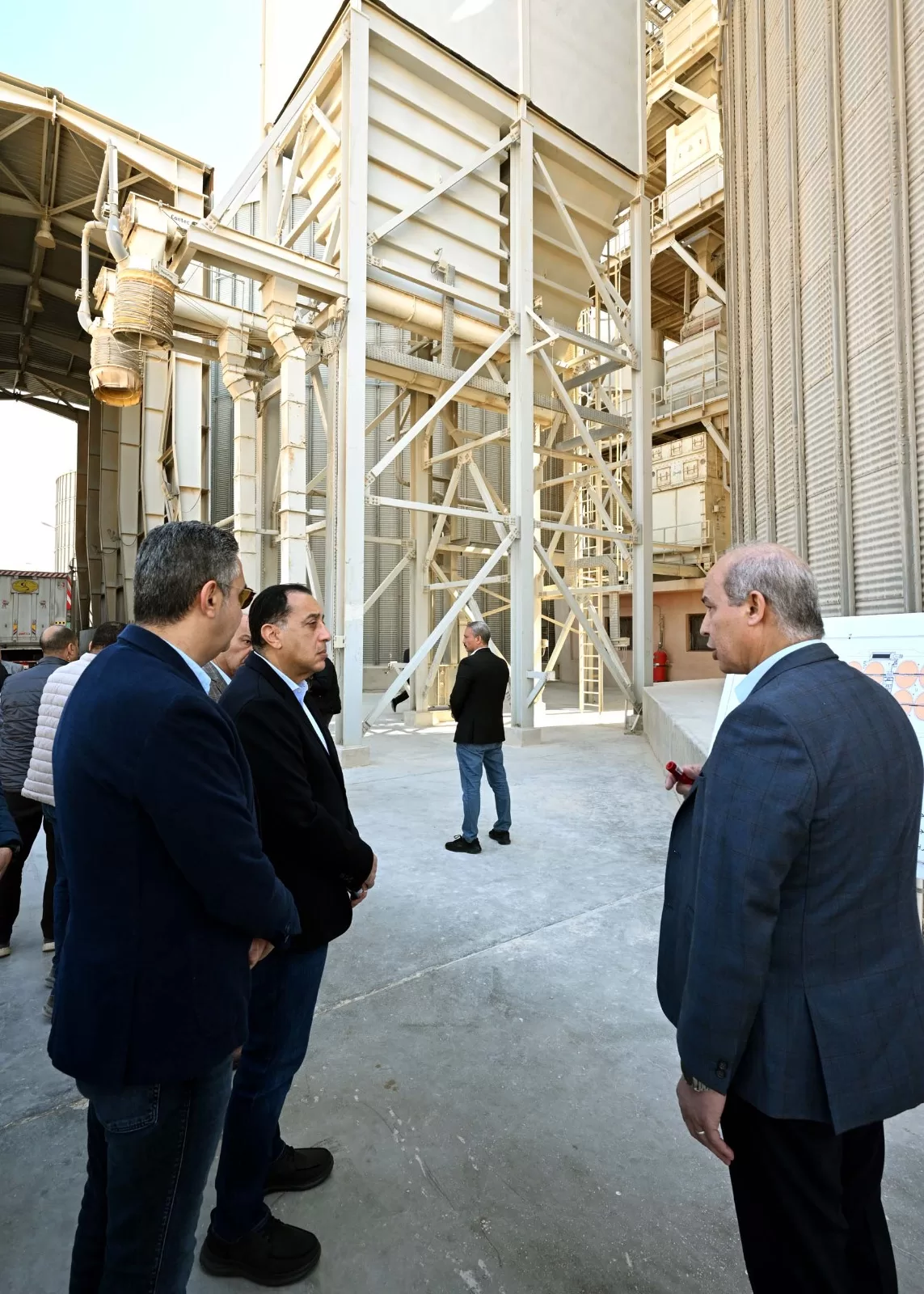
Madbouli made the remarks during an inspection tour of the Ataqa grain silo in Suez.
The facility is one of the modern silos established under Egypt’s National Silos Project and has a storage capacity of 60,000 tons, he said.
The visit comes as part of the government’s ongoing monitoring of the national food security system and efforts to enhance the country’s grain storage capabilities.
The prime minister was received by Minister of Supply and Internal Trade Sherif Farouk in the presence of Suez Governor Hani Rashad and several officials.
The tour reflects the government’s commitment to ensuring the efficiency of the wheat storage system and strengthening strategic reserves of essential commodities, particularly in light of fast-moving regional developments.
Madbouli said that the government continues to monitor the situation around the clock to guarantee stable food supplies and ensure the availability of essential goods for citizens without disruption from external events.
Madbouli noted that expanding modern silos and upgrading grain supply chains represent a key pillar of Egypt’s food security strategy.
These efforts aim to guarantee the sustainable availability of basic commodities and maintain market stability, particularly amid global challenges and current geopolitical conditions in the region.
During the visit, Farouk said the national silos project is among the most prominent initiatives to modernize Egypt’s grain infrastructure.
The project is being implemented by the ministry as part of the state’s broader strategy to strengthen food security, improve storage efficiency, and reduce losses.
He added that the facilities are managed and operated by the Egyptian Holding Company for Silos and Storage (EHCSS) using advanced management and operational systems to ensure grain quality and efficient handling within the national supply chain.
Madbouli listened to a presentation from Managing Director and CEO of the EHCSS Ashraf Sadeq, who explained that the Ataqa silo is a key component of the country’s strategic grain storage network.
It contributes to securing wheat supplies for mills in Suez governorate and serves as a logistical support hub for the governorates of Cairo and Ismailia, helping stabilize flour production and ensure the continued availability of subsidized bread.
Sadeq noted that the silo, which entered operation in 2017, was built using the latest storage technologies. It consists of 12 main storage cells capable of storing different wheat types based on cleanliness levels and country of origin, in addition to two discharge cells and two cells for collecting dust and screening residues.
The facility is equipped with a full range of support systems, including inventory monitoring, temperature control, fumigation, ventilation, dust extraction, fire protection systems and surveillance cameras. It also includes a grain screening unit to remove impurities from wheat.
He added that the silo houses a testing laboratory to measure moisture levels, specific weight, protein content and grain cleanliness to ensure compliance with standard specifications.
Madbouli toured the various stages of wheat handling at the facility, including sample testing of incoming shipments, weighing, unloading, handling through conveyor equipment and storage in the main silos as well as the discharge process.

