


Egypt’s Prime Minister Moustafa Madbouli affirmed that the government is committed to ensuring that factories and production sites operate at maximum efficiency, stressing that national production will continue despite the exceptional regional circumstances.
He emphasised that the state’s current priority is to stabilise markets, maintain price balance, and prevent sharp increases in inflation rates, particularly in light of the extraordinary global situation.
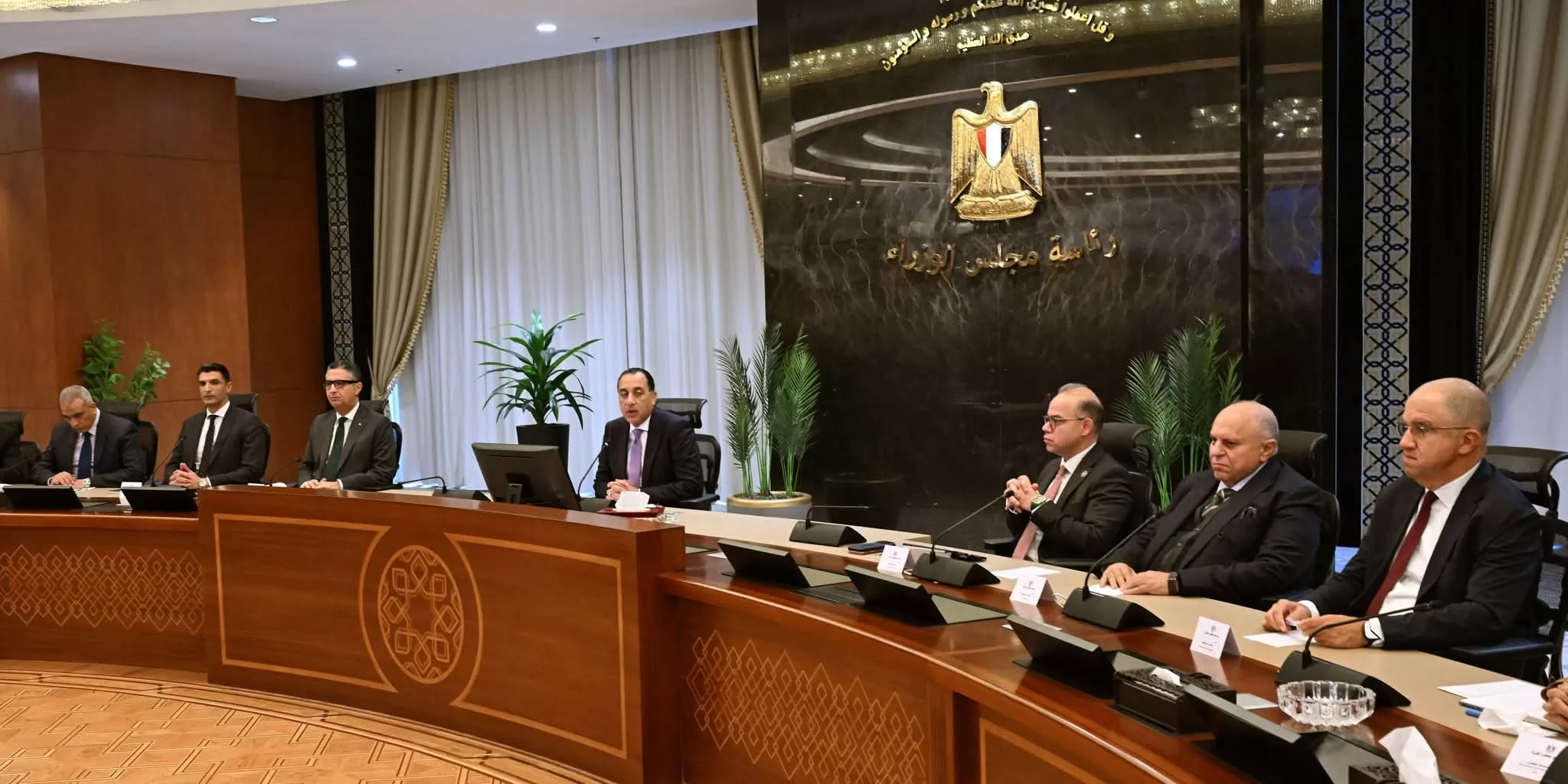
These remarks came during a meeting the premier called on Sunday with heads of the Chambers of Industry and Commerce.
Minister of Supply and Internal Trade Sherif Farouk, Minister of Investment and Foreign Trade Mohamed Farid, and Minister of Industry Khaled Hashem attended the meeting together with senior ministry and government officials.
During the meeting, PM Madbouli noted that his meeting with representatives of the chambers reflects the government’s continued commitment to consultation and coordination with the private sector.
He added that Egypt has faced multiple crises in recent years, but through co-operation between the government and the business community, the country has been able to overcome challenges, maintain market stability, and support production across various sectors.
The prime minister also reviewed the current regional developments and the repercussions of the escalating military conflict in the region, particularly its impact on the energy sector, describing it as an unprecedented challenge affecting several countries.
He expressed hope that the situation will not persist for long, noting that the government’s proactive approach has helped secure the necessary financing for raw materials and production inputs.
For his part, Minister of Investment and Foreign Trade Mohamed Farid stated that Egypt entered the current crisis under stronger economic conditions than before.
He affirmed the government’s commitment to maintaining recent economic gains by continuing reforms, expanding opportunities for the private sector, regulating markets and trade operations, and supporting productive sectors.
Representatives of the Chambers of Industry and Commerce also confirmed that markets currently enjoy adequate supplies of raw materials, a flexible exchange rate, and the availability of foreign currency.
They noted that medicine stocks are sufficient for several months and presented proposals aimed at sustaining growth rates in several sectors while addressing rising global costs of raw materials, shipping, and fuel.

