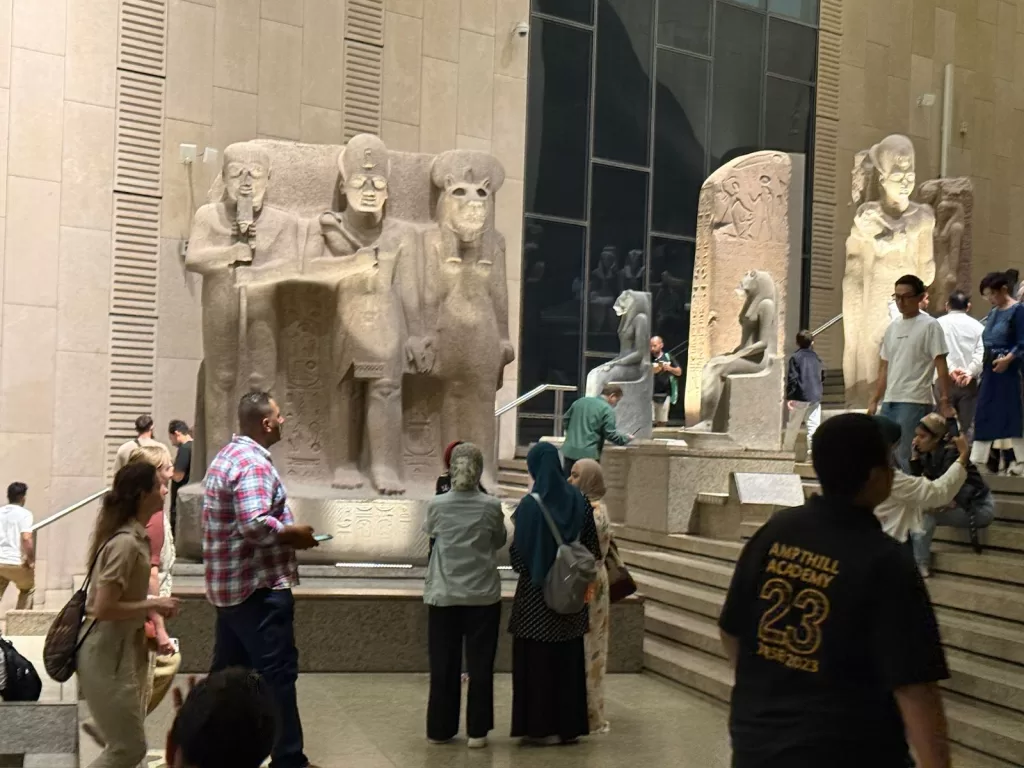


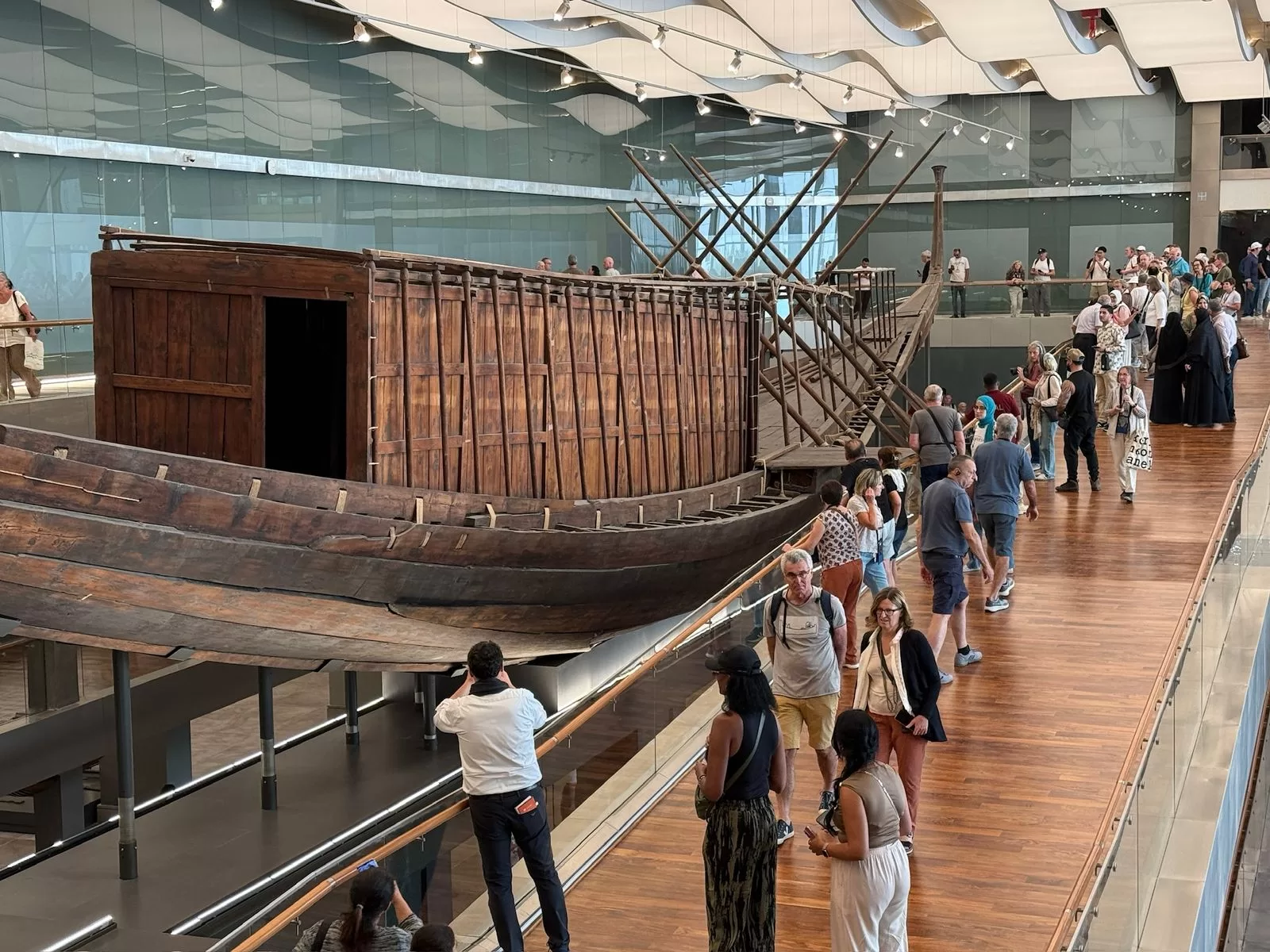
In the shadow of the eternal pyramids, a new chapter of history unfolded as the Grand Egyptian Museum (GEM) welcomed its earliest admirers.
Travellers spanning continents, some with decades of anticipation, others guided by fortunate timing, entered in hushed reverence, transformed by Egypt’s antiquities in their spectacular, purpose-built sanctuary.
Their voices diverse, yet unified in wonder, illuminate GEM not just as a repository of relics, but as a vibrant portal to humanity’s ancient soul.
Dr Percival Vera and his wife, Dr Yvonne Vera, from the United States, had pyramids on their itinerary, but stumbled into GEM’s debut week by serendipity.
“The scale is just unbelievable, unlike anything we’ve encountered worldwide,” Percival shared with the Egyptian Mail.
The couple, both academics, were captivated by artefacts exclusive to this collection, far surpassing displays in the Louvre or American institutions.
“The Egyptians’ devotion to the afterlife eclipses their earthly focus, every possession, preparation, and inscription preserved with exquisite detail,” he marvelled.
“Textbooks convey facts, but proximity ignites true awe,” he added.
Praising the hospitable environment and perfect experience, Percival declared: “We’ve had zero issues, the people are incredibly welcoming. I urge the world to visit. Being pioneers here elevates the magic. We’ll return without question.”
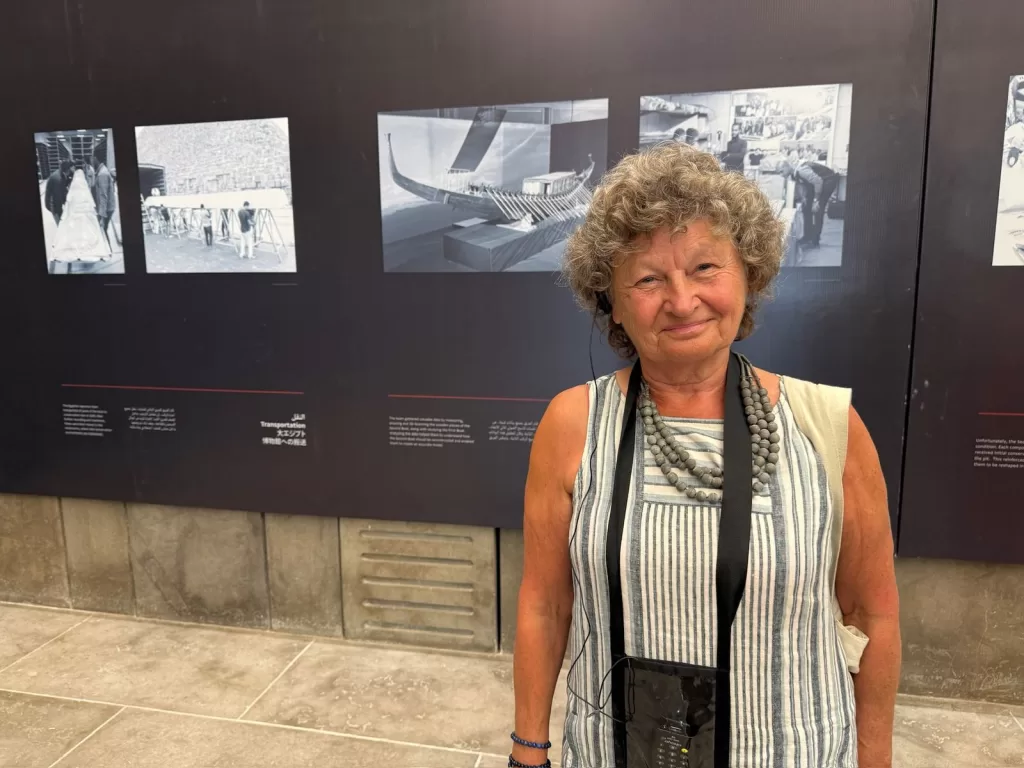
Mie Preckler, a Belgian artist residing in California, orchestrated her inaugural Egyptian adventure around GEM.
After three weeks exploring the country in a small group tour, she extended her stay expressly for the museum, visiting twice in her final day before a November 5 departure.
“Overwhelming in the best way, it diminishes you against history’s grandeur,” she reflected.
As an artist, Preckler admired the holistic design: “Even mundane elements like seating and bins integrate thoughtfully, fostering cohesive beauty.”
Beyond famed icons, hidden gems, like intricate jewellery omitted from school curricula, sparked delight.
Having witnessed the opening ceremony via television, she felt vicarious pride in the project’s multi-decade fruition.
“Despite initial closures upon arrival, I prolonged my trip,” Preckler said.
“Now retired, this ignites a spark, perhaps I’ll pursue Egyptology. Infinite layers await discovery. I’ll definitely return,” she added.
Amina Amla, a hijab-donning retired primary school teacher from Preston, Lancashire, England, discovered echoes of her classroom lessons boosted exponentially.
“GEM is breath-taking, an extension of school history, now vivid and tangible for sharing with students,” she said.
The fusion of cutting-edge architecture with pharaonic majesty enthralled her, particularly Tutankhamun’s vast treasures.
“Everything harmonizes: modern elegance entwined with ancient profundity. The scale astounds,” she said.
Committed to evangelism, Amla pledged: “I’ll rally colleagues and spread the word far and wide.”
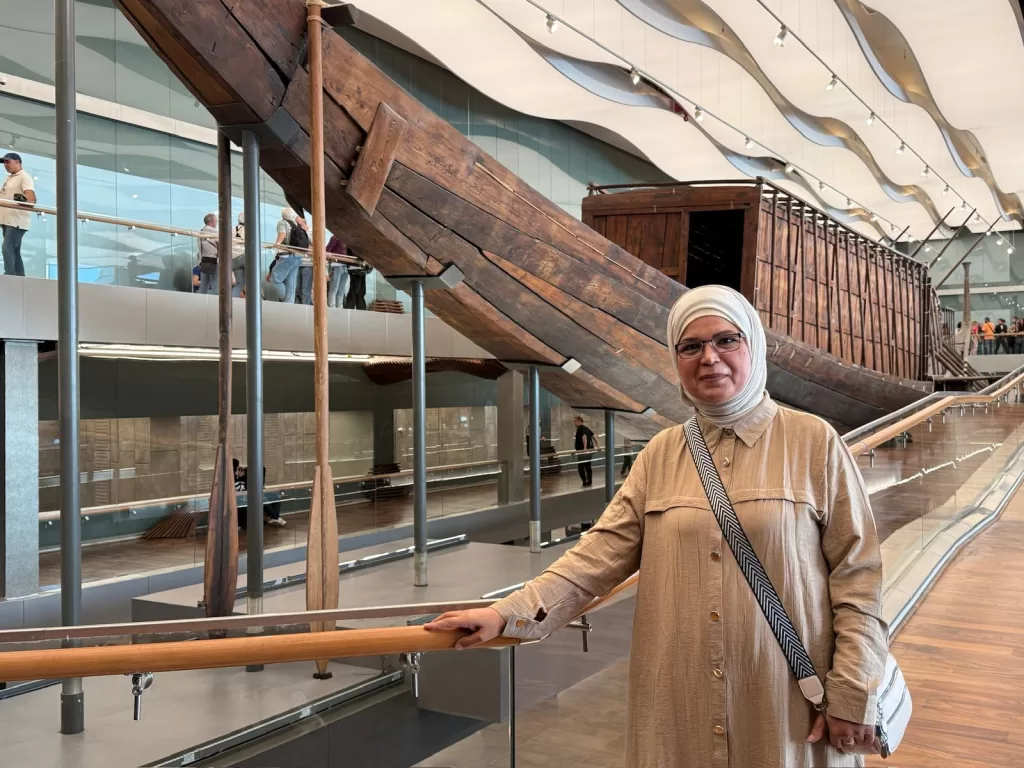
Zeina Abd Ali, journeying from Baghdad with family, interpreted GEM as emblematic of Egypt’s contemporary resurgence.
“Remarkable progress, infinitely superior to the past,” she observed.
Khufu’s solar boat held her gaze longest: “It encapsulates traditional heritage’s essence, transporting you to antiquity’s atmosphere. Truthfully, beauty permeates every corner.”
Closer to home, Egyptian content creator and pharmacist Esraa Ehab, having missed October’s soft opening, prioritized an immediate post-launch visit.
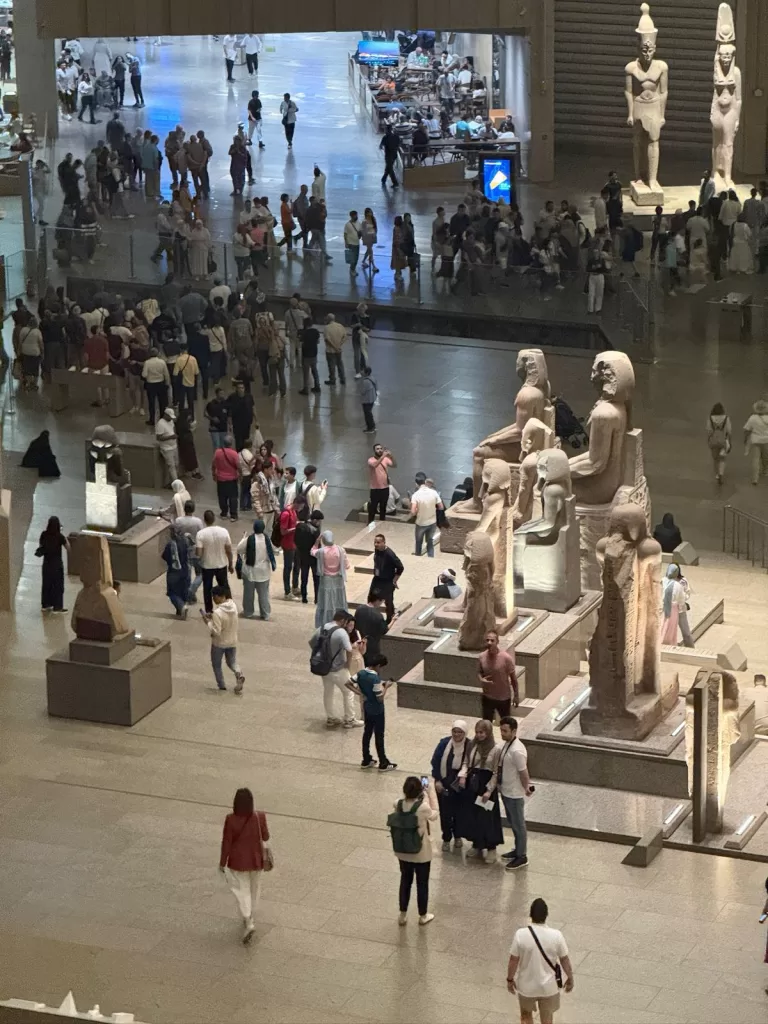
Her enthusiasm radiated: “Perfection in organization, the Grand Hall, majestic Staircase, and complete Tutankhamun Gallery unified at last. Astonishing!”
Contrasting with frequent Tahrir Egyptian Museum outings, GEM unveiled novelties: “Pieces debut here, absent elsewhere.”
She lauded the inclusive design for diverse demographics, families, children, scholars, dreamers alike.
“Augmented reality thrills, a dedicated children’s museum educates playfully, ample spots for relaxation, dining, and prayer abound. Dedicate a full day, you’ll emerge enriched, yearning for encores without a dull moment.”
On affordability, Ehab was unequivocal regarding the EGP200 entry: “Exceptionally fair, upon entry, it feels undervalued. The vastness, galleries, and interactive activities render it a steal, utterly worthwhile.”
Threaded through every testimonial is an undercurrent of gratitude, national pride, and global invitation.
Preckler encapsulated the sentiment: “The entire venue is pure magic. Egypt, take immense pride.”
As footsteps echo across polished floors overlooking Giza’s plateau, GEM transcends museological bounds.
It forges emotional bridges across millennia, cultures, and generations, beckoning humanity to reclaim its shared origins.
In these nascent days, early visitors are not mere spectators, but heralds of a cultural renaissance, ensuring Egypt’s legacy endures not in dust-covered vaults, but in living, breathing inspiration.