


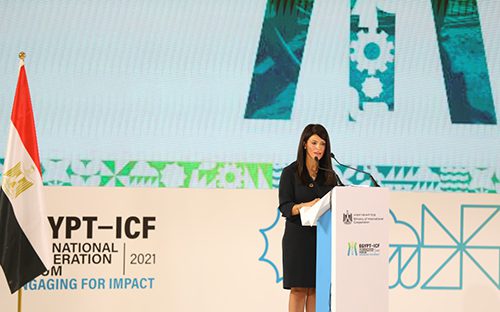
The Ministry of International Co-operation Monday released Cairo’s Communiqué to re-position emerging economies as key allies in global development.
The Egypt-ICF communique was endorsed by President of the United Nations Economic and Social Council Ambassador Collen Vixen Kelapile, who read the Forum’s Final Communiqué requesting the inclusion of recommendations into the international agenda.
President Abdel Fattah El Sisi gave an opening speech at the Egypt-ICF event, emphasising that Egypt advocates the spirit of open and inclusive partnership and the importance of supporting development.
As for policy in the Cairo Communiqué, he underscored the need for the international community and financial institutions to support developing countries as they strive for a green recovery in the post Covid-19 economy.
The president also accentuated the private sector role in advancing all development endeavours, as governments alone will not be able to meet all challenges.
In addition, his speech highlighted that success stories are vital to promoting change in the region, and that the exchange of experience between Egypt and other countries is necessary.
Minister of International Co-operation Rania el-Mashat pointed out that the recommendations push for deeper reform and actively mutually beneficial co-operation to provide impetus and confidence for the global recovery.
The ministry of international co-operation is working with multilateral and bilateral development partners to apply the findings of Egypt-ICF in order to contribute to the achievement of Sustainable Development Goals (SDGs), el-Mashat said.
“Despite the circumstances imposed by the pandemic and the inability of many delegations and international participants to come to Cairo to take part in the first edition of the Forum, an active virtual and actual presence, together with effective, influential, and rich discussions was witnessed,” el-Mashat said.
In order to recognise the persistent SDGs financing gap, as an additional US$3.7 trillion a year will be required to attain SDGs by 2030, all nations and international organisations must be called upon to capitalise on the indispensable role of the private sector and private investments in fulfilling SDGs through the promotion of sustainable corporate practices and impact investment, she said.
Businesses must also be encouraged to implement more inclusive economic policies that increase cross-institutional collaboration and align all stakeholders towards environmental, social and governance (ESG) principles, the minister said.
The economic infrastructure is one of the most prominent sectors with persistent financing gaps ranging from $770 billion to $950 billion. The communique calls for formulating strategic infrastructure development plans, as well as gauging the amount of annual investments needed.


Discussion about this post