




An Egyptian rescue excavation mission has uncovered a series of significant archaeological remains in the Moharram Bek district of central Alexandria, shedding new light on the evolution of urban life in the ancient Mediterranean city across several historical periods, the Ministry of Tourism and Antiquities announced on Saturday.
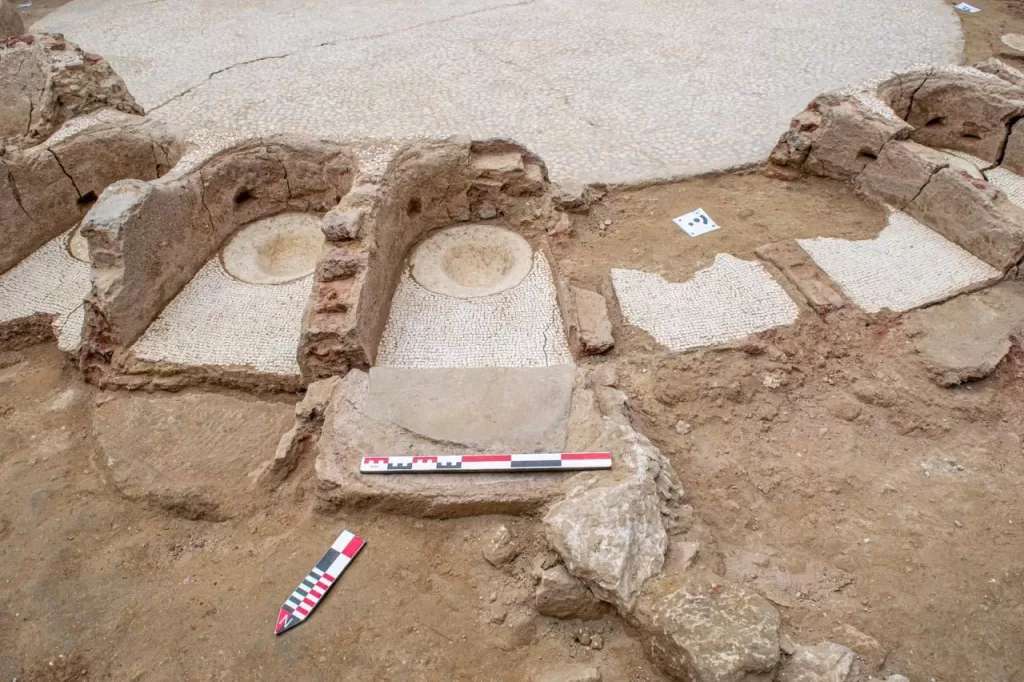
According to the ministry, the excavation revealed a continuous sequence of settlement layers spanning the Ptolemaic, Roman and Byzantine eras. Among the most prominent finds are the remains of a circular public bath of the Tholoi type dating to the late Ptolemaic period, and parts of a Roman residential villa featuring mosaic floors of various styles.
Hesham El‑Leithy, secretary‑general of the Supreme Council of Antiquities, said the results help redraw the ancient urban map of Alexandria and underscore Egypt’s efforts to safeguard its heritage, especially through salvage excavations linked to development projects.
Mohamed Abdel‑Badi, head of the Egyptian Antiquities Sector, said the site presents a rare example of interconnected residential and service architecture, including an advanced water installation and a small bathing pool associated with the Roman villa.
The mosaics uncovered employed both the Opus Tessellatum and Opus Sectile techniques, reflecting the artistic diversity of the city during the Ptolemaic and Roman periods.
Hesham Hussein, head of the Central Department of Lower Egypt Antiquities, noted that the discovery fills an archaeological gap in Alexandria’s southeastern sector, an area that had not been adequately studied.
He added that the findings support a reassessment of historical maps of the city, including those produced by 19th‑century scholar Mahmoud Pasha El‑Falaky, and confirm that the area lay within the city walls until the Byzantine period.
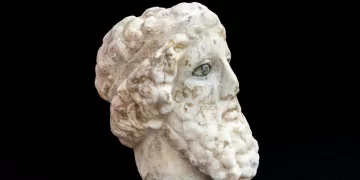
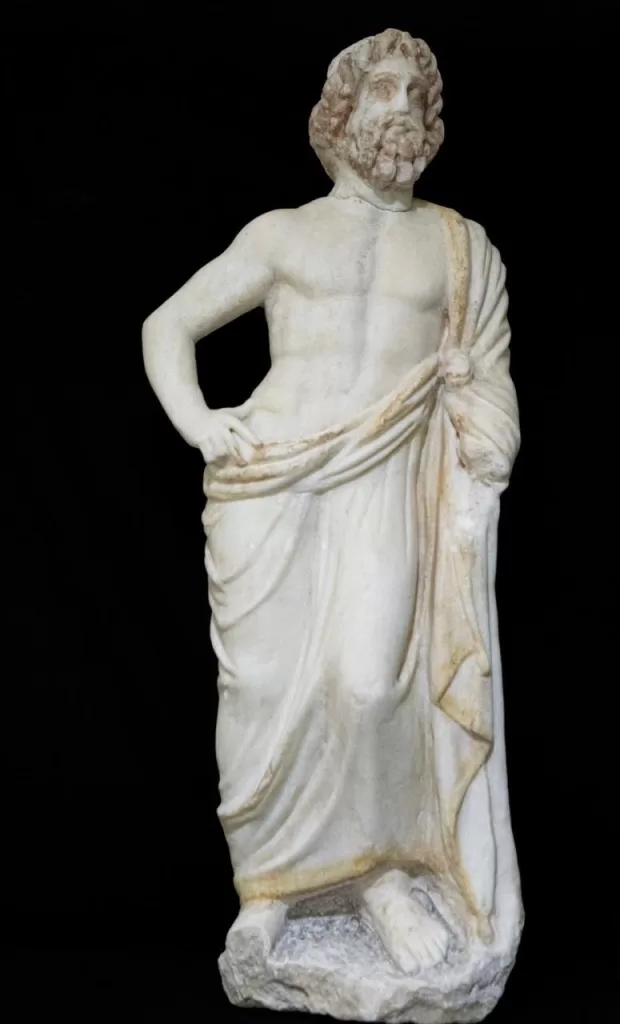
Artefacts recovered from the site include marble statues of deities such as Bacchus and Asclepius, as well as a headless statue believed to represent Minerva.
Coins, lamps, pottery and stamped amphora fragments were also found, reflecting Alexandria’s vibrant commercial and cultural activity and its Mediterranean connections.
Ibrahim Mostafa, head of the mission and director of the Central Alexandria District, said the excavation had lasted several months and yielded exceptional results.
Initial restoration work has begun, and the team is studying the possibility of exhibiting key finds at the Greco‑Roman Museum.
Excavations will continue, with officials expecting further discoveries.