



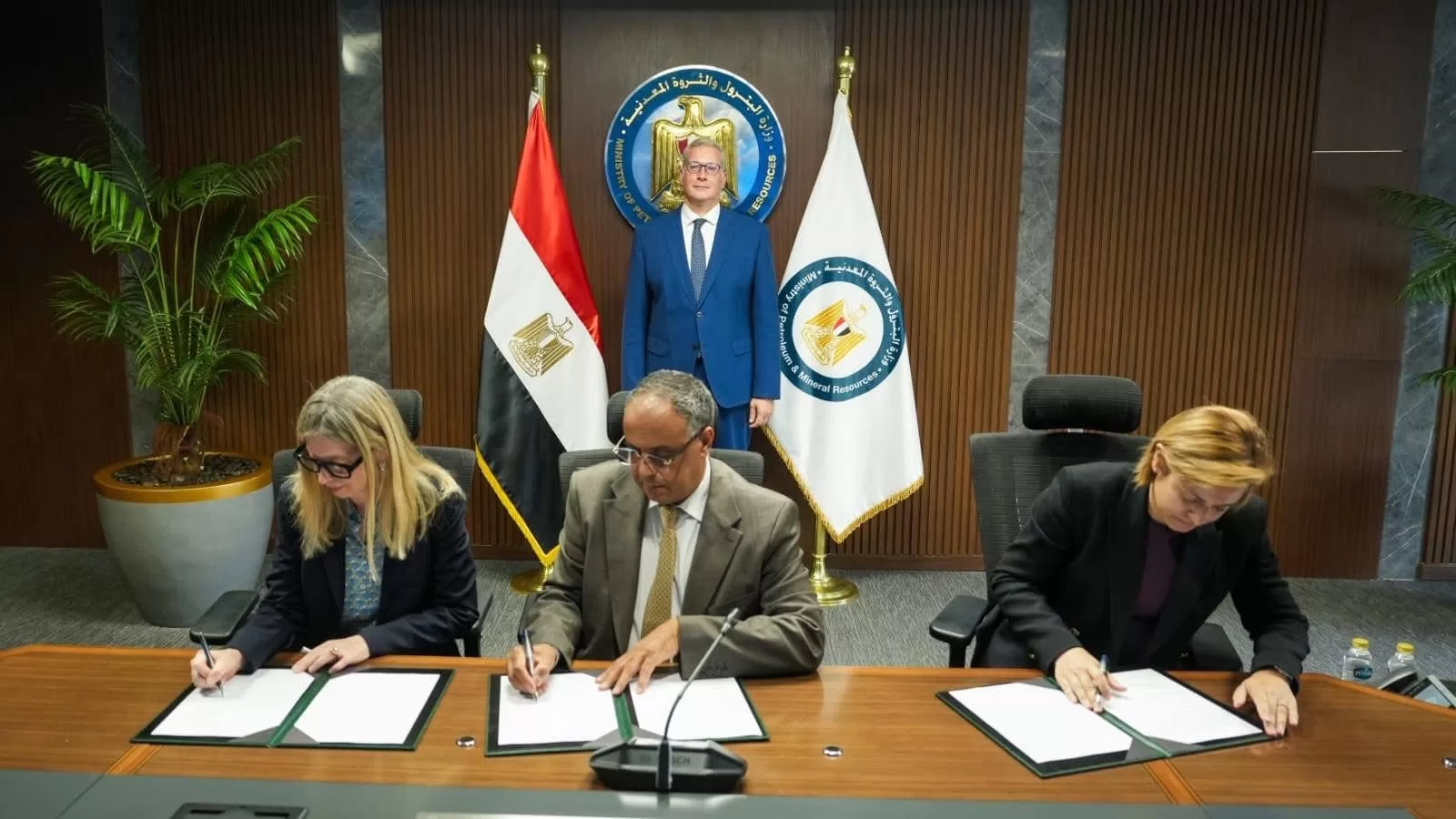
Egypt’s Minister of Petroleum and Mineral Resources Karim Badawi attended the signing of a new agreement for the integrated Badr El-Din concession in the Western Desert between the Egyptian General Petroleum Corporation and international partners Cheiron and Capricorn. The deal aims to accelerate investment of at least $208 million over five years to expand exploration, development, and production activities, including drilling 44 new wells.
Under the agreement, eight existing concession areas operated by Badr El-Din Petroleum Company—a joint venture between EGPC, Cheiron, and Capricorn—will be merged, alongside new exploration zones. This will bring the total concession area to approximately 6,181 square kilometers, enabling intensified exploration and development to boost oil and gas output and add new reserves.
The agreement reflects the ministry’s efforts to attract foreign investment and create a favorable climate for partners in the Western Desert, Egypt’s most important crude oil-producing region. The work program includes upgrading production infrastructure at the Badr-3 processing plant, reprocessing seismic data, and conducting a 3D seismic survey over 500 square kilometers.
Officials expect the agreement to strengthen exploration and production plans in Badr El-Din’s areas, opening new horizons for petroleum and gas reserves and supporting Egypt’s drive to increase domestic energy production.
Egypt’s Minister of Petroleum and Mineral Resources Karim Badawi attended the signing of a new agreement for the integrated Badr El-Din concession in the Western Desert between the Egyptian General Petroleum Corporation and international partners Cheiron and Capricorn. The deal aims to accelerate investment of at least $208 million over five years to expand exploration, development, and production activities, including drilling 44 new wells.
Under the agreement, eight existing concession areas operated by Badr El-Din Petroleum Company—a joint venture between EGPC, Cheiron, and Capricorn—will be merged, alongside new exploration zones. This will bring the total concession area to approximately 6,181 square kilometers, enabling intensified exploration and development to boost oil and gas output and add new reserves.
The agreement reflects the ministry’s efforts to attract foreign investment and create a favorable climate for partners in the Western Desert, Egypt’s most important crude oil-producing region. The work program includes upgrading production infrastructure at the Badr-3 processing plant, reprocessing seismic data, and conducting a 3D seismic survey over 500 square kilometers.
Officials expect the agreement to strengthen exploration and production plans in Badr El-Din’s areas, opening new horizons for petroleum and gas reserves and supporting Egypt’s drive to increase domestic energy production.

