









Egypt’s Minister of State for Military Production Mohamed Salah El-Din Moustafa affirmed his keenness to continuously follow up on the latest developments of projects carried out by the ministry’s affiliated entities and to promptly remove any obstacles that may arise during implementation.
He stressed that the ministry is working to attract more investments and establish productive industrial partnerships with various state institutions, in line with the directives of the political leadership.
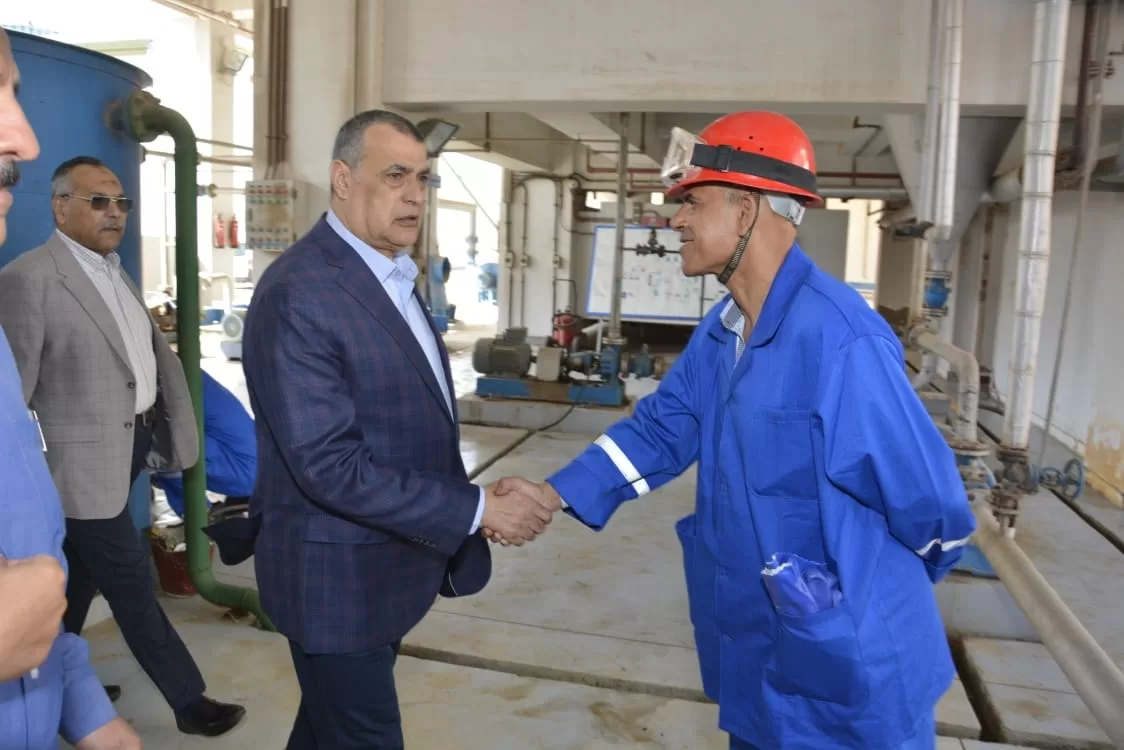
This came during an unannounced inspection tour to the Heliopolis Company for Chemical Industries (Factory 81), one of the leading industrial entities affiliated with the Ministry of Military Production.
The visit came as part of the minister’s commitment to conduct field follow-ups of all companies and units under the ministry to ensure the smooth progress of production operations and verify compliance with ministerial directives previously issued to improve performance.
Upon his arrival, the minister toured the production lines, where Chairman Mohamed Abdel Moneim El-Basiony reviewed recent developments aimed at boosting productivity and enhancing operational efficiency.
The tour included an inspection of the rubber and plastic sector, established in 1964 to meet the requirements of the Armed Forces, as its products are used in complementary ammunition industries, cartridge bases, protective masks, tank wheels, and track pads.
The company also produces a range of civilian products, including stadium seats manufactured in accordance with international standards approved by the Fédération Internationale de Football Association (FIFA).
The minister also inspected the company’s relocation project and reviewed the progress achieved so far.
During the visit, Moustafa checked workers’ compliance with safety measures and the use of personal protective equipment, stressing the ministry’s commitment to applying occupational safety and health standards that ensure a secure working environment for both personnel and facilities.
He also listened to the views and requests of a number of workers, urging them to exert greater effort and instructing officials to remove any challenges facing production.
He stressed the importance of providing an appropriate work environment that helps improve performance and reinforces the key role played by the Heliopolis Company for Chemical Industries in supporting the national economy and advancing local industry in line with presidential directives.
During the tour, the minister stressed the need to apply principles of governance and internal control, adhere to maintenance schedules to preserve the technical condition of production lines, and regularly review production and marketing plans, stock levels, and production inputs.
He also underlined the importance of continuously implementing industrial and cyber safety procedures and safely disposing of waste.
The Heliopolis Company for Chemical Industries (Factory 81) was established as the first Egyptian company specializing in the production of paints and chemicals in the Middle East, particularly specialized coatings used to protect and maintain ships and marine vessels above and below the waterline against rust and corrosion.
The company also produces weather- and salt-resistant paints for coastal buildings, serving both military and civilian sectors, and contributing to major national projects in housing, urban development, roads, and bridges across the country.
The company’s main mission is to meet the needs of the Armed Forces and police through the production of various types of munitions and explosive devices.
Its surplus production capacity is utilized to manufacture a wide range of civilian products such as paints, nitroglycerin, formaldehyde, urea formaldehyde, hexamine, and resin, one of the main components of paint manufacturing, as well as dry fuel tablets and metallic parts used in chemical filters and spare parts.
The minister was accompanied during the tour by Salah Gomblat, Deputy Chairman and Managing Director of the National Authority for Military Production.

