

Egypt Revives PA-UfM’s Role as Regional Peace Platform
Abou El-Enein highlights Egypt’s leadership in regional stability, rejects displacement, warns of rising popular anger
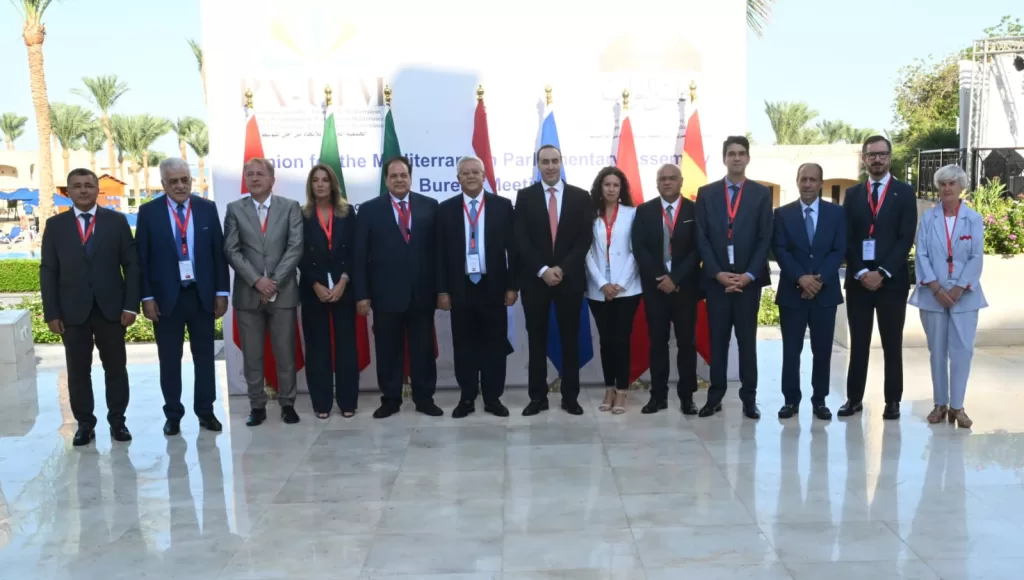
In a landmark event for Mediterranean parliamentary diplomacy, the meetings of the Parliamentary Assembly of the Union for the Mediterranean (PA-UfM), held in Sharm El-Sheikh from September 11 to 13, resulted in an unprecedented final statement decisively condemning Israeli aggression and expansionism. Chaired by Egypt’s representative, MP Mohamed Abou El-Enein, Deputy Speaker of the Egyptian House of Representatives, the session achieved a historic consensus amidst the escalating Middle East crisis.
No displacement, no liquidation
Under Abou El-Enein’s presidency, the PA-UfM issued a statement that is considered the most significant in the body’s history. It delivered a strong denunciation of Israel’s military actions in Gaza, its settlement expansions aimed at annexing the West Bank, and its violations of state sovereignty.
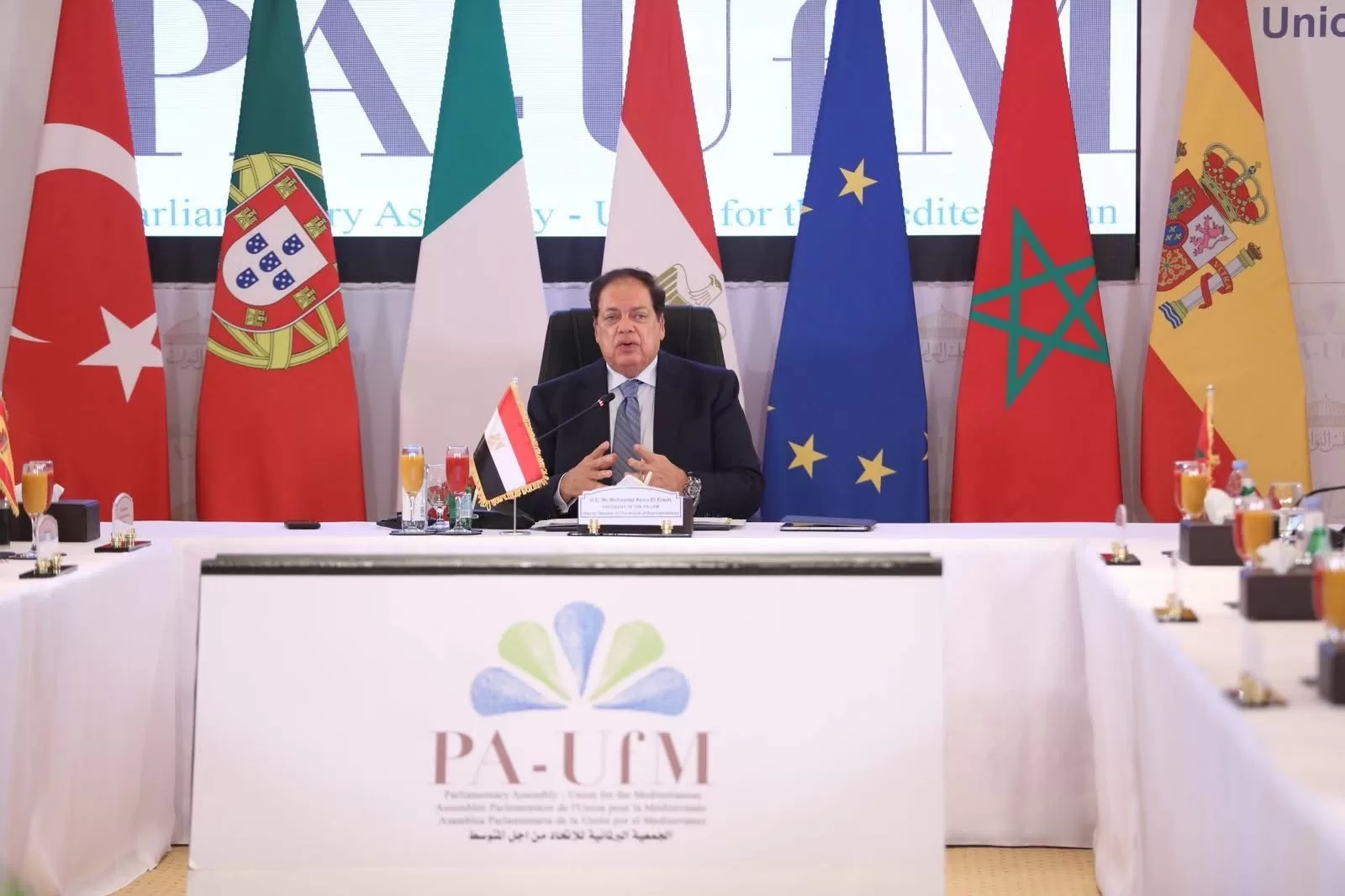
Addressing the delegations, Abou El-Enein, President of the PA-UfM, spoke with striking clarity, asserting that the core issue fueling the conflict is the occupation itself, not the actions of Palestinian factions. He delivered a stern warning on Egypt’s position:
“No displacement, no liquidation, and no Palestinian state on any Arab land except Palestinian land itself.”
He stressed that any attempt to displace Palestinians or liquidate their cause is a “red line” that Egypt will never allow to be crossed, noting that continued Israeli violations “fuel massive popular anger in the region.”
Abou El-Enein also refuted allegations regarding the closure of the Rafah crossing, affirming that Egypt has consistently kept its borders open and that Israel is the party obstructing aid deliveries from the Palestinian side. He highlighted Cairo’s exceptional support, providing 70% of all humanitarian aid to Gaza and receiving 13,500 wounded individuals and their companions for treatment—an unparalleled level of assistance for the Palestinian people.
Furthermore, he presented the Parliament’s policy committee report, which documented the severity of the situation in Gaza, describing the suffering endured by the Palestinian people as genocide. Citing President Abdel Fattah El-Sisi, he underscored that “peace is not born from bombing, nor imposed by force, nor achieved by normalization rejected by the peoples,” and called for justice and fairness as the only viable foundation for a settlement.
A lifeline platform for dialogue
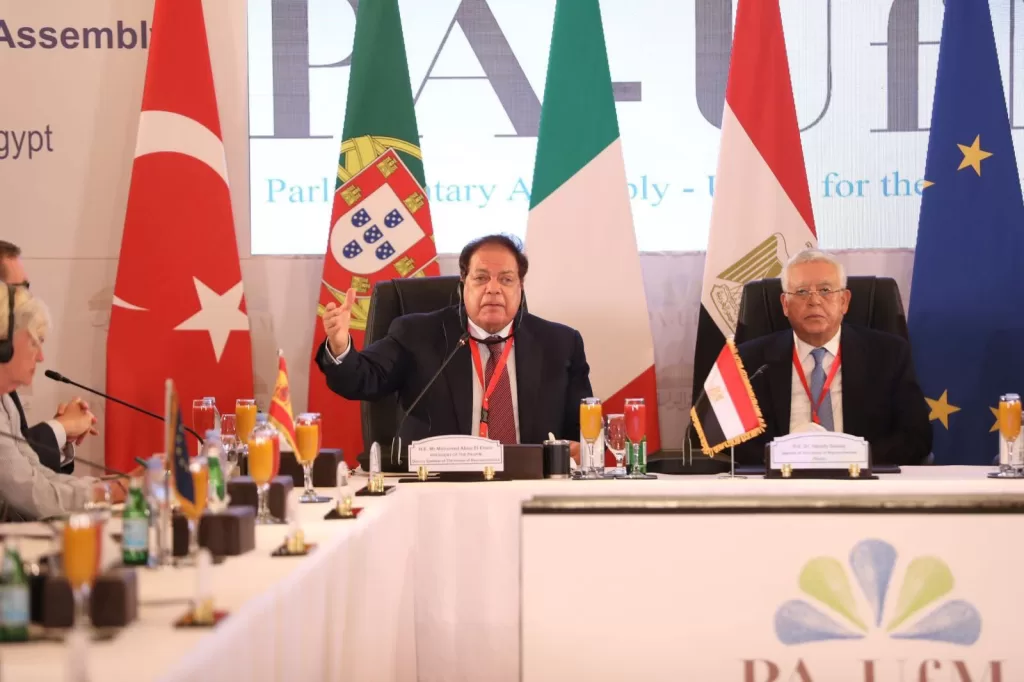
In his opening remarks, Dr. Hanafi Gebali, Speaker of the Egyptian Parliament, affirmed that Egypt’s presidency of the PA-UfM came at a critical time that demanded intensified dialogue. He stressed that Mr. Abou El-Enein was entrusted with the role due to his vast international parliamentary experience, expressing hope that the Assembly would serve as a “lifeline” for Mediterranean peoples against the threat of continued conflict.
Unprecedented momentum and Unified Stand
The Sharm El-Sheikh meetings attracted significant diplomatic and media attention due to the strength of the final communiqué. The statement succeeded in unifying members around a strong denunciation of what it classified as repeated violations of international and humanitarian law, including bombardment, starvation, siege, and forced displacement.
The document stressed that continued occupation undermines prospects for peace and worsens humanitarian conditions, calling for a comprehensive ceasefire and enabling humanitarian organizations to operate freely. It also took a firm diplomatic stance by rejecting any “diplomatic blackmail or retaliatory measures” against states that recognize Palestine.
The PA-UfM bureau affirmed that the two-state solution remains the only viable framework for a comprehensive and lasting peace in the Middle East, underscoring the vital role of parliamentary diplomacy in halting conflicts and promoting regional stability.
Beyond the formal sessions, the event also incorporated cultural diplomacy. Abou El-Enein accompanied delegates on a Red Sea cruise, followed by visits to the Sharm El-Sheikh museum and St. Catherine’s Monastery, showcasing Egypt’s rich cultural and religious heritage.
Through this pivotal gathering, Egypt successfully restored the PA-UfM to its core mission—a platform for constructive dialogue, a lever for just peace, and a unified voice upholding the rights of peoples—reaffirming Egypt’s leadership in shaping a more stable regional future.