








Egypt’s textile and ready-made garments industry is a key pillar of the country’s industrial development strategy, driven by growing investment, expanding production capacity and rising export ambitions.
Long regarded as one of Egypt’s major manufacturing sectors, the industry is now receiving renewed government support as part of efforts to deepen local manufacturing and strengthen the country’s position in global markets.
Over the decades, the industry has played a vital role for decades in generating employment and supporting exports.
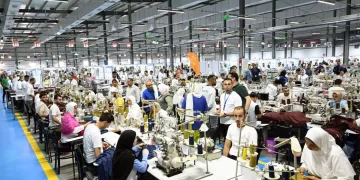
Beyond its traditional importance, it remains one of the country’s most labour-intensive industries, contributing significantly to economic and social development through activities ranging from spinning and weaving to cutting, sewing and packaging.
The sector’s growing importance was highlighted during Prime Minister Moustafa Madbouli’s recent visit to New Borg El Arab, Alexandria Governorate, where he inaugurated a new ready-made garments factory and opened new production lines at another facility.
The visit underscored the government’s commitment to supporting an industry increasingly viewed as a magnet for foreign investment and a major source of export growth.
“The state attaches great importance to supporting industrial projects in this sector, which is one of the industries where Egypt enjoys strong competitive advantages and which contributes to localising industry and increasing exports,” Madbouli said during the tour.
The newly inaugurated factory represents investments worth LE500 million and is expected to generate annual exports worth between $250 million and $500 million. It will also create more than 6,000 job opportunities.
In addition, the newly opened expansion project is expected to generate exports worth around $55 million by 2026 following the addition of 32 new production lines. The project is also expected to provide approximately 6,000 direct and indirect jobs.
The significance of these investments extends beyond increased production capacity. They are also expected to facilitate the transfer of expertise and advanced technologies to the Egyptian market.
The new facilities are equipped with modern production lines and operate in accordance with international quality and sustainability standards.
They also invest heavily in workforce training and skills development to meet the requirements of international markets, helping to enhance productivity and improve the competitiveness of Egyptian products.
Egypt enjoys several advantages that strengthen its position in the textile and garment industry. Its strategic geographical location provides easy access to markets across Europe, Asia and Africa, while an extensive network of trade agreements enables Egyptian products to enter major global markets on favourable terms.
“These significant investment incentives are aimed at strengthening Egypt’s position as a regional and global manufacturing hub, leveraging its strategic location and trade agreements,” Minister of Industry Khaled Hashem said.
“This ambitious vision is being translated into reality in Borg El Arab, which is becoming a centre of manufacturing excellence producing goods that will reach markets in Europe and the United States under the ‘Made in Egypt’ label,” he added.

