



Israeli plan to occupy Gaza city opens door for perpetual war, regional unrest
Analysis by Mohamed Fahmy
The Israeli security cabinet’s latest decision to impose full military control over the Gaza Strip, beginning with Gaza City, is a dangerous and unprecedented escalation in the nearly two year war.
Unlike previous Israeli operations, which targeted specific areas or objectives before withdrawing, this plan seeks to establish an open-ended presence in the Palestinian territory.
The move challenges the explicit recommendations of Israel’s own military leadership, exposes deep internal divisions within its security establishment, and risks entangling the country in a costly and indefinite conflict.
Critics inside and outside Israel warn that the decision is both delusional and inhuman, a recipe for perpetual war, a worsening humanitarian catastrophe, and an irreversible damage to Israel’s global standing.
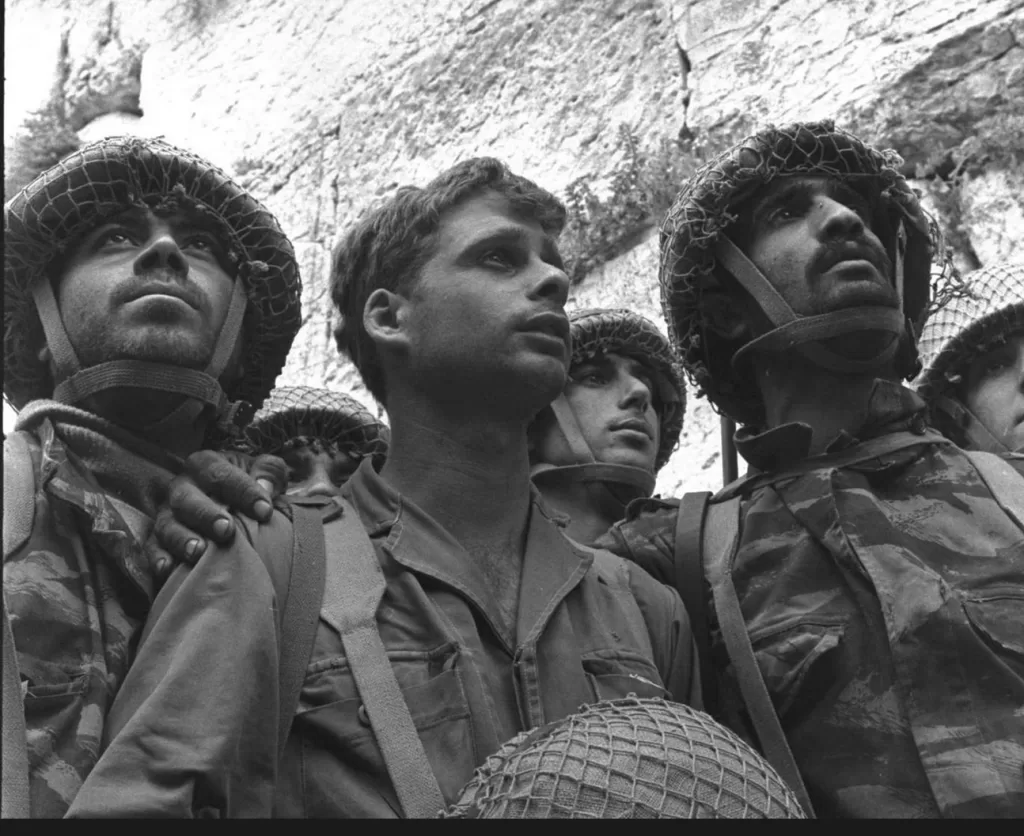
Israel’s history offers an ominous parallel. In June 1967, a photograph by Israeli photojournalist David Rubinger captured three paratroopers standing before the newly conquered Western Wall, a moment celebrated by the Israeli public as a symbol of triumph.
Among the three paratroopers was Yitzhak Yifat, who decades later admitted that the war’s real legacy was not glory, but the burden of ruling over another people.
“We realised that we had conquered another people, a whole people,” Yifat remembered in 2017. And now, it seems we cannot get to a true peace.”
Today, as Israel’s cabinet authorises the full reoccupation of Gaza that lesson remains unlearned.
Prime Minister Benjamin Netanyahu insists the takeover is temporary and that it will last only until Hamas is dismantled and replaced by an “alternative civil administration” that is unaligned with either Hamas or the Palestinian Authority.
But no such alternative exists, making the stated goal a political fiction.
For many observers, the plan echoes the words of far-right Finance Minister Bezalel Smotrich who declared bluntly: “We are erasing the Palestinian state, first in action, then officially.”
Occupation by another name
Netanyahu’s official statements carefully avoid the word “occupation”. In doing this, he is aware of the international legal obligations and political consequences the word carries.
Yet, the practical reality will be indistinguishable from the occupation Israel maintained in Gaza prior to its 2005 withdrawal.
International law is clear: permanent control over another territory’s population brings with it the responsibility of providing basic services, maintaining order, and protecting civilians.
These obligations will be costly, complex, and politically explosive.
Ram Aminach, an Israeli military economics expert, has warned that the financial burden could reach $6 billion in the initial months alone, with “incomprehensible” long term costs to sustain two million Palestinians in a devastated enclave.
Given Israel’s already strained economy haemorrhaging funds across multiple fronts from Lebanon to Yemen, this is a gamble the state may not be able to afford.
Lessons from Iraq and Afghanistan
Operationally, the plan assumes the Israel army can achieve in five or six months what it has failed to do in over two years: decisively defeat Hamas and hold the territory without facing sustained insurgency.
This assumption flies in the face of recent history. The US and Britain’s occupations of Iraq and Afghanistan, despite vastly superior resources,descended into protracted guerrilla warfare.
Israel’s own record in Gaza offers little more comfort: areas previously “cleared” of Hamas fighters have seen their return within weeks or months.
Israeli army Chief of Staff, Lt. Gen. Eyal Zamir, reportedly opposed the plan on both strategic and humanitarian grounds. His concerns are echoed by opposition leader Yair Lapid who has warned of a “disaster that will lead to many more disasters,” including increased risks to soldiers, the probable deaths of Israeli hostages, and severe diplomatic fallout.
October 7 deadline
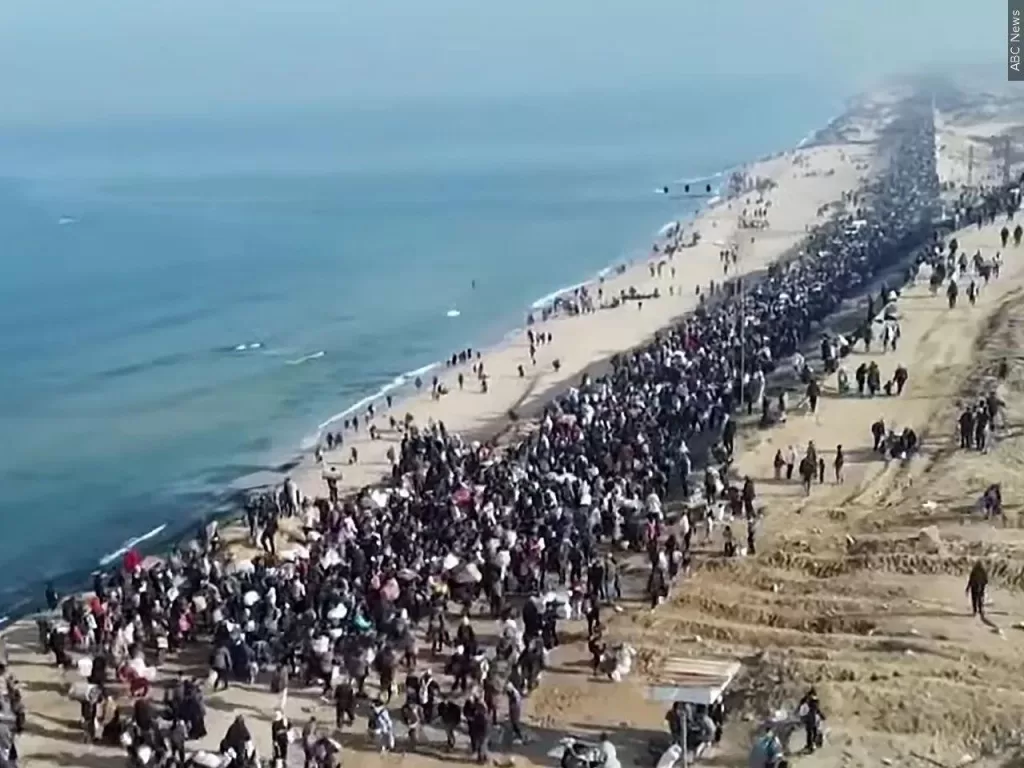
Under the cabinet’s plan, civilians in Gaza City have until October 7, the second anniversary of the Hamas attacks that ignited the war, to evacuate south before a full-scale military assault begins. The symbolic timing is deliberate, but the humanitarian implications are chilling.
Approximately one million people, many already displaced multiple times, will be ordered to move into the southern strip, an area already buckling under the weight of refugees.
It is here, in the remaining 25% of territory outside Israeli control, that 80% of Gaza’s population is now crammed.
The unanswered question is how Israel plans to achieve “full control” without triggering mass civilian casualties.
The Israeli army’s track record in recent months, which includes incidents where soldiers opened fire at aid distribution sites, killing hundreds, offers little reassurance.
Hostages as a political battleground
Perhaps the most morally fraught consequence of the decision is its impact on the remaining Israeli hostages held by Hamas.
The Hostage and Missing Families Forum accused Netanyahu’s government of “formally abandoning”their loved ones. Hamas has warned that any attempt to seize Gaza City will be tantamount to “sacrificing” the captives.
Critics argue that Netanyahu is prolonging the war for political survival, bound by the demands of his ultra-nationalist coalition partners who openly advocate Jewish resettlement in Gaza and the removal of its Palestinian population.
In this narrative, the hostages’ fate has become secondary to ideological goals.
Netanyahu’s political calculus
Netanyahu’s career has been defined by a consistent rejection of any binding commitment to Palestinian statehood.
His rhetoric over decades, claiming there is “no partner for peace” and portraying any Palestinian entity as a mortal threat has created a political environment where indefinite control is presented as the only “safe” option.
However, in embracing this approach, Netanyahu is steering Israel towards a strategic cul-de-sac: No clear exit strategy from Gaza.
The plan thus represents not just a military operation, but a political bet that Israel can weather international outrage and sustain a costly occupation indefinitely.
The humanitarian abyss
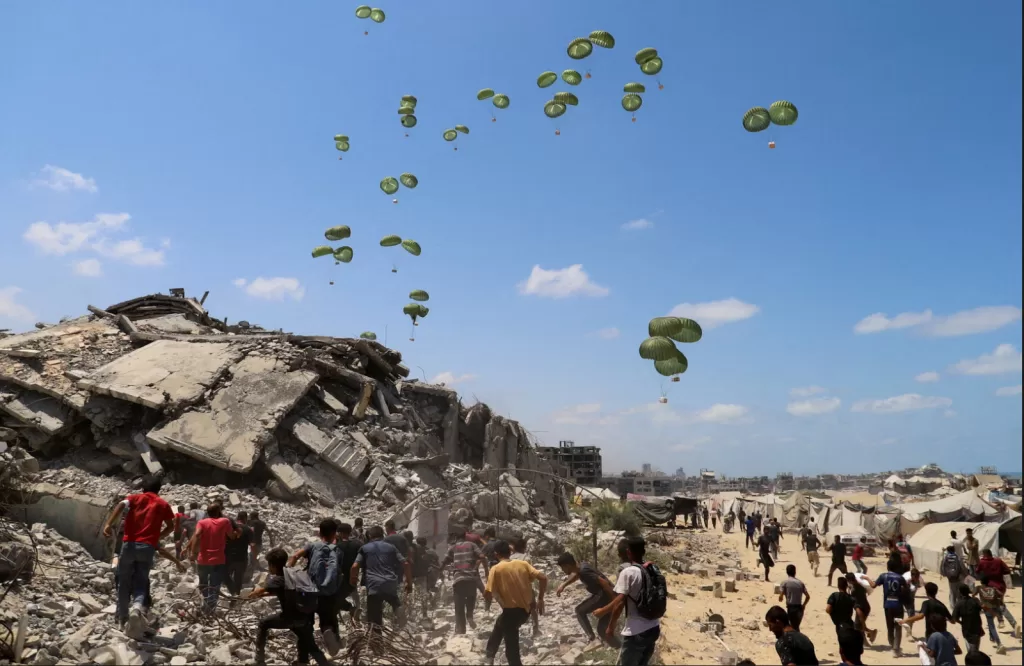
Beyond the politics, the human cost cannot be overstated. Gaza is already experiencing near total infrastructure collapse. Food and clean water shortages are acute, with the UN warning of famine. Medical facilities are overwhelmed and under constant threat of attack. Electricity remains scarce, crippling hospitals, sewage treatment, and communications.
A full occupation will place the entire burden of civilian administration on Israel, including the responsibility to prevent starvation and disease.
This is a responsibility the current government shows little willingness or perhaps ability to meet.
Strategic consequences for the region
For Egypt and other regional powers, Israel’s plan carries dangerous ripple effects: Increased refugee pressures on neighbouring states, if mass displacement occurs, potential destabilisation ofSinai, should violence spill over the border, and the collapse of already fragile peace efforts, including Egyptian-led ceasefire negotiations.
The same effects include radicalisation risks across the Arab world, feeding into extremist recruitment narratives.
From Cairo’s perspective, the reoccupation of Gaza threatens not only Palestinian lives but also Egyptian national security.
A recipe for perpetual war
Israel’s plan to “fully control” Gaza City, and ultimately the entire strip, may appear at first as a bold attempt to impose security through force. In reality, however, it is a high-risk gamble with no credible endgame.
By ignoring the lessons of past occupations, Israel risks locking itself into a cycle of violence it cannot escape.
The words of Yitzhak Yifat, reflecting on 1967, resonate with tragic relevance: the conquest of another people is not a victory, but the beginning of an endless problem. Netanyahu’s Gaza plan threatens to repeat that history, on an even bloodier scale.
For the international community, including Egypt, the task is urgent: to resist the normalisation of an occupation that will deepen the humanitarian crisis, destabilise the region, and extinguish the already dim prospects for peace.
Diplomatic pressure, legal accountability, and humanitarian mobilisation will be essential to prevent Gaza from becoming an open-air prison under permanent military rule.
The decision now before Israel is not just about Gaza, but about the future of the conflict, the security of the region, and the moral direction of the state itself.
A policy born of fear, ideology, and political survival is no substitute for a sustainable strategy of peace.
If history is any guide, Israel’s control of Gaza City will not bring the quiet its leaders promise. It will bring only more graves, more grief, and more generations locked in the tragic embrace of a war without end.
Mohamed Fahmy is the editor-in-chief of The Egyptian Gazette and Egyptian Mail newspapers

