




Egypt’s Minister of Industry Khaled Hashem affirmed on Sunday that Egypt possesses a strong manufacturing base in the fertiliser industry, which represents about one-third of exports by the chemical and fertiliser sector.
He stressed that stable energy supplies, despite recent geopolitical crises, have ensured continued production and strengthened Egyptian exports to global markets.
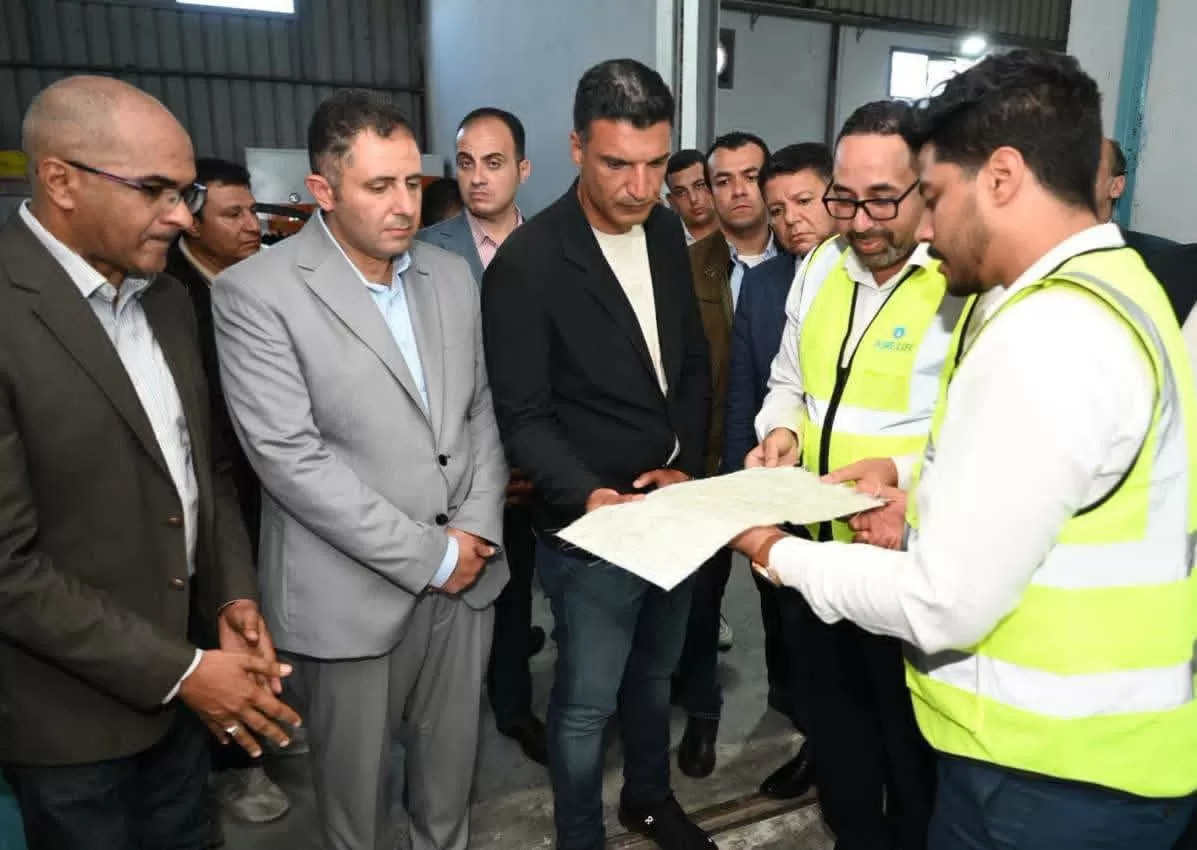
Hashem made the remarks during a tour of the Damietta Public Free Zone, accompanied by Damietta Governor Hossam El-Din Fawzy and senior ministry officials, to inspect major factories in targeted industries.
During the tour, the minister inspected Misr Fertilisers Production Company (MOPCO), covering 400,000 square metres with investments of LE53 billion and capital of LE28.6 billion.
It produces 1.8 million tonnes of urea and 1.2 million tonnes of ammonia annually, with 100% local content, exports around 45% of production to European markets and provides 2,407 direct and indirect jobs.
Hashem reviewed production, advanced technologies, safety, environmental protection, governance, training, digital transformation and carbon-removal efforts.
He noted that chemical and fertiliser exports reached about $9.4 billion in 2025, up 7% from 2024, stressing that uninterrupted energy supplies enabled the sector to maintain production and meet domestic and export demand.
Hashem also inspected Pure Life, which manufactures micron filters and desalination equipment.
With investments of about LE500 million, the factory produces 3 million micron filters, 3,000 pressure vessels and 1,500 industrial filter vessels annually, with 60–100% local content, exports to 53 countries and provides around 500 jobs.
He stressed expanding local production to support national water, desalination and sanitation projects.
The minister then visited DNM Spinning, Weaving and Textile Dyeing Factory, with $170 million in investments, annual production of 48 million square metres, 40% local content, $120 million in exports and 2,400 jobs.
Hashem stressed that water-treatment components are key enabling industries under Industrial Strategy 2030, while spinning and weaving are vital for global supply chains, local manufacturing and exports.

