



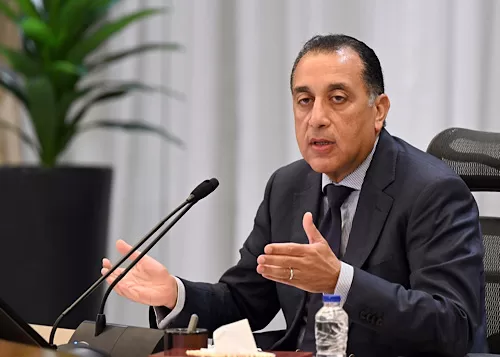
Egyptian Prime Minister Moustafa Madbouli has welcomed the International Monetary Fund (IMF) Executive Board’s completion of the seventh review of Egypt’s Extended Fund Facility (EFF) programme and the second review under the Resilience and Sustainability Facility (RSF), describing the decision as a vote of confidence in the country’s economic reform agenda.
Madbouli stated on Friday that the decision grants Egypt immediate access to 1.31 billion Special Drawing Rights (SDRs), equivalent to approximately $1.77 billion. This comprises 1.11 billion SDRs (around $1.5 billion) under the EFF and 200 million SDRs (about $272 million) through the RSF, bringing total IMF disbursements across both programmes to 5.4 billion SDRs (around $7.3 billion).
He highlighted the IMF’s assessment that Egypt has absorbed the impact of Middle East conflict from a stronger macroeconomic position than during previous external shocks, demonstrating the resilience built by recent reforms. The Fund praised the government’s swift policy response—including exchange rate flexibility, energy price adjustments, and tighter public spending—which helped contain the fallout and maintain economic stability despite ongoing regional uncertainty.
According to Madbouli, the IMF report showed that Egypt’s real GDP grew by 5 per cent during the third quarter of fiscal year 2025/2026, with average growth reaching 5.2 per cent over the first nine months. Full-year growth is projected to reach 4.6 per cent.
The IMF also highlighted record remittances from Egyptians abroad, robust tourism revenues, a gradual recovery in Suez Canal receipts, and energy hedging policies as key factors supporting the external sector. These elements have helped maintain international reserves above 119 per cent of the reserve adequacy benchmark.
Additionally, the Fund recognised Egypt’s fiscal performance, noting that the government exceeded its targets for both the primary surplus and tax revenues while continuing to lower its overall financing needs.
Madbouli concluded that the report reinforces confidence in Egypt’s direction and provides momentum for further structural reforms. Key priorities include expanding the private sector’s role, implementing the State Ownership Policy Document, accelerating the privatisation programme, and improving the business environment to drive sustainable, private sector-led growth while protecting vulnerable groups.
The IMF said on Thursday it completed two reviews of some facilities for Egypt, giving the country access to about $1.8 billion, according to Reuters.
Egypt would receive about $1.5 billion under the IMF’s 48-month loan programme after completing the seventh review, along with roughly $272 million under the Resilience and Sustainability Facility, bringing total disbursements under Egypt’s current arrangement with the fund to about $7.3 billion.

