



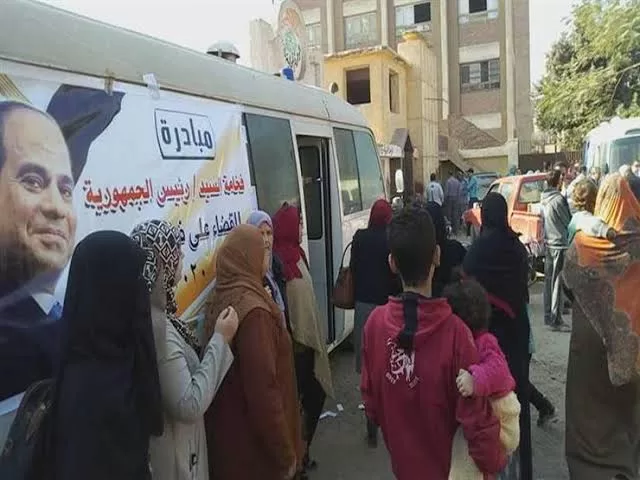
Over the past 13 years, Egypt has launched dozens of presidential initiatives across different sectors.
The goal has been to improve the quality of life for millions of citizens by strengthening health, education, and social services, all as part of the state’s vision for building a “new republic” and achieving sustainable development.
These initiatives have made a real difference in key areas, helping improve human development, strengthen social support, and deliver better public services.
‘100 Million Healthy Lives’
The health sector has seen some of the most dramatic progress through these presidential initiatives.
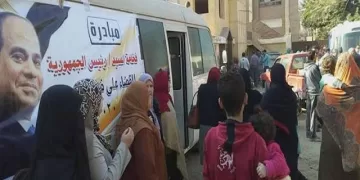
The standout is the ‘100 Million Healthy Lives’ campaign, launched in 2018 to eliminate Hepatitis C and detect other major diseases.
The campaign has provided free screenings to more than 60 million citizens, at a cost of over EGP3.8 billion. It received $250 million in financing from the World Bank as part of a larger $530 million healthcare project.
New infection rates for Hepatitis C dropped by over 92%, making Egypt the first country in the world to earn the World Health Organisation’s “gold-tier” certification. The state treated over 4.2 million patients for free.

The initiative also includes many specialised programmes, such as early detection of liver cancer, maternal and child care, new-born hearing tests, schoolchildren nutrition screening, elderly care, mental health support, and premarital screening to prevent hereditary diseases.
According to Health Minister Dr Khaled Abdel Ghaffar, these efforts have delivered more than 212 million medical services in recent years and earned a United Nations award for work on non-communicable diseases.
In 2024, Egypt achieved another historic milestone when the WHO certified the country as malaria-free, marking the end of decades of effort to control the disease.
Special attention has also been given to women’s health. A major initiative launched in July 2019 focuses on the early detection of breast cancer. By March 2026, it had carried out more than 67.6 million examinations, detected over 37,000 cases, and trained over 30,000 medical staff in modern methods. The goal is to reduce breast cancer deaths by 25% by 2030 and 40% by 2040.
In July 2021, another initiative began for early detection of hereditary diseases in new-borns. It expanded specialised centres to 56 across the country, offering free screening and treatment for 19 conditions, including free access to one of the world’s most expensive medications for children with spinal muscular atrophy.
Universal Health Insurance
In July 2019, President Sisi launched the Universal Health Insurance system in Port Said. The long-term aim is to cover all 100 million Egyptians through six phases by 2032.
According to the latest official data, the system has reached around 5.4 million beneficiaries in six governorates, namely Port Said, Ismailia, Suez, South Sinai, Luxor, and Aswan, with an 83.6% registration rate among the target population.
The second phase is now being prepared for five more governorates. The number of affiliated health facilities grew from 41 in 2019 to 328 in 2025, while the total number of beneficiaries rose from about 579,000 to more than 6.2 million.
Pre-university education
Since September 2018, Egypt has been introducing the new “Education System 2.0,” starting with kindergarten and Grade 1. The new approach focuses on real understanding and skills rather than just memorisation, in line with Egypt’s Vision 2030.
Students received free tablets, more than 3.3 million distributed so far, and the curriculum is linked to the Egyptian Knowledge Bank, a huge free digital library with content from major global publishers serving over 100 million users. Secondary exams are now fully online with automated grading, and a new “Egyptian Baccalaureate” track based on competencies will begin soon.
On the infrastructure side, more than 7,630 education projects added over 117,000 new classrooms between 2014 and mid-2023 to handle population growth and reduce overcrowding. Nearly 37,000 interactive smart screens were installed in secondary schools.
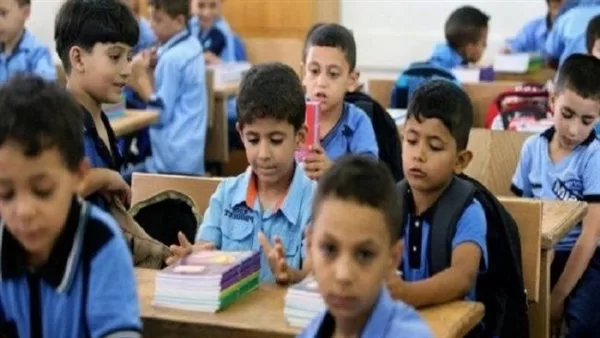
The Decent Life initiative has helped by upgrading around 1,299 schools and building more than 15,000 new classrooms in rural areas. This helped reduce the illiteracy rate in the first-phase villages from 26.2% to 19.9%.
In technical education, the ministry is expanding applied-technology schools and introducing programming, artificial intelligence, and internationally accredited tests.
Higher education
Higher education has expanded with new non-profit national universities, offering programmes in fields like artificial intelligence, cyber-security, and biotechnology at more affordable fees. Several new technological universities have also been established.
Prime Minister Moustafa Madbouli has emphasised that the quality of education is essential for sustainable development and building a knowledge-based economy. He described education as a “matter of national security” and a “cornerstone” of the New Republic project, saying real investment starts with developing people’s scientific, intellectual, and cultural abilities.
Reaching for space
Egypt has also pushed into space technology as part of its scientific ambitions. Since the Egyptian Space Agency was created in 2018, the country has launched projects like NEXSAT-1, its first experimental Earth observation satellite with over 40% local manufacturing.

It completed EgyptSat-2 with China and built the largest satellite assembly and testing centre in Africa and the Middle East at Egypt’s Space City. Egypt is also involved in African satellite projects and is developing locally made microsatellites.
Social dimension
The Decent Life (Hayah Karima) initiative is the largest national development project of its kind in the Middle East and Africa. It aims to improve living conditions for around 60 million people in rural Egypt.
By the end of the 2025/2026 fiscal year, around 23,000 projects had been completed across 1,477 villages in 20 governorates, benefiting nearly 18 million citizens. Total investment reached about EGP350 billion, with the largest share going to Upper Egypt.
The initiative has dramatically improved access to healthcare, education, utilities, roads, and economic opportunities. It has also provided EGP4.7 billion in financing for small and medium enterprises. A second phase covering 1,667 more villages and about 22 million citizens is now in preparation.
Cash transfer programme
The Takaful and Karama cash transfer programme, launched in 2015, started with around 1.7 million families. Over time, it has helped a total of 7.7 million families, with about three million graduating from the programme after improving their economic situation.

Today, roughly 4.7 million families, nearly 18 million people, remain enrolled.
Additional support has come through the Tahya Misr Fund, established in 2014, which has funded projects for homeless children, healthcare, and vulnerable communities.
More recent efforts like the “New Beginning for Human Development” initiative continue to strengthen support for low-income households.

