


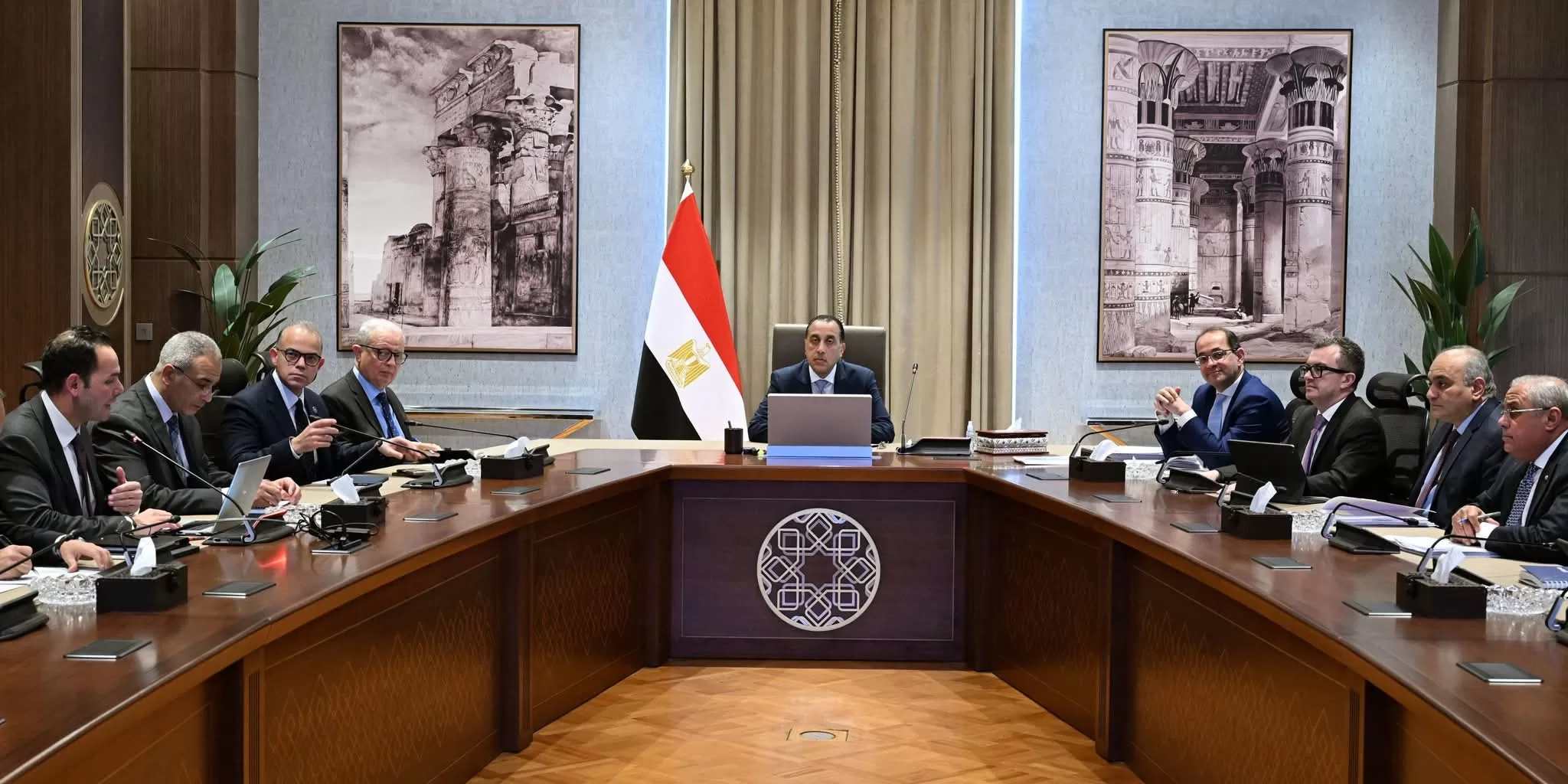
Prime Minister Moustafa Madbouli affirmed that the ongoing update of the State Ownership Policy document is based on a comprehensive evaluation of its implementation and its impact on private sector participation in the national economy.
He also emphasised that the government remains committed to strengthening the role of the private sector as a key partner in achieving sustainable economic growth, creating job opportunities, and enhancing the competitiveness of the Egyptian economy at both regional and international levels.
Madbouli was chairing a meeting on Tuesday to review the updated version of the State Ownership Policy document.
Deputy Prime Minister for Economic Affairs Hussein Eissa, Minister of Finance Ahmed Kouchouk, Minister of Investment and Foreign Trade Mohamed Farid, Minister of Planning and Economic Development Ahmed Rostom, Deputy Minister of Finance for Fiscal Policies Yasser Sobhy, Assistant to the Prime Minister and Head of the Information and Decision Support Centre Dr Osama El-Gohary, along with officials from relevant ministries and entities were present at the meeting.
During the meeting, Assistant PM el-Gohary presented a comprehensive report on the second updated version of the document, covering its preparation process, conceptual and structural framework, and proposed future directions since October 2025.
The updated version incorporates the structure of economic bodies within its objectives and outlines the state’s approach to restructuring these entities to enhance efficiency and ensure the financial sustainability of state-owned assets.
This includes a defined timetable for reforming and restructuring the remaining bodies, integrating them into the state budget, removing preferential treatment, and clearly defining their commercial and non-commercial activities.
The presentation also addressed asset governance mechanisms and detailed action plans to improve the business environment through tax, customs, regulatory, and digital reforms.
It further introduced an integrated institutional framework for monitoring implementation and measuring impact.
Participants provided their remarks, noting that extensive consultations had been conducted and international experiences reviewed.
It was confirmed that the document will be released for public consultation, with all feedback to be carefully considered and incorporated.
The prime minister directed that the draft be presented to the Cabinet following the Eid al-Fitr holiday, ahead of public consultation with investors and experts, the preparation of the executive programme in coordination with relevant authorities, and its subsequent presentation for presidential approval.

