











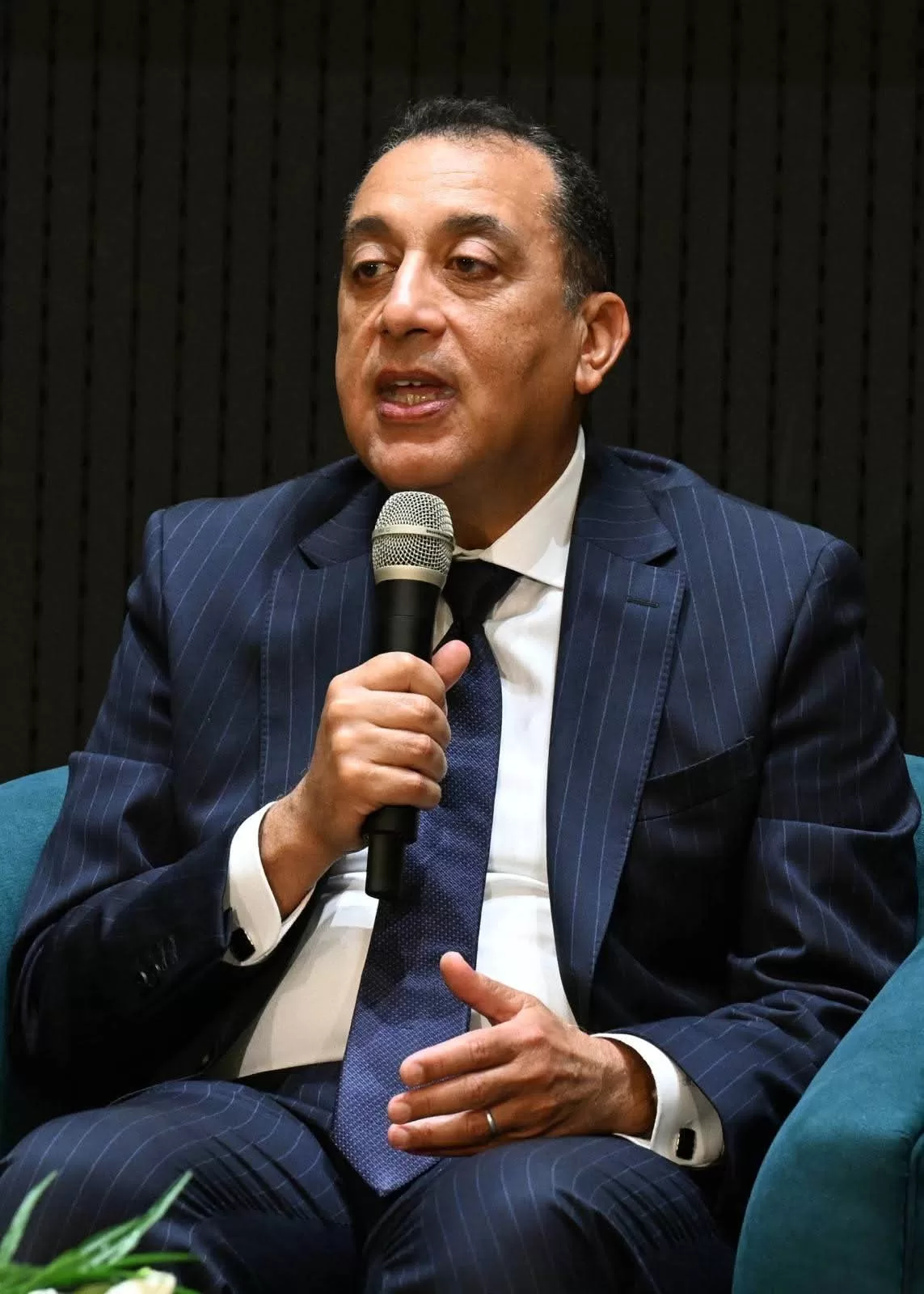
Egypt’s Prime Minister Moustafa Madbouli stated that the government’s objective is to restore the private sector’s role as the main driver of economic growth.
The premier was addressing the launch of the second edition of the State Ownership Policy document, “Deepening Reform and Maximising Impact 2026–2030,” held at the government headquarters in the New Administrative Capital.
During his address, Madbouli noted that private investment accounted for around 39.8% of total investments, before gradually increasing following improvements in stability and infrastructure development.
The prime minister highlighted that the preparation of the second edition reflects extensive efforts building on the first version issued at the end of 2022, noting that the policy has undergone a development process spanning approximately three and a half years.
He reviewed the broader economic context, including the challenges faced between 2011 and 2013, and the subsequent national efforts to restore stability, strengthen infrastructure, and support economic recovery, which helped rebuild investor confidence and expand private sector participation across multiple sectors.
He explained that during periods of instability, the state assumed a leading role in sustaining growth and employment, particularly in light of annual labour market inflows of between one and 1.5 million graduates.
Madbouli affirmed that the private sector has always been the key engine of investment, adding that the government’s strategic direction aims to raise its contribution to more than 65% of economic activity by 2030.
He pointed out that current indicators show private sector participation has already exceeded 56.5% of total investments over the past three years, with projections suggesting that the 65% target could be surpassed within the next two years.
He stressed that the State Ownership Policy document represents a new approach for Egypt, noting that while initial ambitions were high, implementation over recent years took place amid global and regional volatility between 2023 and 2025.
He nevertheless described the outcomes achieved as positive under the circumstances, emphasising that accumulated experience has informed the revision of the policy and its integration with a clear executive programme expected to be finalised before 30 September.
The prime minister underlined the government’s openness to feedback on the second edition, calling for written observations within the coming month to refine and strengthen the document and its implementation framework.
He also reaffirmed the state’s commitment to sustaining economic reform efforts, supporting tax and investment incentives, and enhancing the business environment.
He announced the cabinet’s approval of the “Economic Entities Platform,” which will unify investment-related services and procedures through a one-stop shop under the supervision of the Ministry of Investment and Foreign Trade, in coordination with relevant state bodies.

