




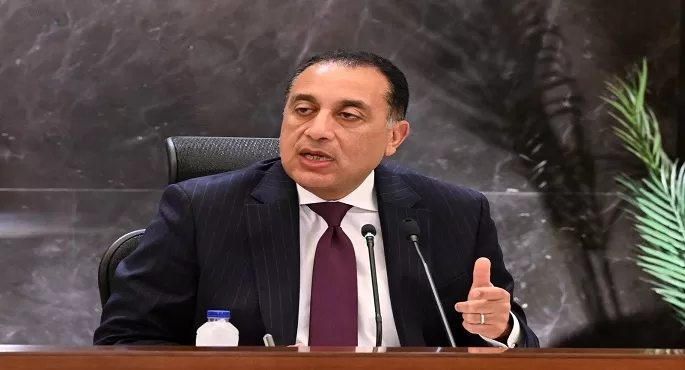
Prime Minister Moustafa Madbouli said the government is facing a dual challenge this summer, with fuel demand for power generation increasing while global energy prices continue to rise.
Speaking during the government’s weekly press conference on Thursday, Madbouli said the state is bearing additional burdens compared with last summer due to higher electricity consumption and rising fuel costs.
He noted that all relevant state agencies are closely monitoring the issue.
The prime minister said regular meetings are being held with the governor of the Central Bank of Egypt and the ministers of finance, electricity and petroleum to review developments in the energy sector.
He added that he also holds separate meetings with the ministers of electricity and petroleum to monitor the implementation of plans aimed at securing the country’s energy needs during the summer months.
Madbouli said he recently held a dedicated meeting with the Ministry of Electricity and Renewable Energy to review progress on grid expansion projects designed to accommodate additional renewable energy capacity.
He stressed that the government is monitoring each project individually and tracking implementation rates.
Madbouli said that accelerating the operation of new and renewable energy projects will help reduce reliance on imports of natural gas, mazut and diesel used to operate power plants.
He added that the state is making every effort to ensure the summer passes without disruptions or problems in electricity supplies.
On another issue, Madbouli said discussions on reforming the subsidy system are continuing, noting that he held meetings with the Ministry of Supply and Internal Trade and the Ministry of Social Solidarity to examine mechanisms for transitioning from in-kind subsidies to cash support.
He added the government is reviewing all opinions and observations related to the issue, describing it as one of the state’s key reform files.
Madbouli said the current in-kind subsidy system suffers from long-standing structural problems that have accumulated over decades.
According to some estimates, inefficiency rates within the subsidized bread system reach as high as 25 percent due to distortions and entrenched practices.
Madbouli said that the system must be managed more efficiently to ensure support reaches those who genuinely need it.
The prime minister stressed that the government has no plans to reduce the value of subsidies or scale them back.
He said the main objective behind studying a shift to cash subsidies is to ensure support reaches eligible families in a fairer and more efficient manner.
Madbouli added that the government is continuing to assess various scenarios and alternatives before taking any executive steps on the matter.

