


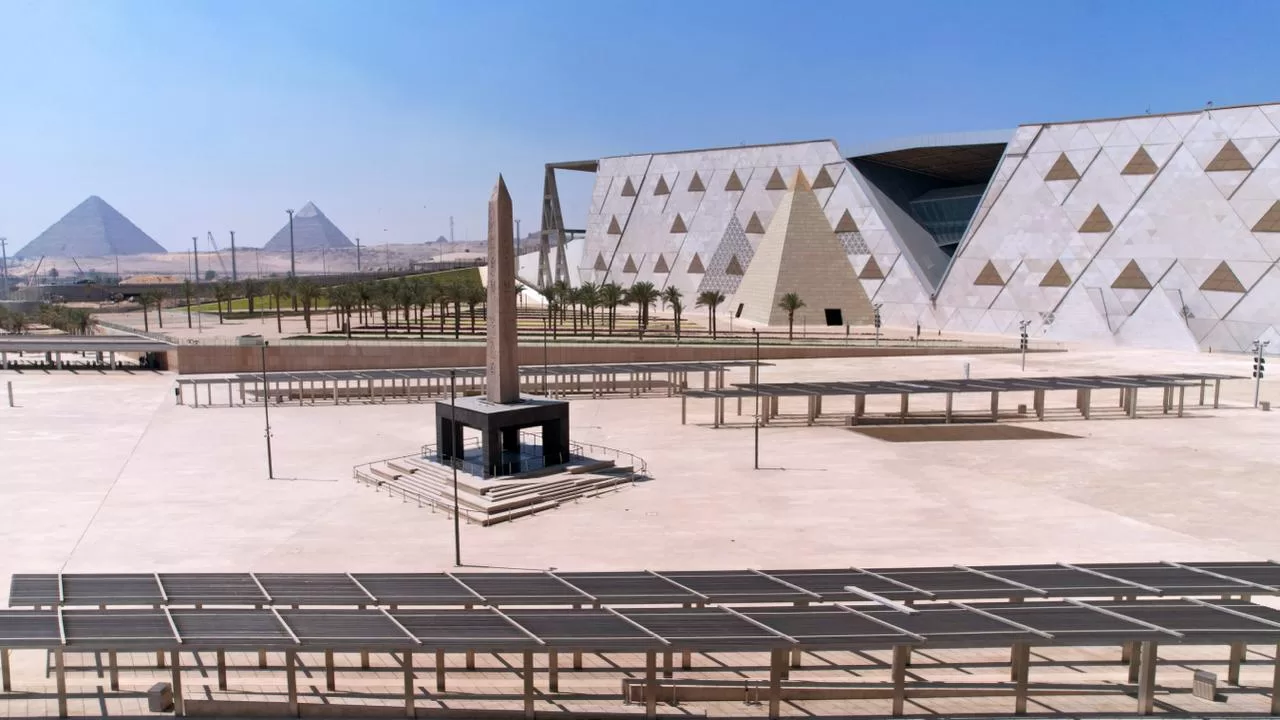
At the heart of the Grand Egyptian Museum (GEM), Egypt’s crown jewel of culture, visitors encounter a breathtaking innovation: the world’s very first Suspended Obelisk. Situated within a sprawling 28,000-square-metre exterior atrium, this remarkable monument offers a fresh perspective on Egypt’s ancient legacy, inviting everyone to experience heritage in a truly transformative way.
The Suspended Obelisk: A vision realised
The centerpiece, an obelisk of King Ramses II, began its modern journey from San el-Hagar in the Sharqiya Governorate in mid-2018.
Now, for the first time in more than 3,500 years, visitors can marvel at the rarely-seen cartouche of Ramses II, gracefully revealed on the inner side of the obelisk’s shaft. Suspended above the atrium plaza, this 16-metre, 110-ton monument encourages guests to gaze upward, forging a powerful connection to Egypt’s awe-inspiring history.
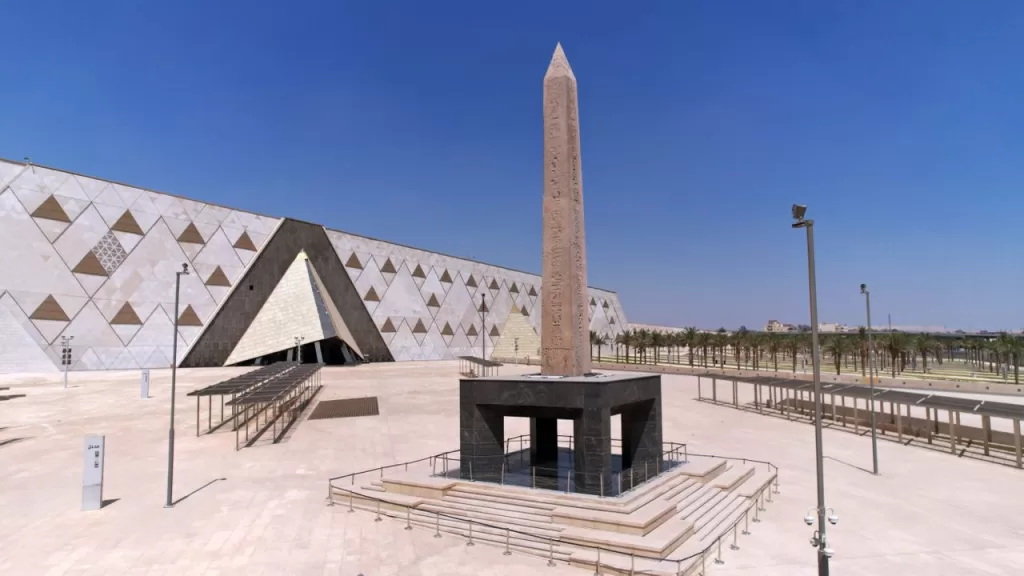
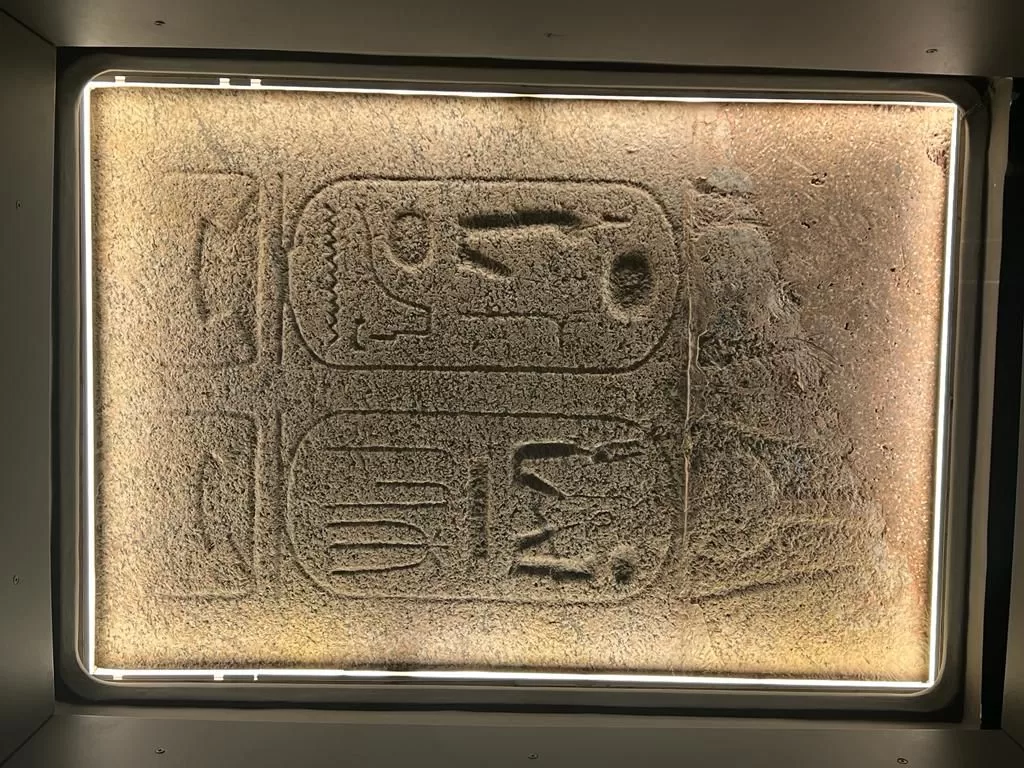
The concept originated with Major General Atef Moftah, Engineering Supervisor of the GEM Project. Upon noticing the hidden cartouche as the obelisk arrived, he was inspired to give this overlooked detail the prominence it deserves. His innovative design ensures not only seismic safety but also creates an unforgettable, immersive experience for visitors.
Beneath the obelisk, a map of Egypt is engraved across the plaza, with the word “Egypt” inscribed in major world languages, a universal symbol of welcome and inclusion.
The obelisk’s base, elegantly clad in native stone, further enhances this spirit of hospitality, uniting visitors from across the globe with Egypt’s living heritage.
A façade of heritage and innovation
The GEM’s façade, designed by Major General Moftah, masterfully combines tradition with modernity. Stretching an impressive 800 metres and soaring 46 metres high, it tells the story of Egypt’s lasting contributions to world civilisation.
Seven triangular forms, inspired by the iconic pyramids, create a seamless link between ancient achievement and contemporary design. On the eastern side, two sections feature three luminous marble pyramids each. Bathed in shifting patterns of light and shadow, they pay homage to the ancient Egyptians’ mastery of illumination as a “fourth dimension” – a testament to timeless ingenuity.
The northern façade, crafted from shimmering glass, houses a transparent seventh pyramid, which glows in natural light. This modern pyramid stands as a beacon of Egypt’s enduring influence in science, art, and literature.
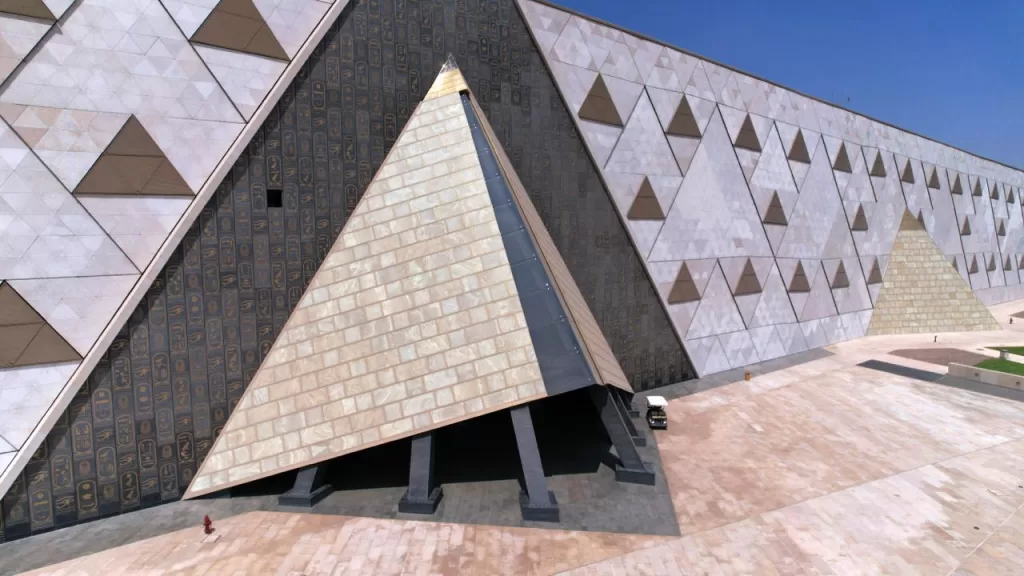
Handcrafted by Egyptian artisans using pure Sinai marble – the same material found in ancient temples and statues – the façade radiates cultural continuity and pride. At the museum’s entrance, a series of royal cartouches offers visitors a tangible link to Egypt’s storied rulers, welcoming all with open arms as the sun’s rays slip between the kings’ cartouches to light King Ramses’ face on his birthday and coronation.
This revised design, replacing a previous concept that relied on imported materials, also dramatically reduced costs, from $250 million to $20 million, while prioritising the use of local resources and resonant national symbolism.
A gateway to the world
On the northern side, the glass-encased seventh pyramid draws the visitor’s gaze inside, celebrating Egypt’s boundless influence. To the east, three luminous marble pyramids ascend in elegant steps, leading toward the grand entrance, where statues of Egypt’s greatest kings stand in silent majesty.
As night falls, the 800-metre-long façade, its seven illuminated pyramids shimmering against the sky, creates a magical interplay of stone and light, reflecting the eternal dance between earth and the heavens. This gateway is both a tribute to Egypt’s rich past and a promise for its future, warmly inviting the world to step inside and discover its wonders.
In the next article, we’ll step into the Grand Hall to explore the statue of King Ramses and the splendours that await within.
Missed the beginning?
Catch up with Part 1: A great idea that was born over dinner of GEM’s epic journey.

