


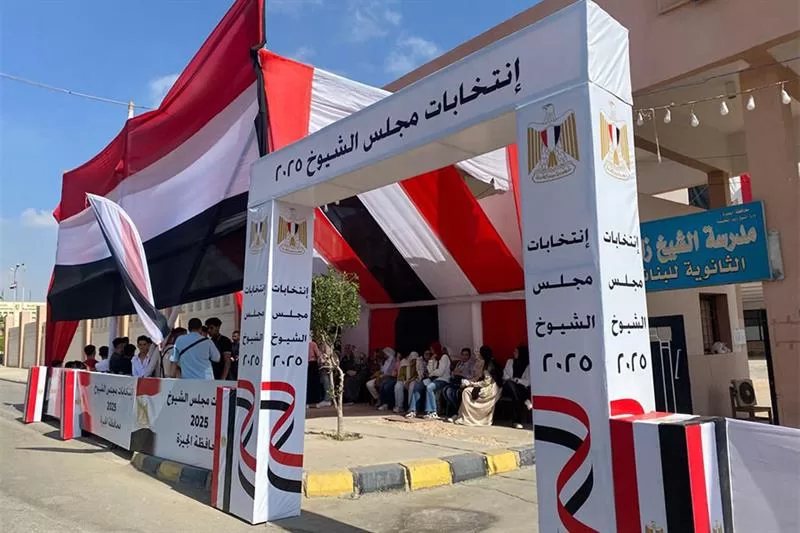
Polling stations nationwide opened their doors at 9:00 am Tuesday to receive eligible voters wishing to cast their ballots in the second and final day of voting in the Senate election.
The electoral process is conducted under the supervision of judicial authorities, amid monitoring by various NGOs as well as local and international media.
Counsellors from the State Lawsuits Authority and the Administrative Prosecution Authority, serving as heads of the subcommittees (polling committees), received the polling station premises early in the morning.
They inspected the polling stations to ensure all necessary materials for the voting process were in place, especially papers, documents, procedural logs, and voter rolls. They also opened the ballot boxes to confirm they were completely empty before sealing them with special coded plastic locks.
Police forces were deployed to secure the polling stations and their surroundings, ensuring that voters could cast their ballots in a safe and reassuring environment.
By the end of the day, the counting of ballots will begin at each polling station. Each subcommittee will conduct the count and announce a detailed report with figures, including the number of registered voters, the number of those who voted over the two-day period, the count of valid and invalid votes and the number of valid votes received by each candidate and electoral list.
The figures will be recorded in an official report and submitted to the general committees at the primary courts, which will forward the results to the National Election Authority (NEA).
A total of 424 candidates are contesting the individual seats—183 of them are independents, and 241 are affiliated with political parties. Additionally, there is one electoral list titled “The National List for Egypt,” which includes 200 candidates and covers the four electoral districts designated for the list-based system.
According to the voter database, approximately 69 million citizens are eligible to vote in this election, which is being fully managed and supervised by the National Elections Authority. A total of 9,250 members of the State Lawsuits Authority and the Administrative Prosecution Authority are chairing 8,825 subcommittees across 8,286 polling centers, assisted by around 65,000 staff members working in subcommittees, general committees, and preservation and monitoring committees.
The National Elections Authority has taken several measures to facilitate the voting process, particularly for the elderly and people with disabilities. Most subcommittees have been located on the ground floors of polling centers, and centers have been equipped with instructional posters that include QR codes, allowing voters to scan them for additional information on voting procedures and mechanisms. Educational materials were also provided to clarify how to cast a valid vote.
The election process is being monitored by 9 international organizations, 59 local civil society organizations, and delegations representing 20 diplomatic missions in Cairo. It is also being covered by local, Arab, and international media outlets, with a total of 25,000 accredited observers issued permits by the National Elections Authority.

