






At a moment of acute regional sensitivity—when attention is firmly fixed on the war unfolding across the Middle East—Kuwaiti writer Fouad Al-Hashem ignited an unexpected media and political firestorm. His article, which contained sharply offensive remarks about Egypt and its people, triggered a wave of anger across both official and public spheres in Egypt, reopening a broader debate about the limits of free expression and the responsibility that must accompany the written word in times of crisis.
What Al-Hashem published was not a passing opinion piece or routine political critique. Rather, it featured language widely perceived as derogatory and demeaning to Egyptians, crossing the line from legitimate criticism into an affront to national dignity and deeply held social values.
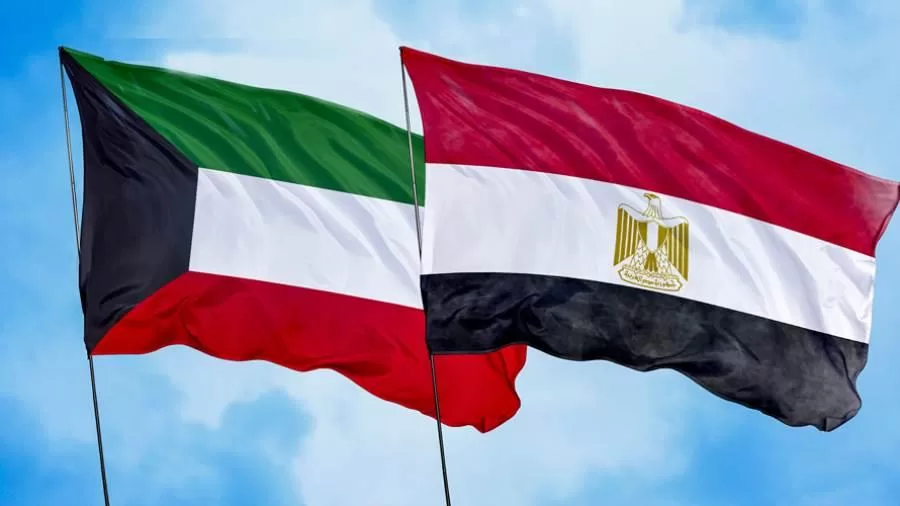
Unsurprisingly, the fallout was swift. The article poured fuel on the fire at a particularly delicate juncture, as Egypt remains actively engaged in diplomatic efforts to contain escalating regional tensions. To many observers, the piece appeared less like commentary and more like an attempt to drive a wedge between two nations bound by longstanding historical ties.
Cairo, for its part, did not treat the matter as mere “journalistic opinion.” At the public level, the temperature ran considerably higher. Egyptian social media platforms erupted in anger, with reactions ranging from calls for legal accountability to campaigns urging boycotts of outlets hosting the writer, alongside sharp responses reflecting the depth of public outrage.
Egyptian media officials, described the article as a “professional and moral lapse”—a stark failure of both ethics and standards. Diplomatic and legal measures, including direct engagement with Kuwaiti authorities and the submission of formal memoranda through official channels have been introduced.
For its part, the Kuwaiti Journalists Association issued a statement condemning the offensive remarks made by Fouad Al-Hashem against Egypt. Dr. Zuhair Al-Abbad, President of the Association, affirmed that Al-Hashem’s comments are categorically rejected, noting that he is not considered part of the Kuwaiti journalistic community, as he is not a member of the Association, and that his remarks were made from outside Kuwaiti territory.
He added: “The Association clarifies that journalist Fouad Al-Hashem does not represent the views of Kuwaiti journalists who are members of the Association. Furthermore, he was not a member at the time of writing his article, as his membership had not been renewed. The Egyptian people—and Egyptian women in particular—will always stand as a symbol of honour and dignity. It suffices that Maria the Copt, may God be pleased with her, was among the wives of our Prophet Muhammad (peace be upon him). May God preserve Egypt, Arab unity, Islam, and peace.”
The Association further reaffirmed its firm stance against anyone who offends Kuwait or its brotherly allies, clarifying that Al-Hashem’s membership has not been renewed for over a year. It also noted that although he had previously requested renewal, his application was rejected.
In a related context, Al-Abbad praised, via his official account on X, the guidance issued by Egypt’s Ministry of Information, which called on Egyptians not to conflate the misconduct of an individual with Kuwait’s enduring affection for Egypt—underscoring a shared rejection of any attempt to sow discord between the two brotherly peoples.
The case was also referred to Kuwait’s Public Prosecutor, signaling a clear intent on both sides to contain the crisis within legal and institutional frameworks rather than allowing it to spiral into a full-blown media confrontation.
On the Kuwaiti side, prominent voices moved quickly to contain the fallout. Officials and commentators stressed that Al-Hashem’s remarks “represent his personal views alone,” bearing no reflection of the state or Kuwaiti society at large. In a notable development, the writer’s own daughter publicly disavowed his statements, describing them as offensive and inappropriate toward the Egyptian people.
These voices emphasised that Egypt–Kuwait relations remain “a model to be emulated in the Arab world,” far too deep-rooted to be shaken by a single article or tweet—a clear effort to nip any potential discord in the bud.
At the same time, a parallel wave of solidarity emerged from Kuwaiti users online, affirming respect for Egypt and rejecting the content of the article—an effort to defuse tensions and prevent the situation from snowballing into a broader societal rift.
This episode once again lays bare a longstanding and unresolved question: where does freedom of expression end, and where does responsibility begin?
In the age of social media, opinion pieces no longer remain confined to newspaper pages; they can, within moments, evolve into cross-border crises capable of influencing interstate relations—particularly when they touch on the dignity of entire nations.
Despite the intensity of the backlash, the overall trajectory suggests this is closer to a “storm in a teacup” than a structural crisis in Egypt–Kuwait relations. The shared history—spanning political alignment, economic cooperation, and deep people-to-people ties—acts as a stabilising buffer, making it unlikely that such a relationship would be derailed by a single, albeit loud, voice.
The Fouad Al-Hashem affair is more than a media controversy; it is a litmus test for how Arab states manage crises triggered by individual rhetoric in an era of open and highly interconnected media ecosystems.
The central takeaway is clear: relations between nations are not defined by a single article—but they can be strained by a careless word, if left unchecked and unanswered with wisdom and balance.

