


The Islamic month of Ramadan is associated in Egypt with some drinks and desserts.
Egyptians prepare for this holy month by buying sufficient amounts of dried fruits and dates.
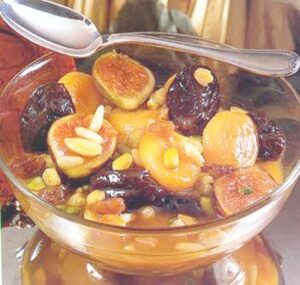
Popular drinks during the month include Khoshaf, dried fruit compote that is always served before the breakfast.
Khoshaf was probably taken from the Persian culinary culture. It also probably belongs to other peoples or cultures. In Turkish, it means drenched dates, but in Persian, it means sweet drink or juice.
Egyptians copied the way Khoshaf is prepared from the Ottomans. Now it is the official Ramadan beverage in this country.
In the good old days, Khoshaf was prepared by only soaking dates and raisins in water and adding some milk and sugar to this mix.
Now, however, the list of ingredients is becoming longer with some people adding a wide range of dried fruits and nuts to it.
Siwa, a beautiful oasis in Egypt’s Western Desert, is one of the most important places in Egypt for date production, thanks to the high quality of its farmland.
Dried apricots (English for Qamr el din) are another recipe of this Islamic month.
The name of the recipe is derived from a small town in Syria that was famous for making dried apricots.
The apricot season in this town was very short. This was why farmers used to collect fresh apricots from the fields very quickly soon after they ripen, dry them, and then turn them into juice.
There are many brands of dried apricot in the market, yet the Syrian remains the best and the most popular in Egypt.

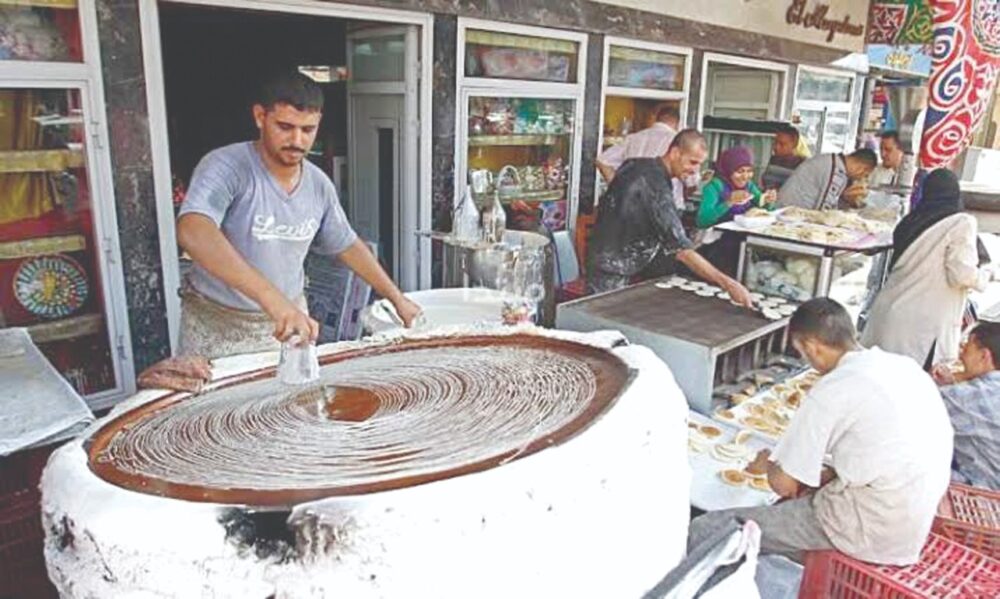
Kunafa, a crunchy and buttery dessert made with shredded pastry layers, and Qatayef, sweet dumplings stuffed with nuts, chocolate or cream, are the most sough-after desserts in Ramadan.
Shops manufacturing and selling kunafa and Qatatef in their raw form are always crowded during Ramadan.
Kunafa is believed to have been invented by a pastry chef from the Levant to serve to Muawiyah bin Abi Sufyan, the founder and first caliph of the Umayyad Caliphate.
Muawiyah used to complain to his doctor that he always felt hungry during the day in Ramadan.
The doctor then advised him to eat kunafa as part of the pre-dawn meal (Sohour) so that he could be well fed before starting the day’s fast.
The dessert then came to be known as ‘Kunafa Muawiyah’.
However, some people believe that Egyptians knew Kunafa, even before those living in the Levant did.
The same people say this dessert first appeared during the Fatimid era.
When Caliph Al Muizz li Din Allah Al-Fatimi entered Cairo during Ramadan, locals went out to greet him after the breakfast. They offered him many gifts, including the dessert known now as Kunafa.
Regardless of its history, the same dessert gained great popularity and turned into a Ramadan staple throughout the ages.
Raw kunafa is now made in different ways, including the traditional hand-made one which is baked on round ovens. There is another type which is baked with modern machines. This last type is usually hair-thin and most favoured by housewives.
Nowadays, a wide range of fruits, including mangoes and strawberries, is added on top of the kunafa after it is baked, soaked in syrup and stuffed with cream or nuts. Some people make appetizers of it by wrapping it around prawns and frying the mix to create a perfect oriental treat.
Qatayef is also in high demand during this Islamic month. It is believed to date back to the late Umayyed and early Abbasid eras when it was served for the first time.
Kunafa and Qatayef are sold in their raw form and also as ready-made and ready to eat at almost all the nation’s pastry shops. Their prices vary according to the place and the ingredients used in making them.a


Discussion about this post