



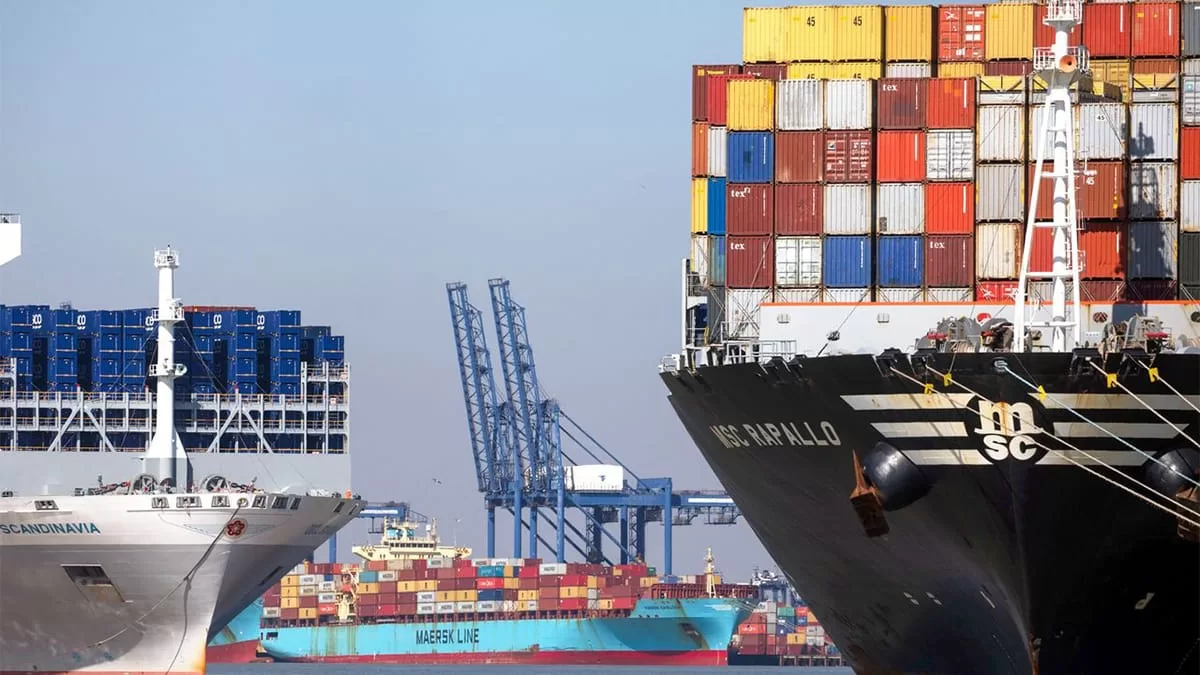
In a world where over 80 per cent of global trade is transported by sea, Egypt’s progress in the Liner Shipping Connectivity Index (LSCI) reflects not just a statistic, but a tangible improvement in its position within the global trade network.
According to a recent report by United Nations Conference on Trade and Development, Egypt ranked 19th globally and first in Africa in the LSCI during the first quarter of 2026, advancing three places compared to 2025. It also ranked ahead of major African economies such as Morocco and South Africa.
This progress reflects Egypt’s improved integration into global maritime transport networks, driven by its strategic location and its access to major ports on the Mediterranean and Red Seas.
According to UNCTAD, the index measures several indicators, including the number of ship calls, container-handling capacity, the number of services and companies, vessel size, and the number of countries connected through regular shipping routes.
The pace of port development in Egypt has accelerated in recent years as part of a broader plan to transform the country into a regional logistics hub. This includes the addition of new docks and the deepening of navigation channels in major ports such as Alexandria and Damietta, as well as the development of Ain Sokhna Port as a key hub linked to industrial and logistics zones within the Suez Canal Economic Zone, through which about 12 per cent of global trade passes.
Investments have also included the modernization of container terminals, the implementation of digital systems, and improved connectivity to road and rail networks.
The increasing number of countries connected to Egypt via regular shipping lines is another key indicator of progress, helping to enhance trade and investment opportunities.
It serves as a direct measure of a country’s access to global markets. According to UNCTAD, the more maritime partners Egypt has, the greater its export opportunities and the more diversified its imports become.
The improvement in Egypt’s LSCI ranking extends beyond shipping activity; it also affects the cost and availability of goods, job creation, and the economy’s ability to attract investment.
Countries with stronger connectivity to global shipping networks benefit from lower trade costs and faster flows of goods, boosting economic competitiveness and attracting investment, particularly in port-related industrial and logistics sectors.
Citizens are also expected to benefit. Egypt’s improved ranking not only means increased shipping traffic, but also lower prices for goods reaching consumers.
Reduced shipping costs can translate into lower prices, especially with growing competition among shipping companies and the expansion of global shipping lines.
This progress also contributes to faster and more diverse delivery of goods, while creating job opportunities in transportation, warehousing, and logistics—making its impact increasingly visible in everyday life, according to UNCTAD indicators.

