







By Wael Salem
Egypt advances strategic recalibration of its financial system, as geopolitical tensions ripple across the Middle East, against the background of the escalation of the Iran conflict.
This measure aims to ease pressure on the Egyptian pound and build greater resilience against external shocks.
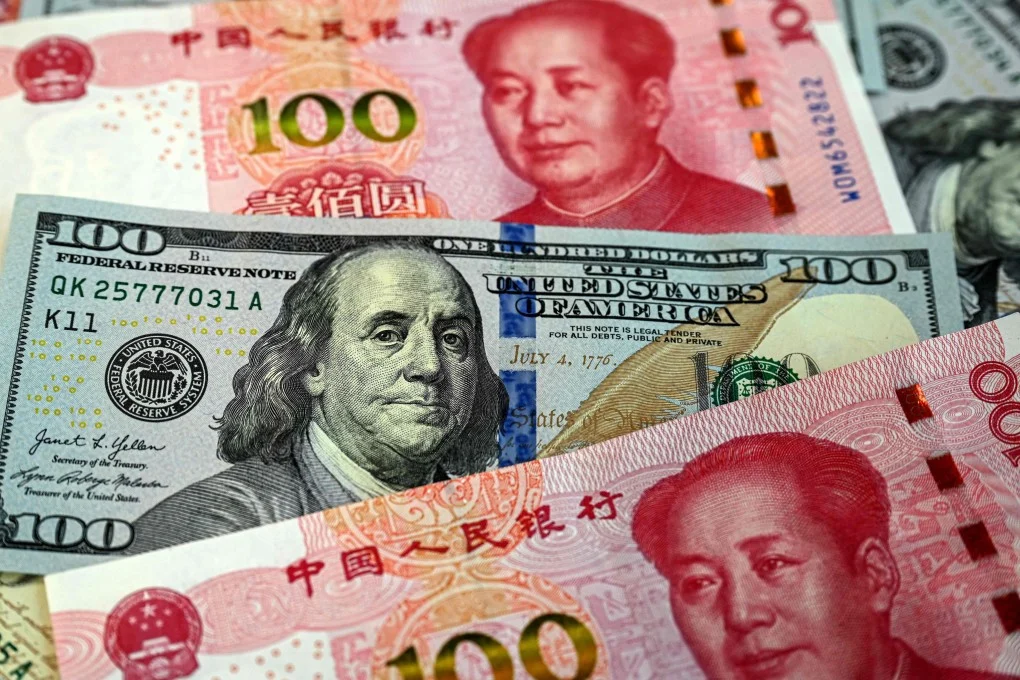
At the centre of this shift is Cairo’s growing financial engagement with Beijing, particularly efforts to expand a bilateral currency swap agreement that would allow the use of the Chinese yuan in trade and financing.
During a phone call with Chinese Foreign Minister Wang Yi last week, Egyptian Foreign Minister Badr Abdel-Aati highlighted the importance of deepening financial co-operation, including through the activation and scaling up of the currency swap mechanism, between their two countries.
He also underscored Egypt’s interest in strengthening ties with the China Development Bank to boost the issuance of yuan-denominated bonds.
The push comes at a time of mounting economic strains, observers said.
Since the outbreak of Israeli-US war on Iran in late February, Egypt’s economy has felt the reverberations through higher energy costs, disrupted supply chains, and renewed capital outflows, factors that have collectively tightened foreign currency liquidity and weighed on the Egyptian pound.
Against this backdrop, reducing reliance on dollar-denominated financing has become an increasingly urgent priority for Cairo.
Currency swap agreements enable central banks to exchange local currencies, in this case, Egyptian pounds and Chinese yuan.
This, the same observers added, facilitates trade and investment without passing through the US dollar.
For Egypt, expanding this mechanism could help preserve foreign currency reserves, while smoothing bilateral trade flows with one of its largest economic partners.
China’s economic footprint in Egypt has expanded steadily over the past decade, with more than 2,800 Chinese companies operating across sectors, ranging from manufacturing to infrastructure, and total investments exceeding $8 billion.
At the same time, Beijing has been actively promoting the international use of the yuan through similar agreements with dozens of countries.
However, economists caution against viewing the move as a wholesale shift away from the dollar.
“The dollar remains deeply entrenched in global trade and finance,” Khaled Hanafy, secretary-general of the Union of Arab Chambers, said recently.
“Egypt does not abandon the US dollar, but diversifies its options,” he was quoted by some media outlets as adding.
He described this as a “pragmatic hedge” against volatility, rather than a structural pivot.
Rashad Abdo, an economics professor at Helwan University, said attempts to reduce reliance on the US dollar are not new.
“Nevertheless, the same attempts historically faced structural constraints, including the strength and the stability of the US economy and the dollar’s dominance in global markets,” he told The Egyptian Gazette over the phone.
He pointed to a key structural challenge in Egypt-China trade relations, including a persistent imbalance in favour of China.
Egypt imports large volumes of machinery, electronics, and industrial inputs from China, far exceeding its exports to the Chinese market.
“This imbalance means that even with local currency arrangements, the need for foreign currency does not disappear entirely,” Professor Abdo explained.
Banking expert Sahar el-Damaty stressed that it is too early to speak of a viable global alternative to the US currency, even as the use of local currencies in trade can help reduce transaction costs and mitigate some US dollar-related pressures.
“The US dollar will remain the backbone of international trade and reserve holdings for the foreseeable future,” el-Damaty said.
“Local currency arrangements can complement, but not replace, the global role of the US dollar,” she told this newspaper.
She noted that the most sustainable path to easing US dollar-related pressures lies in boosting domestic production, expanding exports, and attracting foreign investment.
“These are the channels that generate real foreign currency inflows and support exchange rate stability,” el-Damaty said.
Egypt’s approach appears to be part of a broader global trend towards a more multipolar currency system.
El-Damaty said countries do not replace the US dollar overnight.
“They rather gradually build alternatives to reduce exposure to shocks,” she added.
For Egypt, expanding the yuan swap framework offers both immediate and strategic value: short-term relief from liquidity pressures, and a longer-term hedge in a world where geopolitical risks are reshaping financial flows, she said.
The government has, meanwhile, been working with the Central Bank to strengthen foreign-currency inflows, including through the acceleration of financing from international institutions, the expansion of the state asset-sale programme, and the attraction of foreign investment.

