


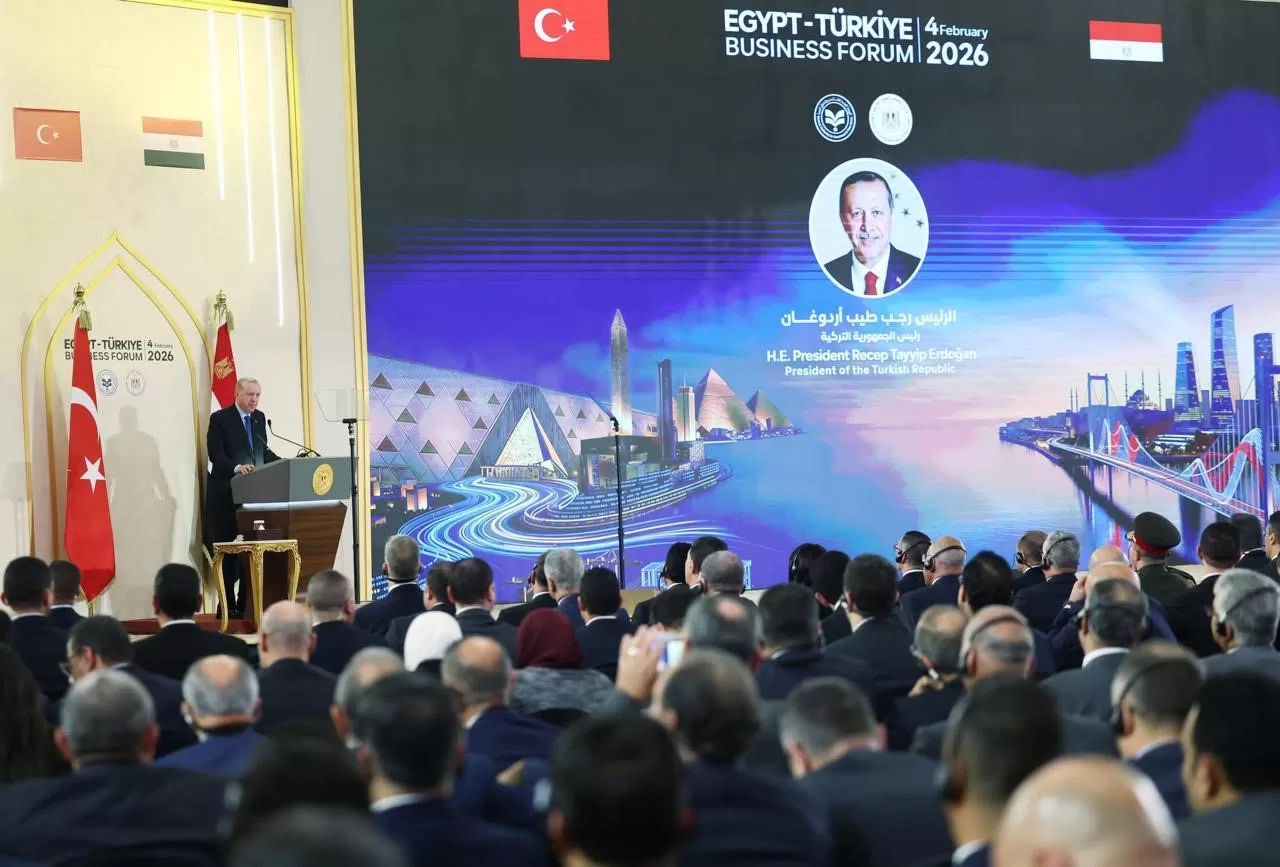
Turkish President Recep Tayyip Erdogan’s official visit to Egypt on Wednesday marked a new stage in the steadily improving relationship between the two countries, signalling a potential realignment in the region amidst growing complexities in the Middle East.
Experts emphasised the significance of Erdogan’s visit, with both governments expressing a clear intention to foster collaboration across a range of fields.
“The visit carries multiple important connotations,” said Ahmed Sayed Ahmed, an international relations specialist. He underscored the strong political will of both leaders to strengthen ties on the basis of shared interests and mutual benefits.
Egyptian foreign policy, Ahmed explained in a televised interview, is focused on enhancing cooperation and boosting trade. The government’s approach aims to support national development through attracting foreign investment, enabling technology transfer, and expanding export markets for Egyptian goods.
Professor of Political Science, Reda Farahat, stated that President Erdogan’s visit to Cairo signals both countries’ desire to strengthen political, economic, and security ties.
The visit’s timing shows their commitment to coordinating on major regional issues, especially the Palestinian situation and Middle East stability. President El Sisi emphasised Egypt’s key role in promoting regional security, supporting Palestinian rights, and maintaining the Gaza ceasefire.
The visit also witnessed the signing of several agreements and memoranda of understanding.
Farahat noted that these agreements and MoUs are a practical embodiment of the shared political will to build a comprehensive and sustainable partnership. “This opens new horizons for deepening strategic integration between the two countries,” he said.
He also pointed to the second meeting of the High-Level Strategic Cooperation Council between Egypt and Turkey, describing it as an effective institutional platform for enhancing political coordination and supporting economic, trade and investment cooperation.
The Free Egyptians Party, led by MP Essam Khalil, also lauded the strengthening ties and the mature, pragmatic shift in Egyptian diplomacy.
In a statement, the party pointed to the far-reaching impact of this diplomatic evolution, highlighting the potential for increased regional stability and a more favourable climate for collaboration.
The party emphasised that President El Sisi’s foreign policy is grounded in national interest and security, respect for sovereignty, and a commitment to balanced, responsible partnership, a posture that, they argue, affirms Egypt’s role as a pivotal actor on the regional stage.

