


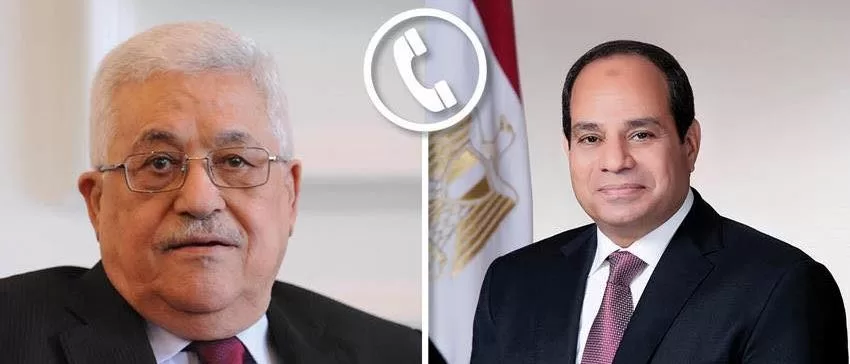
Egypt’s President Abdel Fattah El Sisi and Palestinian President Mahmoud Abbas held a high level telephone call to address the intensifying regional instability and the ongoing humanitarian crisis in the Gaza Strip, according to a statement released by Presidential Spokesperson Ambassador Mohamed El Shenawy.
During the conversation, both leaders issued a firm rejection of Iranian aggression against Arab states. They noted that such escalations are particularly egregious given that the targeted nations have consistently opposed military conflict and worked to prevent a wider regional conflagration.
De-escalation and regional stability
President El Sisi emphasized the urgent need to halt the current cycle of escalation, advocating for peaceful resolutions to regional crises. He underscored that a diplomatic priority must be the preservation of national stability and the protection of civilian populations from the “negative repercussions” of war.
The leaders warned that continued hostilities carry dire economic consequences and threaten to further devastate the humanitarian landscape across the Middle East.
Progress on Gaza ceasefire
A significant portion of the call focused on the situation in the Gaza Strip. President El Sisi provided an update on Egypt’s intensive diplomatic efforts with international mediators and regional stakeholders. These efforts are currently directed toward, ensuring the full implementation of the second stage of the Gaza ceasefire agreement. Securing the entry of sufficient humanitarian aid to meet the critical needs of the Strip’s residents.
Palestinian reform and reconciliation
President Abbas expressed his profound appreciation for Egypt’s historical role in supporting the Palestinian cause and the legitimate right to an independent state. Abbas also outlined the Palestinian National Authority’s current vision for implementing structural changes within the authority. Bridging internal political divides to present a unified Palestinian front.
The call concluded with a mutual commitment to continue close coordination to restore security and stability to the region.

