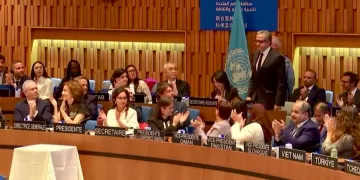








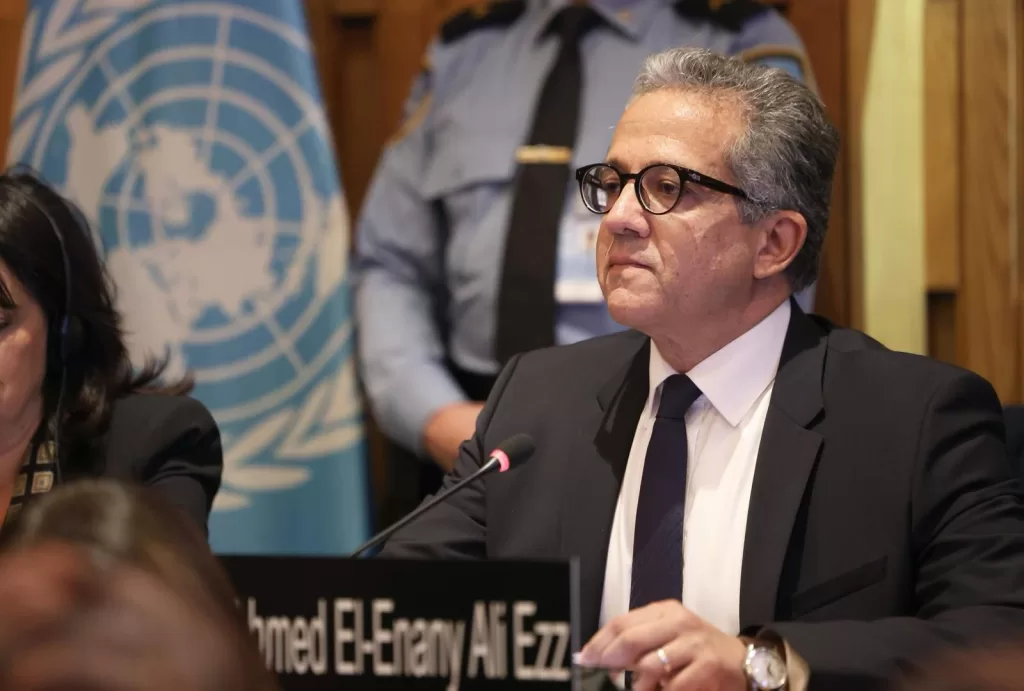
The Executive Board of UNESCO nominated former Minister of Tourism and Antiquities, Khaled el-Enany, to be its new Director-General earlier this month.
He secured an overwhelming 55 votes, while his closest competitor, Firmin Edouard Matoko of the Republic of Congo, won only two votes.
El-Enany’s victory marks the largest winning margin in UNESCO’s history.
If approved by UNESCO’s General Conference in Samarkand, Uzbekistan, on November 6, he will become the first Egyptian and Arab, and the second African, to lead UNESCO since its founding in 1945, in the aftermath of World War II.
He described his nomination as a “moment of deep gratitude” to Egypt, Arab states, and the African continent.
“It is also a moment of gratitude to all those who have placed their trust in me,” el-Enany told The Egyptian Gazette in an exclusive interview.
He expressed appreciation for Egyptian authorities, the League of Arab States, and the African Union for their steadfast support.
He said being the first Arab candidate recommended by UNESCO’s Executive Board is a source of pride for him.
“It also reflects the evolution of a new multilateralism where every region has a voice,” he added.
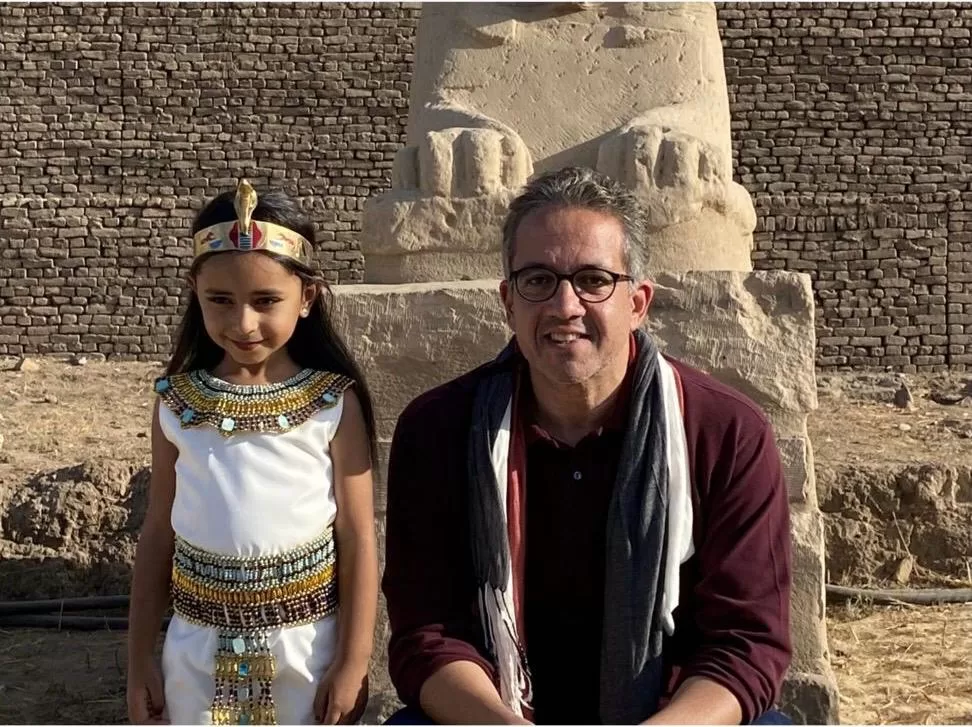
Lifelong affinity for culture, education
El-Enany’s journey to UNESCO’s helm is rooted in his upbringing. His mother taught French, and his neighbours worked in cultural activities, sparking his deep curiosity for the study of history and heritage.
This environment encouraged him to pursue tour guiding and Egyptology studies.
“I wanted to understand our history and share it with others,” he explained.
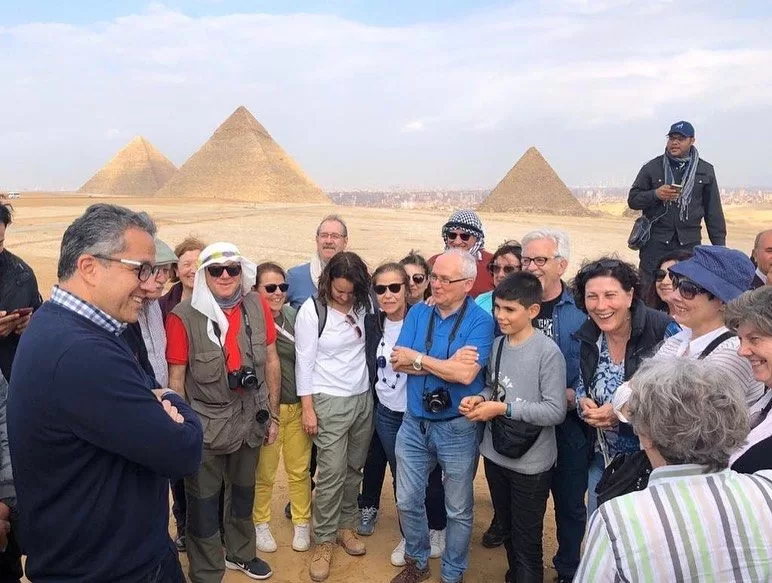
His tenure as Minister of Tourism and Antiquities (from 2019 to 2022) further shaped his perspective, particularly through experiences like standing before the temples of Abu Simbel, a site saved by UNESCO’s landmark rescue campaign.
“I understood what international cooperation can achieve when people work together for a common cause,” he said.
As potentially the first Egyptian and Arab to lead UNESCO, el-Enany brings a unique perspective to the organisation.
Egypt and Arab states, he said, have always been meeting points for civilisations, where ideas, faiths, and traditions converge.
“History teaches us humility and that no culture can stand alone, while every civilisation has something to offer and learn from others,” he said.
El-Enany’s goal is to foster a culture of dialogue where every member state is heard, ensuring UNESCO becomes a space where co-operation replaces confrontation and diversity is a strength.
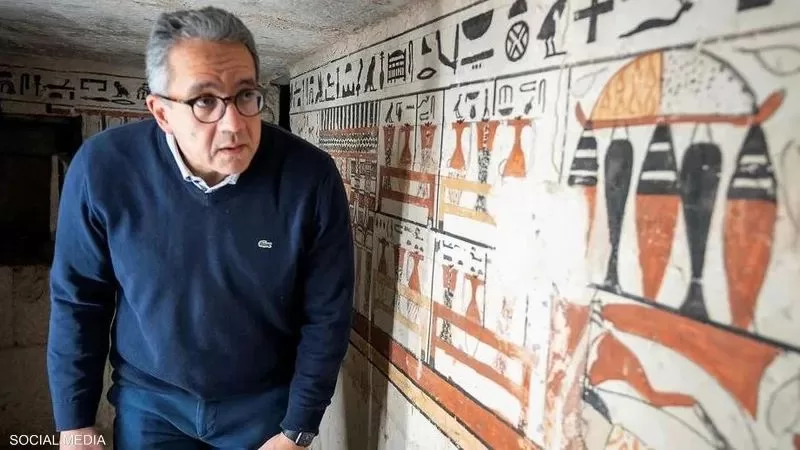
A connected UNESCO
El-Enany’s priorities for UNESCO centre on breaking down silos and making the organisation more responsive to global challenges.
He believes that UNESCO was not designed to operate in silos.
“The organisation’s strength lies in its ability to connect disciplines such as culture, science, education, and freedom of speech,” he said.
He aims to enhance coordination between sectors, improve data circulation, and foster an organisational culture that values dialogue.
A key focus is bringing UNESCO closer to people. While the organisation is renowned for its work in heritage, its contributions to education, science, and communication are less visible.
“This is not about doing less for culture, but about making the full scope of UNESCO’s mandate better known,” he emphasised.
“Effective communication will be central to this effort, helping people understand how UNESCO improves lives through education, environmental protection, and knowledge-sharing,” he added.

Safeguarding cultural heritage
Preserving cultural heritage is a cause close to el-Enany’s heart.
He envisions proactive measures to protect endangered sites, leveraging early-warning systems, satellite technology, and artificial intelligence to monitor risks in real time.
“Too often, we intervene after damage occurs,” he said. “We need to shift towards anticipation and prevention,” he added.
He underscored the importance of empowering local communities as the “first guardians of heritage” by investing in training and building local expertise.
Partnerships with museums, universities, and scientific institutions, he said, would further combat illicit trafficking and restore damaged sites through innovation.
“Every stone preserved and every archive protected is a step towards peace,” el-Enany said, highlighting the human dimension of heritage preservation.
Education, linguistic diversity
Education remains at the heart of UNESCO’s mission, and el-Enany aims to make it more inclusive through technology.
He plans to strengthen support for national digital education strategies, teacher training, and initiatives like Open Digital Schools and multilingual learning resources.
He highlighted UNESCO’s Beijing Consensus, which ensures that AI empowers teachers and fosters critical thinking.
El-Enany also emphasised the importance of linguistic diversity, particularly through the International Decade of Indigenous Languages (2022–2032).
He outlined three priorities: supporting national language policies to protect endangered languages, expanding digital access for indigenous and minority languages, and creating multilingual educational resources.
Linguistic diversity, he said, is a prerequisite for inclusion and innovation.
A UNESCO that unites
Founded to build peace through education, culture, and science, UNESCO remains as relevant today as ever.
El-Enany is committed to keeping it a technical and intellectual organisation, free from political conflicts.
He said his goal is to bring UNESCO closer to the people by strengthening its field presence and decentralising its activities.
He envisions a UNESCO where every country contributes, regardless of geography or development level, fostering balanced and inclusive cooperation.
If elected, el-Enany hopes to leave a legacy of unity.
“I want UNESCO to be a place where every nation, every culture, and every person feels a sense of belonging,” he said.
His dream is for people worldwide to recognise UNESCO not just for heritage sites, but as an organisation that makes education fairer, protects cultures, defends freedoms, and brings people together.
UNESCO’s General Conference is likely to endorse his candidacy, given the overwhelming majority of votes he won.
In any case, el-Enany’s nomination to lead UNESCO signals a new chapter, one rooted in dialogue, inclusivity, and a shared commitment to humanity’s progress.

